












Linking surface chemistry to optical properties of semiconductor nanocrystals
Literature Information
Publication Date
2015-06-16
DOI
10.1039/C5CP02173A
Impact Factor
3.676
Authors
Michael M. Krause, Patanjali Kambhampati
View Original
Abstract
The intricate chemistry occurring at the surface of semiconductor nanocrystals is crucial to tailoring their optical properties to a myriad of applications. This perspective aims to re-evaluate long held ideas in semiconductor nanocrystal surface science in the light of a body of new and rich research. We start by reviewing recent developments in ligand chemistry, followed by a discussion of spectroscopic and computational approaches used for advancing the poorly-understood electronic structure of the surface. With the insights gained, we show how the surface impacts emissive behaviour and we summarize strategies to increase fluorescent quantum yield. This discussion is followed by a review of experimental approaches for quantitative analysis of the surface chemistry at concentrations relevant to spectroscopic measurements. We end by highlighting some new directions in ligand chemistry, namely all-inorganically passivated semiconductor nanocrystals and new applications of surface emission.
Related Literature
Understanding the conformation transition in the activation pathway of β2 adrenergic receptor via a targeted molecular dynamics simulation
Xiuchan Xiao, Xiaojun Zeng, Yuan Yuan, Nan Gao, Yanzhi Guo, Xuemei Pu, Menglong Li
2014-11-21
Paper
DOI: 10.1039/C4CP04528A
Salt-specific effects observed in calorimetric studies of alkali and tetraalkylammonium salt solutions of poly(thiophen-3-ylacetic acid)
Gregor Hostnik, Vojko Vlachy, Dmitrij Bondarev, Ji, Janez Cerar
2014-12-03
Paper
DOI: 10.1039/C4CP04710A
Zero thermal expansion in NaZn13-type La(Fe,Si)13 compounds
Wei Wang, Rongjin Huang, Chuanjun Huang, Laifeng Li
2014-11-27
Communication
DOI: 10.1039/C4CP04672B
Mass analyzed threshold ionization detected infrared spectroscopy: isomerization activity of the phenol–Ar cluster near the ionization threshold
Mitsuhiko Miyazaki, Shunpei Yoshikawa, François Michels, Kentaro Misawa, Shun-ichi Ishiuchi, Makoto Sakai, Otto Dopfer, Klaus Müller-Dethlefs, Masaaki Fujii
2014-11-27
Paper
DOI: 10.1039/C4CP04584J
Identifying the distinct features of geometric structures for hole trapping to generate radicals on rutile TiO2(110) in photooxidation using density functional theory calculations with hybrid functional
Haifeng Wang
2014-11-05
Communication
DOI: 10.1039/C4CP04159C
Analysis of computational models for an accurate study of electronic excitations in GFP
Tobias Schwabe, Maarten T. P. Beerepoot, Jacob Kongsted
2014-12-03
Paper
DOI: 10.1039/C4CP04524F
Resolving stress tensor components in space from polarized Raman spectra: polycrystalline alumina
Giuseppe Pezzotti, Wenliang Zhu
2014-11-24
Paper
DOI: 10.1039/C4CP04244A
The local environment of the molecules in water–DMSO mixtures, as seen from computer simulations and Voronoi polyhedra analysis
Abdenacer Idrissi, B. Marekha, M. Kiselev
2014-12-11
Paper
DOI: 10.1039/C4CP04839C
Organic–inorganic halide perovskite/crystalline silicon four-terminal tandem solar cells
Philipp Löper, Soo-Jin Moon, Sílvia Martín de Nicolas, Bjoern Niesen, Sylvain Nicolay, Julien Bailat, Jun-Ho Yum, Stefaan De Wolf
2014-11-17
Paper
DOI: 10.1039/C4CP03788J
You might also like
Compound Q&A
What are the main uses of (5-Sulfamoyl-3-pyridinyl)boronic acid (CAS: 951233-61-7)?
(5-Sulfamoyl-3-pyridinyl)boronic acid is primarily used in chemical synthesis, p...
951233-61-7(5-Sulfamoyl-3-pyrid...
Compound Q&A
How is Benzyl 2-methyl-2-(methylsulfonyl)-4-pentenoate (CAS: 1942858-50-5) typically synthesized?
Benzyl 2-methyl-2-(methylsulfonyl)-4-pentenoate is typically synthesized via est...
1942858-50-5Benzyl 2-methyl-2-(m...
Compound Q&A
What precautions should be taken when handling 8-Fluoroquinolin-6-ol (CAS: 209353-22-0)?
When handling 8-Fluoroquinolin-6-ol (CAS: 209353-22-0), it is important to use p...
209353-22-08-Fluoroquinolin-6-o...
Compound Q&A
What are the physical and chemical properties of 1,3-Dibromo-5-(2-methyl-2-propanyl)benzene (CAS: 129316-09-2)?
1,3-Dibromo-5-(2-methyl-2-propanyl)benzene (CAS: 129316-09-2) is a crystalline c...
129316-09-21,3-Dibromo-5-(2-met...
Compound Q&A
What industries use Ethyl 7-chloro-4-oxo-1-(1,3-thiazol-2-yl)-1,4-dihydro-1,8-naphthyridine-3-carboxylate (CAS: 174726-87-5)?
Ethyl 7-chloro-4-oxo-1-(1,3-thiazol-2-yl)-1,4-dihydro-1,8-naphthyridine-3-carbox...
174726-87-5Ethyl 7-chloro-4-oxo...
Compound Q&A
What precautions should be taken when handling Delta-7-Avenasterol (CAS: 23290-26-8)?
When handling Delta-7-Avenasterol (CAS: 23290-26-8), it is important to wear app...
23290-26-8Delta-7-Avenasterol
Compound Q&A
What precautions should be taken when handling N-({(5R)-3-[3-Fluoro-4-(4-morpholinyl)phenyl]-2-oxo-1,3-oxazolidin-5-yl}methyl)acetamide (CAS: 872992-20-6)?
Proper handling involves the use of personal protective equipment such as gloves...
872992-20-6N-({(5R)-3-[3-Fluoro...
Compound Q&A
What precautions should be taken when handling 2-Methyl-2-proanyl 4-[(2-aminophenyl)amino]-1-piperidinecarboxylate (CAS: 79099-00-6)?
When handling 2-Methyl-2-proanyl 4-[(2-aminophenyl)amino]-1-piperidinecarboxylat...
79099-00-62-Methyl-2-propanyl ...
Compound Q&A
What is N-Methyl-4-chlorobenzylamine hydrochloride (CAS: 65542-24-7)?
N-Methyl-4-chlorobenzylamine hydrochloride (CAS: 65542-24-7) is a organic compou...
65542-24-7N-Methyl-4-chloroben...
Compound Q&A
Is [2-(Dodecyloxy)ethoxy]acetic acid (CAS: 27306-90-7) safe?
[2-(Dodecyloxy)ethoxy]acetic acid (CAS: 27306-90-7) is generally considered safe...
27306-90-7[2-(Dodecyloxy)ethox...
Source Journal
Physical Chemistry Chemical Physics

CiteScore:
5.5
Self-citation Rate:
10.3%
Articles per Year:
3036
Physical Chemistry Chemical Physics (PCCP) is an international journal co-owned by 19 physical chemistry and physics societies from around the world. This journal publishes original, cutting-edge research in physical chemistry, chemical physics and biophysical chemistry. To be suitable for publication in PCCP, articles must include significant innovation and/or insight into physical chemistry; this is the most important criterion that reviewers and Editors will judge against when evaluating submissions. The journal has a broad scope and welcomes contributions spanning experiment, theory, computation and data science. Topical coverage includes spectroscopy, dynamics, kinetics, statistical mechanics, thermodynamics, electrochemistry, catalysis, surface science, quantum mechanics, quantum computing and machine learning. Interdisciplinary research areas such as polymers and soft matter, materials, nanoscience, energy, surfaces/interfaces, and biophysical chemistry are welcomed if they demonstrate significant innovation and/or insight into physical chemistry. Joined experimental/theoretical studies are particularly appreciated when complementary and based on up-to-date approaches.
Recommended Compounds
![(4-Methyl-1H-benzo[d]imidazol-2-yl)methanamine structure](https://static.chemtradehub.com/structs/933/933756-31-1-7b0b.webp "(4-Methyl-1H-benzo[d]imidazol-2-yl)methanamine structure")
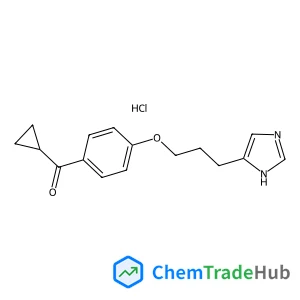
![[3-Fluoro-4-(1-pyrrolidinylcarbonyl)phenyl]boronic acid structure](https://static.chemtradehub.com/structs/874/874289-09-5-e3d4.webp "[3-Fluoro-4-(1-pyrrolidinylcarbonyl)phenyl]boronic acid structure")
[3-Fluoro-4-(1-pyrrolidinylcarbonyl)phenyl]boronic acid
CAS Number:
874289-09-5
Molecular Formula:
C11H13BFNO3
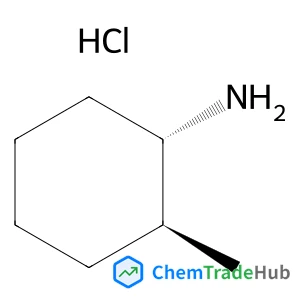
(1R,2R)-2-Methylcyclohexanamine hydrochloride (1:1)
CAS Number:
39558-31-1
Molecular Formula:
C7H16ClN
Recommended Suppliers






Disclaimer
This page provides academic journal information for reference and research purposes only. We are not affiliated with any journal publishers and do not handle publication submissions. For publication-related inquiries, please contact the respective journal publishers directly.
If you notice any inaccuracies in the information displayed, please contact us at support@chemtradehub.com. We will promptly review and address your concerns.