













Significance of weak interactions in imidazolium picrate ionic liquids: spectroscopic and theoretical studies for molecular level understanding
Literature Information
Publication Date
2015-06-08
DOI
10.1039/C5CP01944C
Impact Factor
3.676
Authors
Sumit Kumar Panja, Nidhi Dwivedi, Hemanth Noothalapati, Shinsuke Shigeto, A. K. Sikder, Abhijit Saha, Sailaja S. Sunkari, Satyen Saha
View Original
Abstract
The effects of interionic hydrogen bonding and π–π stacking interactions on the physical properties of a new series of picrate anion based ionic liquids (ILs) have been investigated experimentally and theoretically. The existence of aromatic (C2–H⋯O) and aliphatic (C7–H⋯O–N22 and C6–H⋯O–N20) hydrogen bonding and π–π stacking interactions in these ILs has been observed using various spectroscopic techniques. The aromatic and aliphatic C–H⋯O hydrogen bonding interactions are found to have a crucial role in binding the imidazolium cation and picrate anion together. However, the π–π stacking interactions between two successive layers are found to play a decisive role in tight packing in ILs leading to differences in physical properties. The drastic difference in the melting points of the methyl and propyl derivatives (mmimPic and pmimPic respectively) have been found to be primarily due to the difference in the strength and varieties of π–π stacking interactions. While in mmimPic, several different types of π–π stacking interactions between the aromatic rings (such as picrate–picrate, picrate–imidazole and imidazolium–imidazolium cation rings) are observed, only one type of π–π stacking interaction (picrate–picrate rings) is found to exist in the pmimPic IL. NMR spectroscopic studies reveal that the interaction of these ILs with solvent molecules is different and depends on the dielectric constant of the solvent. While an ion solvation model explains the solvation in high dielectric solvents, an ion-pair solvation model is found to be more appropriate for low dielectric constant solvents. The enhanced stability of these investigated picrate ILs compared with that of inorganic picrate salts under high doses of γ radiation clearly indicates the importance of weak interionic interactions in ILs, and also opens up the possibility of the application of picrate ILs as prospective diluents in nuclear separation for advanced fuel cycling process.
Recommended Journals
Related Literature
Directional control of π-stacked building blocks for crystal engineering: the 1,8-naphthalimide synthon
Daniel L. Reger, J. Derek Elgin, Radu F. Semeniuc, Perry J. Pellechia, Mark D. Smith
2005-07-14
Communication
DOI: 10.1039/B504998A
Click-chemistry as an efficient synthetic tool for the preparation of novel conjugated polymers
Dirk Jan V. C. van Steenis, Olivier R. P. David, Gino P. F. van Strijdonck, Jan H. van Maarseveen, Joost N. H. Reek
2005-07-19
Communication
DOI: 10.1039/B507776A
Water-soluble organic dppz analogues—tuning DNA binding affinities, luminescence, and photo-redox properties
Tim Phillips, Chatna Rajput, Lance Twyman, Ihtshamul Haq, Jim A. Thomas
2005-07-27
Communication
DOI: 10.1039/B506946G
Networked calix[4]arenepolymers with unusual mechanical properties
Joseph N. Grima, Kenneth E. Evans
2005-07-14
Communication
DOI: 10.1039/B505839B
Comb-shaped poly(ethylene glycol)-modified subtilisin Carlsberg is soluble and highly active in ionic liquids
Kazunori Nakashima, Tatsuo Maruyama, Noriho Kamiya, Masahiro Goto
2005-08-02
Communication
DOI: 10.1039/B505479F
Enantiomerically pure P-chiral phosphinoselenoic chlorides: inversion of configuration at the P-chirogenic center in the synthesis and reaction of these substances
Tsutomu Kimura, Toshiaki Murai
2005-07-13
Communication
DOI: 10.1039/B507755A
A new simple synthesis of poly(thiophene-methine)s
Md. Badruz Zaman, Dmitrii F. Perepichka
2005-07-20
Communication
DOI: 10.1039/B506138E
A latent photoreaction predominates within water-soluble calixarenes: photochemistry of benzoinalkyl ethers
Raja Kaliappan, Lakshmi S. Kaanumalle, V. Ramamurthy
2005-07-13
Communication
DOI: 10.1039/B507517C
You might also like
Compound Q&A
How should waste containing N-Methoxy-N-methyl-1,3-thiazole-5-carboxamide (CAS: 898825-89-3) be handled?
Waste containing N-Methoxy-N-methyl-1,3-thiazole-5-carboxamide (CAS: 898825-89-3...
898825-89-3N-Methoxy-N-methyl-1...
Compound Q&A
How should N-(4-Biphenylyl)dibenzo[b,d]furan-4-amine (CAS: 1318338-47-4) be stored?
N-(4-Biphenylyl)dibenzo[b,d]furan-4-amine should be stored in a tightly sealed c...
1318338-47-4N-(4-Biphenylyl)dibe...
Compound Q&A
What is the market or research trend for 3-Acetamido-5-amino-2,4,6-triiodobenzoic acid (CAS: 1713-07-1)?
The market for 3-Acetamido-5-amino-2,4,6-triiodobenzoic acid (CAS: 1713-07-1) is...
1713-07-13-Acetamido-5-amino-...
Compound Q&A
How should Benzyl 2-O-acetyl-3,4,6-tri-O-benzyl-beta-D-galactopyranoside (CAS: 61820-03-9) be stored?
Benzyl 2-O-acetyl-3,4,6-tri-O-benzyl-beta-D-galactopyranoside (CAS: 61820-03-9) ...
61820-03-9Benzyl 2-O-acetyl-3,...
Compound Q&A
What regulatory guidelines apply to 2-Ethylpiperazine dihydrochloride (CAS: 438050-52-3)?
2-Ethylpiperazine dihydrochloride (CAS: 438050-52-3) is regulated under the Glob...
438050-52-32-Ethylpiperazine di...
Compound Q&A
What regulatory guidelines apply to 1,1'-[1,3-Phenylenebis(methylene)]bis(3-methyl-1H-pyrrole-2,5-dione) (CAS: 119462-56-5)?
1,1'-[1,3-Phenylenebis(methylene)]bis(3-methyl-1H-pyrrole-2,5-dione) (CAS: 11946...
119462-56-51,1'-[1,3-Phenyleneb...
Compound Q&A
Are there alternatives to 5-Fluoro-2-(1-pyrrolidinyl)pyridine (CAS: 1287217-79-1) in synthesis?
Several alternatives can be used in the synthesis of 5-Fluoro-2-(1-pyrrolidinyl)...
1287217-79-15-Fluoro-2-(1-pyrrol...
Compound Q&A
What precautions should be taken when handling 1-((2R,3R,4R,5R)-5-((bis(4-methoxyphenyl)(phenyl)methoxy)methyl)-4-hydroxy-3-methoxytetrahydrofuran-2-yl)-5-methylpyrimidine-2,4(1H,3H)-dione (CAS: 153631-19-7)?
Proper personal protective equipment (PPE) must be worn when handling this compo...
153631-19-71-((2R,3R,4R,5R)-5-(...
Compound Q&A
What precautions should be taken when handling 6-Bromoimidazo[1,2-a]pyridin-8-amine (CAS: 676371-00-9)?
When handling 6-Bromoimidazo[1,2-a]pyridin-8-amine, it is important to wear appr...
676371-00-96-Bromoimidazo[1,2-a...
Compound Q&A
Are there alternatives to (2S,4R)-4-(4-Nitrobenzyl)pyrrolidine-2-carboxylic acid hydrochloride (CAS: 1049740-22-8) in synthesis?
Alternatives to (2S,4R)-4-(4-Nitrobenzyl)pyrrolidine-2-carboxylic acid hydrochlo...
1049740-22-8(2S,4R)-4-(4-Nitrobe...
Source Journal
Physical Chemistry Chemical Physics

CiteScore:
5.5
Self-citation Rate:
10.3%
Articles per Year:
3036
Physical Chemistry Chemical Physics (PCCP) is an international journal co-owned by 19 physical chemistry and physics societies from around the world. This journal publishes original, cutting-edge research in physical chemistry, chemical physics and biophysical chemistry. To be suitable for publication in PCCP, articles must include significant innovation and/or insight into physical chemistry; this is the most important criterion that reviewers and Editors will judge against when evaluating submissions. The journal has a broad scope and welcomes contributions spanning experiment, theory, computation and data science. Topical coverage includes spectroscopy, dynamics, kinetics, statistical mechanics, thermodynamics, electrochemistry, catalysis, surface science, quantum mechanics, quantum computing and machine learning. Interdisciplinary research areas such as polymers and soft matter, materials, nanoscience, energy, surfaces/interfaces, and biophysical chemistry are welcomed if they demonstrate significant innovation and/or insight into physical chemistry. Joined experimental/theoretical studies are particularly appreciated when complementary and based on up-to-date approaches.
Recommended Compounds
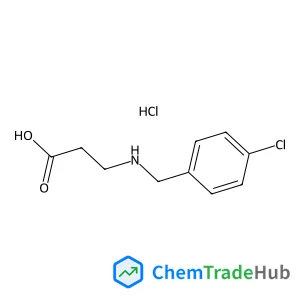
N-(4-Chlorobenzyl)-beta-alanine hydrochloride (1:1)
CAS Number:
1172479-10-5
Molecular Formula:
C10H13Cl2NO2
Recommended Suppliers




Disclaimer
This page provides academic journal information for reference and research purposes only. We are not affiliated with any journal publishers and do not handle publication submissions. For publication-related inquiries, please contact the respective journal publishers directly.
If you notice any inaccuracies in the information displayed, please contact us at support@chemtradehub.com. We will promptly review and address your concerns.