



Exploring the comparative binding aspects of benzophenanthridine plant alkaloid chelerythrine with RNA triple and double helices: a spectroscopic and calorimetric approach
Literature Information
Publication Date
2015-05-27
DOI
10.1039/C5CP01737H
Impact Factor
3.676
Authors
Lucy Haque, Ankur Bikash Pradhan, Sutanwi Bhuiya, Suman Das
View Original
Abstract
A comparative study on the interaction of a benzophenanthridine alkaloid chelerythrine (CHL) with RNA triplex poly(U).poly(A)*poly(U) (hereafter U.A*U, .(dot) and *(asterisk) represent Watson–Crick and Hoogsteen base pairing respectively) and its parent duplex poly(A).poly(U) (A.U) was carried out by using a combination of various spectroscopic, viscometric and calorimetric techniques. The interaction was characterized by hypochromic and bathochromic effects in the absorption spectrum, the increase of thermal melting temperature, enhancement in solution viscosity, and perturbation in the circular dichroic spectrum. The binding constant calculated by using spectrophotometric data was in the order of 105 for both forms of RNA, but it was greater for triplex RNA (30.2 × 10⁵ M−1) than duplex RNA (3.6 × 10⁵ M−1). Isothermal titration calorimetric data are in good agreement with the spectrophotometric data. The data indicated stronger binding of CHL to the triplex structure of RNA compared to the native duplex structure. Thermal melting studies indicated greater stabilization of the Hoogsteen base paired third strand of the RNA triplex compared to its Watson–Crick strands. The mode of binding of CHL to both U.A*U and A.U was intercalation as revealed from fluorescence quenching, viscosity measurements and sensitization of the fluorescence experiment. Thermodynamic data obtained from isothermal calorimetric measurements revealed that association was favoured by both a negative enthalpy change and a positive entropy change. Taken together, our results suggest that chelerythrine binds and stabilizes the RNA triplex more strongly than its respective parent duplex. The results presented here may be useful for formulating effective antigene strategies involving benzophenanthridine alkaloids and the RNA triplex.
Recommended Journals

Critical Reviews in Solid State and Materials Sciences

Acta Metallurgica Sinica-English Letters

Bioorganic & Medicinal Chemistry Letters

Biocatalysis and Biotransformation

Colloid Journal

Journal of Chemical Sciences

Polycyclic Aromatic Compounds

Herald of the Russian Academy of Sciences

Journal of the Indian Institute of Science

Atomization and Sprays
Related Literature
Precision synthesis for well-defined linear and/or architecturally controlled thermoresponsive poly(N-substituted acrylamide)s
Atsushi Narumi, Shin-ichiro Sato
2022-02-02
Review Article
DOI: 10.1039/D1PY01449H
Star polymer networks: a toolbox for cross-linked polymers with controlled structure
Shintaro Nakagawa, Naoko Yoshie
2022-03-30
Review Article
DOI: 10.1039/D1PY01547H
Effects of the number and position of methoxy substituents on triphenylamine-based chalcone visible-light-absorbing photoinitiators
Shih-Chieh Yen, Zhong-Han Lee, Jen-Shyang Ni, Ching-Chin Chen
2022-06-03
Paper
DOI: 10.1039/D2PY00604A
Microfluidic-supported synthesis of anisotropic polyvinyl methacrylate nanoparticles via interfacial agents
Nikunjkumar R. Visaveliya, Firdaus Khatoon, Jin Xu, Kelvin Leo, Lauren St. Peter, Christopher Chan, Tatiana Mikhailova, Visar Bexheti, Ashni Kapadia, Piyali Maity, William P. Carbery
2022-04-11
Paper
DOI: 10.1039/D1PY01729B
Thiolactone chemistry, a versatile platform for macromolecular engineering
Nicolas Illy, Emma Mongkhoun
2022-07-25
Review Article
DOI: 10.1039/D2PY00731B
Synthesis of an amphiphilic copolymer using biopolymer-dextran via a combination of ROP and RAFT techniques
Puja Das Karmakar, Sagar Pal
2022-02-02
Paper
DOI: 10.1039/D1PY01596F
Recent advances in asymmetric organocatalysis based on helical polymers
Li Zhou, Kai He, Na Liu
2022-06-02
Review Article
DOI: 10.1039/D2PY00483F
One-pot synthesis of high-concentration mixed-shell polymeric micelles as nanochaperones for the renaturation of bulk proteins
Fei Deng, Menglin Yang, Yanli Zhang, Xiaohui Wu, Rujiang Ma, Feihe Ma, Linqi Shi
2021-12-30
Paper
DOI: 10.1039/D1PY01404H
Correction: pH sensitive water-in-water emulsions based on the pullulan and poly(N,N-dimethylacrylamide) aqueous two-phase system
Alexander Plucinski, Bernhard V. K. J. Schmidt
2022-07-18
Correction
DOI: 10.1039/D2PY90095E
You might also like
Compound Q&A
What are the main uses of 1-(3-Aminophenyl)-3-[(3R)-1-(3,3-dimethyl-2-oxobutyl)-2-oxo-5-(2-pyridinyl)-2,3-dihydro-1H-1,4-benzodiazepin-3-yl]urea (CAS: 155412-88-7)?
This compound is mainly used as an intermediate in the synthesis of antipsychoti...
155412-88-71-(3-Aminophenyl)-3-...
Compound Q&A
How should waste containing 1-(D-Ribofuranosyl)-1,4-dihydro-3-pyridinecarboxamide (CAS: 19132-12-8) be handled?
Waste containing 1-(D-Ribofuranosyl)-1,4-dihydro-3-pyridinecarboxamide (CAS: 191...
19132-12-81-(D-Ribofuranosyl)-...
Compound Q&A
What regulatory guidelines apply to 2-Methyl-2-propanyl 3-bromo-3-(hydroxymethyl)-1-azetidinecarboxylate (CAS: 2007919-81-3)?
2-Methyl-2-propanyl 3-bromo-3-(hydroxymethyl)-1-azetidinecarboxylate (CAS: 20079...
2007919-81-32-Methyl-2-propanyl ...
Compound Q&A
What is N-(4-Chloro-2-pyridinyl)acetamide (CAS: 245056-66-0)?
N-(4-Chloro-2-pyridinyl)acetamide (CAS: 245056-66-0) is a chemical compound with...
245056-66-0N-(4-Chloro-2-pyridi...
Compound Q&A
What is 5-Chloro-2-hydroxybenzoic acid (CAS: 321-14-2)?
5-Chloro-2-hydroxybenzoic acid, also known as 5-chlorosalicylic acid, is an arom...
321-14-25-Chloro-2-hydroxybe...
Compound Q&A
What precautions should be taken when handling 1,1-Dichloro-1-fluoroethane (CAS: 1717-00-6)?
When handling 1,1-Dichloro-1-fluoroethane (CAS: 1717-00-6), it is important to u...
1717-00-61,1-Dichloro-1-fluor...
Compound Q&A
What are the physical and chemical properties of Fmoc-(2S,3R)-3-phenylpyrrolidine-2-carboxylic acid (CAS: 281655-32-1)?
Fmoc-(2S,3R)-3-phenylpyrrolidine-2-carboxylic acid is a white crystalline solid ...
281655-32-1Fmoc-(2S,3R)-3-pheny...
Compound Q&A
What are the main uses of 4-Amino-5-bromo-2-pyridinecarboxylic acid (CAS: 1363381-01-4)?
4-Amino-5-bromo-2-pyridinecarboxylic acid is primarily used as a precursor in th...
1363381-01-44-Amino-5-bromo-2-py...
Compound Q&A
What precautions should be taken when handling (S)-tert-butyl 2-((2-(4-bromophenyl)-2-oxoethyl)carbamoyl)pyrrolidine-1-carboxylate (CAS: 1007881-98-2)?
Handling this compound should be done with personal protective equipment (PPE) i...
1007881-98-2(S)-tert-butyl 2-((2...
Compound Q&A
What precautions should be taken when handling 8-bromo-2,2-dimethyl-3,4-dihydro-2H-1,4-benzoxazin-3-one (CAS: 688363-73-7)?
When handling 8-bromo-2,2-dimethyl-3,4-dihydro-2H-1,4-benzoxazin-3-one, use prop...
688363-73-78-bromo-2,2-dimethyl...
Source Journal
Physical Chemistry Chemical Physics

CiteScore:
5.5
Self-citation Rate:
10.3%
Articles per Year:
3036
Physical Chemistry Chemical Physics (PCCP) is an international journal co-owned by 19 physical chemistry and physics societies from around the world. This journal publishes original, cutting-edge research in physical chemistry, chemical physics and biophysical chemistry. To be suitable for publication in PCCP, articles must include significant innovation and/or insight into physical chemistry; this is the most important criterion that reviewers and Editors will judge against when evaluating submissions. The journal has a broad scope and welcomes contributions spanning experiment, theory, computation and data science. Topical coverage includes spectroscopy, dynamics, kinetics, statistical mechanics, thermodynamics, electrochemistry, catalysis, surface science, quantum mechanics, quantum computing and machine learning. Interdisciplinary research areas such as polymers and soft matter, materials, nanoscience, energy, surfaces/interfaces, and biophysical chemistry are welcomed if they demonstrate significant innovation and/or insight into physical chemistry. Joined experimental/theoretical studies are particularly appreciated when complementary and based on up-to-date approaches.
Recommended Compounds
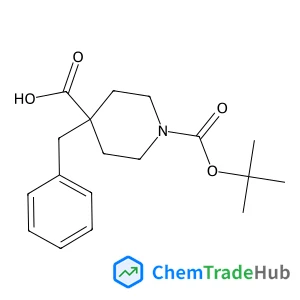
4-Benzyl-1-(tert-butoxycarbonyl)piperidine-4-carboxylic acid
CAS Number:
170838-87-6
Molecular Formula:
C18H25NO4
![1-[3-(4-Morpholinylsulfonyl)phenyl]methanamine structure](https://static.chemtradehub.com/structs/933/933989-32-3-51af.webp "1-[3-(4-Morpholinylsulfonyl)phenyl]methanamine structure")

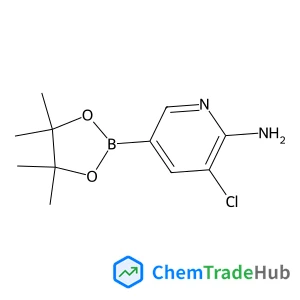
3-Chloro-5-(4,4,5,5-tetramethyl-1,3,2-dioxaborolan-2-yl)-2-pyridinamine
CAS Number:
1032758-99-8
Molecular Formula:
C11H16BClN2O2
Recommended Suppliers




Disclaimer
This page provides academic journal information for reference and research purposes only. We are not affiliated with any journal publishers and do not handle publication submissions. For publication-related inquiries, please contact the respective journal publishers directly.
If you notice any inaccuracies in the information displayed, please contact us at support@chemtradehub.com. We will promptly review and address your concerns.