












Classification of the mechanisms of photoinduced electron transfer from aromatic amino acids to the excited flavins in flavoproteins
Literature Information
Publication Date
2015-06-02
DOI
10.1039/C5CP01432H
Impact Factor
3.676
Authors
Kiattisak Lugsanangarm, Nadtanet Nunthaboot, Arthit Nueangaudom, Somsak Pianwanit, Sirirat Kokpol, Seiji Taniguchi, Haik Chosrowjan
View Original
Abstract
In many flavoproteins photoinduced electron transfer (ET) efficiently takes place from aromatic amino acids such as tryptophan or tyrosine to the excited isoalloxazine, so that the fluorescence lifetimes of isoalloxazine in some flavoproteins become ultrashort. The mechanism of ET in the flavoproteins was classified into four classes from the relationship between logarithmic ET rates (ln Rate) and the donor–acceptor distances (Rc), using reported data. The physical quantity, GT, is defined as the sum of solvent reorganization energy, electrostatic energy between a donor cation and an Iso anion, the standard free energy gap between the photoproducts and reactants, and net electrostatic energy between the photoproducts and other ionic groups in the flavoproteins (NetES). When GT fluctuates around zero with Rc, the ET rate becomes fastest (faster than 1 ps−1) in Kakitani and Mataga rates. In the ultrafast ET processes, the ln Rate becomes a parabolic function (category 1) of Rc as in FMN binding proteins and pyranose 2-oxidase at the shorter emission wavelengths, when NetES is negligible compared to the other quantities in the GT function. In the ultrafast ET processes, the ln Rate does not display any clear function of Rc (category 2) when NetES is dominant in the GT function, because of no direct relation between NetES and Rc. ET in flavodoxin from Helicobacter pylori may be classified into category 2. When GT linearly varies with Rc around a certain positive value, the ET rates become much slower (<1 ps−1). In this case the ln Rate linearly decreases with Rc (category 3), as Tyr224 in D-amino acid oxidase dimers. It is also conceivable that the ln Rate decreases with much scattered function of Rc (category 4), when NetES is dominant in the GT function, as Tyr314 in D-amino acid oxidase dimers. In ET processes of category 1, ET rates decrease as Rc becomes shorter than the distance at the maximum values of ln Rates, where GT is negative. Conditions and physical meanings were discussed for the GT-negative region.
Recommended Journals
Related Literature
One-pot synthesis of structure-controlled temperature-responsive polymer gels
Tomoki Sakai, Nagisa Ito, Mitsuo Hara, Takahiro Seki, Mineto Uchiyama, Masami Kamigaito, Kotaro Satoh, Taiki Hoshino, Yukikazu Takeoka
2022-06-17
Paper
DOI: 10.1039/D2PY00554A
Ruthenium-catalyzed diazoacetate/cyclooctene metathesis copolymerization
Minghang Ji, Shengquan Zheng, Chen Zou, Min Chen
2022-07-30
Paper
DOI: 10.1039/D2PY00886F
Recent advances in asymmetric organocatalysis based on helical polymers
Li Zhou, Kai He, Na Liu
2022-06-02
Review Article
DOI: 10.1039/D2PY00483F
Thermoresponsive metalloprotein-based hybrid hydrogels for the reversible and highly selective removal of lead(ii) from water
Tianbiao Wei, Shanqing Huang, Qingyuan Hu, Jue Wang, Zhongzhong Huo, Tongyang Zhu, Chi Wu, Hao Chen
2022-02-07
Paper
DOI: 10.1039/D1PY01574E
Protected amine-functional initiators for the synthesis of α-amine homo- and heterotelechelic poly(2-ethyl-2-oxazoline)s
Zihnil A. I. Mazrad, May Lai, Thomas P. Davis, Joseph A. Nicolazzo, Meike N. Leiske
2022-07-08
Paper
DOI: 10.1039/D2PY00649A
High-efficiency solution-processed green thermally activated delayed fluorescence OLEDs using a polymer-small molecule mixed host
Seunguk Cho, Na Yeon Kwon, Chai Won Kim, Hyoseong Lee, Jung Min Ha, Hyung Jong Kim, Han Young Woo, Sungnam Park, Min Ju Cho, Dong Hoon Choi
2022-02-25
Paper
DOI: 10.1039/D1PY01700D
Chromium complexes supported by NNO-tridentate ligands: an unprecedented activity with the requirement of a small amount of MAO
Jiliang Tian, Xingwang Zhang, Shaofeng Liu
2022-03-04
Paper
DOI: 10.1039/D2PY00125J
Effect of anions on the phase transition temperature of two structurally isomeric polymers: poly(N-isopropylacrylamide) and poly(2-isopropyl-2-oxazoline)
Taehun Chung, Jihoon Han, Young Jae Kim, Kyeong-Jun Jeong, Jun Mo Koo, Jemin Lee, Hyung Gyu Park, Taiha Joo
2022-07-06
Paper
DOI: 10.1039/D2PY00543C
You might also like
Compound Q&A
What are the main uses of 1-(3-Aminophenyl)-3-[(3R)-1-(3,3-dimethyl-2-oxobutyl)-2-oxo-5-(2-pyridinyl)-2,3-dihydro-1H-1,4-benzodiazepin-3-yl]urea (CAS: 155412-88-7)?
This compound is mainly used as an intermediate in the synthesis of antipsychoti...
155412-88-71-(3-Aminophenyl)-3-...
Compound Q&A
How should waste containing 1-(D-Ribofuranosyl)-1,4-dihydro-3-pyridinecarboxamide (CAS: 19132-12-8) be handled?
Waste containing 1-(D-Ribofuranosyl)-1,4-dihydro-3-pyridinecarboxamide (CAS: 191...
19132-12-81-(D-Ribofuranosyl)-...
Compound Q&A
What regulatory guidelines apply to 2-Methyl-2-propanyl 3-bromo-3-(hydroxymethyl)-1-azetidinecarboxylate (CAS: 2007919-81-3)?
2-Methyl-2-propanyl 3-bromo-3-(hydroxymethyl)-1-azetidinecarboxylate (CAS: 20079...
2007919-81-32-Methyl-2-propanyl ...
Compound Q&A
What is N-(4-Chloro-2-pyridinyl)acetamide (CAS: 245056-66-0)?
N-(4-Chloro-2-pyridinyl)acetamide (CAS: 245056-66-0) is a chemical compound with...
245056-66-0N-(4-Chloro-2-pyridi...
Compound Q&A
What is 5-Chloro-2-hydroxybenzoic acid (CAS: 321-14-2)?
5-Chloro-2-hydroxybenzoic acid, also known as 5-chlorosalicylic acid, is an arom...
321-14-25-Chloro-2-hydroxybe...
Compound Q&A
What precautions should be taken when handling 1,1-Dichloro-1-fluoroethane (CAS: 1717-00-6)?
When handling 1,1-Dichloro-1-fluoroethane (CAS: 1717-00-6), it is important to u...
1717-00-61,1-Dichloro-1-fluor...
Compound Q&A
What are the physical and chemical properties of Fmoc-(2S,3R)-3-phenylpyrrolidine-2-carboxylic acid (CAS: 281655-32-1)?
Fmoc-(2S,3R)-3-phenylpyrrolidine-2-carboxylic acid is a white crystalline solid ...
281655-32-1Fmoc-(2S,3R)-3-pheny...
Compound Q&A
What are the main uses of 4-Amino-5-bromo-2-pyridinecarboxylic acid (CAS: 1363381-01-4)?
4-Amino-5-bromo-2-pyridinecarboxylic acid is primarily used as a precursor in th...
1363381-01-44-Amino-5-bromo-2-py...
Compound Q&A
What precautions should be taken when handling (S)-tert-butyl 2-((2-(4-bromophenyl)-2-oxoethyl)carbamoyl)pyrrolidine-1-carboxylate (CAS: 1007881-98-2)?
Handling this compound should be done with personal protective equipment (PPE) i...
1007881-98-2(S)-tert-butyl 2-((2...
Compound Q&A
What precautions should be taken when handling 8-bromo-2,2-dimethyl-3,4-dihydro-2H-1,4-benzoxazin-3-one (CAS: 688363-73-7)?
When handling 8-bromo-2,2-dimethyl-3,4-dihydro-2H-1,4-benzoxazin-3-one, use prop...
688363-73-78-bromo-2,2-dimethyl...
Source Journal
Physical Chemistry Chemical Physics

CiteScore:
5.5
Self-citation Rate:
10.3%
Articles per Year:
3036
Physical Chemistry Chemical Physics (PCCP) is an international journal co-owned by 19 physical chemistry and physics societies from around the world. This journal publishes original, cutting-edge research in physical chemistry, chemical physics and biophysical chemistry. To be suitable for publication in PCCP, articles must include significant innovation and/or insight into physical chemistry; this is the most important criterion that reviewers and Editors will judge against when evaluating submissions. The journal has a broad scope and welcomes contributions spanning experiment, theory, computation and data science. Topical coverage includes spectroscopy, dynamics, kinetics, statistical mechanics, thermodynamics, electrochemistry, catalysis, surface science, quantum mechanics, quantum computing and machine learning. Interdisciplinary research areas such as polymers and soft matter, materials, nanoscience, energy, surfaces/interfaces, and biophysical chemistry are welcomed if they demonstrate significant innovation and/or insight into physical chemistry. Joined experimental/theoretical studies are particularly appreciated when complementary and based on up-to-date approaches.
Recommended Compounds
![1-[3-(4-Morpholinylsulfonyl)phenyl]methanamine structure](https://static.chemtradehub.com/structs/933/933989-32-3-51af.webp "1-[3-(4-Morpholinylsulfonyl)phenyl]methanamine structure")
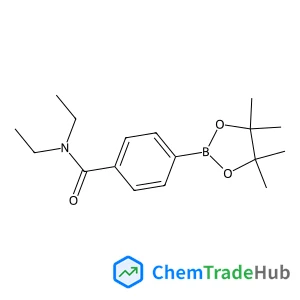
N,N-Diethyl-4-(4,4,5,5-tetramethyl-1,3,2-dioxaborolan-2-yl)benzamide
CAS Number:
325142-99-2
Molecular Formula:
C17H26BNO3
Recommended Suppliers





Disclaimer
This page provides academic journal information for reference and research purposes only. We are not affiliated with any journal publishers and do not handle publication submissions. For publication-related inquiries, please contact the respective journal publishers directly.
If you notice any inaccuracies in the information displayed, please contact us at support@chemtradehub.com. We will promptly review and address your concerns.