(2R)-2-(3-Bromophenyl)pyrrolidine hydrochloride (1:1)
CAS Number:
1391550-13-2
Molecular Formula:
C10H13BrClN
Jonas Elm, Patrick Norman, Kurt V. Mikkelsen
The Rayleigh light scattering properties of (H2SO4)a(NH3)b and (H2SO4)a((CH3)2NH)b atmospheric molecular clusters have been investigated using a response theory approach. Using density functional theory the molecular structures and stepwise formation free energies of clusters with a and b up to 4 have been re-investigated. The Rayleigh scattering intensities are calculated from the dipole polarizability tensor α using the CAM-B3LYP functional by applying linear response methods. The intrinsic scattering properties of (H2SO4)a(NH3)b and (H2SO4)a((CH3)2NH)b indicate that amine containing clusters scatter light significantly more efficiently then their ammonia containing counterparts. Using the Atmospheric Cluster Dynamics Code (ACDC) the steady state cluster concentrations are estimated and the effective scattering is calculated. The effective scattering is shown to be highly dependent on the estimated concentrations and indicates that there exist competitive pathways, such as nucleation and coagulation, which influence the cluster distributions. The frequency dependence of the scattering is found to depend on the cluster composition and show increased responses when clusters contain more bases than acid molecules. Based on structures obtained using semi-empirical molecular dynamics simulations the Rayleigh scattering properties of clusters with up to 20 acid–base pairs are evaluated. This study represents the first step towards gaining a fundamental understanding of the scattering properties of small atmospheric clusters in the ambient atmosphere.
Anupom Roy, James W. Gauld
DOI: 10.1039/D3CC05715A
Tsuyoshi Murata, Marina Hamasaki, Yasushi Morita
DOI: 10.1039/D3CC04840C
Rodrigo Báez-Grez, Cina Foroutan-Nejad
DOI: 10.1039/D3CC05451A
Qi-qin Ge, Qian Han, Yun Han, Fei Ma, Chen-zhong Li, Chun-yang Zhang
DOI: 10.1039/D3CC05639B
Jack E. Bramham, Alexander P. Golovanov
DOI: 10.1039/D3CC04802K
Rahul Mondal, Matthew J. Evans, Dat T. Nguyen, Thayalan Rajeshkumar, Laurent Maron, Cameron Jones
DOI: 10.1039/D3CC05787A
Manideepa Dhar, Chittaranjan Mishra, Avijit Das
DOI: 10.1039/D3CC05172B
Santosh J. Gharpure, Sanyog Kumari
DOI: 10.1039/D3CC05237K
Liangjun Shen, Jun-Yi Wang, Xunwen Xiao
DOI: 10.1039/D3CC05684H
Sabrin Al-Fogra, Sofia Rohde, Marcus Speck, Frank Hauke, Andreas Hirsch, Tao Wei
DOI: 10.1039/D3CC05355E
Waste containing 6-Chloro-5-(2'-hydroxy-3'-methoxy-4-biphenylyl)-3-(3-methoxyphe...
(3alpha,5alpha)-3-Hydroxypregnane-11,20-dione is primarily used in the pharmaceu...
The market for 4-Amino-6-chloro-2-pyridinecarboxylic acid (CAS: 546141-56-4) is ...
Alternatives to (2-Benzoylethyl)trimethylammonium chloride (CAS: 24472-88-6) in ...
N-[4-Nitro-3-(trifluoromethyl)phenyl]acetamide (CAS: 393-12-4) is generally safe...
Alternative reagents such as other phosphates or similar functional groups can b...
There are alternatives to N,N'-Bis(3-aminopropyl)-1,3-propanediamine (CAS: 4605-...
When handling Aluminium trihexadecanoate, it is important to use appropriate per...
(1,1-Dioxido-3-oxo-1,2-benzothiazol-2(3H)-yl)acetic acid is a chemical compound ...
Several alternatives to 5,5-dimethyloxolan-2-one (CAS: 3123-97-5) can be used in...

Physical Chemistry Chemical Physics (PCCP) is an international journal co-owned by 19 physical chemistry and physics societies from around the world. This journal publishes original, cutting-edge research in physical chemistry, chemical physics and biophysical chemistry. To be suitable for publication in PCCP, articles must include significant innovation and/or insight into physical chemistry; this is the most important criterion that reviewers and Editors will judge against when evaluating submissions. The journal has a broad scope and welcomes contributions spanning experiment, theory, computation and data science. Topical coverage includes spectroscopy, dynamics, kinetics, statistical mechanics, thermodynamics, electrochemistry, catalysis, surface science, quantum mechanics, quantum computing and machine learning. Interdisciplinary research areas such as polymers and soft matter, materials, nanoscience, energy, surfaces/interfaces, and biophysical chemistry are welcomed if they demonstrate significant innovation and/or insight into physical chemistry. Joined experimental/theoretical studies are particularly appreciated when complementary and based on up-to-date approaches.
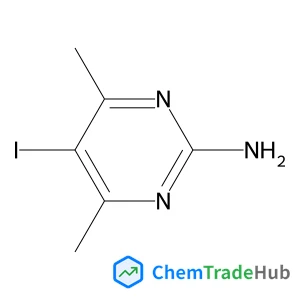
![1-[6-(1H-Imidazol-1-yl)-3-pyridinyl]methanamine structure](https://static.chemtradehub.com/structs/914/914637-08-4-8825.webp "1-[6-(1H-Imidazol-1-yl)-3-pyridinyl]methanamine structure")