












Graphene film doped with silver nanoparticles: self-assembly formation, structural characterizations, antibacterial ability, and biocompatibility
Literature Information
Publication Date
2015-04-28
DOI
10.1039/C5BM00058K
Impact Factor
6.843
Authors
Panpan Zhang, Haixia Wang, Wei Xu, Yang Li, Qing Li, Gang Wei, Zhiqiang Su
View Original
Abstract
Graphene and silver nanoparticles (AgNPs) are important building blocks for the synthesis of functional nanomaterials for bio-related applications. Here, we report a facile strategy to decorate AgNPs onto reduced graphene oxide (RGO) by the simultaneous reduction of silver ions and graphene oxide nanosheets within one system, and further to fabricate a dimension-adjustable RGO/AgNP multi-layered film by a thermal-driven self-assembly process. The structures of the fabricated RGO/AgNP hybrid films were identified by UV-visible spectroscopy, X-ray diffraction, X-ray photoelectron spectroscopy, Raman spectroscopy, and transmission electron microscopy. The thickness of the fabricated RGO/AgNP film was further measured by scanning electron microscopy. The hydrophilicity of the RGO/AgNP films was tested by contact angle measurement. Antibacterial and cell culture experiments based on the fabricated RGO/AgNP films indicate that this kind of hybrid film exhibits excellent antibacterial activity and high biocompatibility. A potential antibacterial mechanism of the fabricated RGO/AgNP hybrid film was proposed.
Related Literature
Molecular BioSystems issue 8 contents pages –free access to Chemical Communications subscribers
Front/Back Matter
DOI: 10.1039/B710033G
Synthesis, characterization and photophysical properties of a SWNT-phthalocyanine hybrid
Beatriz Ballesteros, Gema de la Torre, Christian Ehli, Dirk M. Guldi, Maurizio Prato, Tomas Torres
2007-05-10
Communication
DOI: 10.1039/B702819A
Mechanism of a self-templating synthesis of monodispersed hollow silica nanospheres with tunable size and shell thickness
Qiangbin Wang, Yan Liu
2007-05-17
Communication
DOI: 10.1039/B701572K
Accurate heteronuclear J-coupling measurements in dilute spin systems using the multiple-quantum filtered J-resolved experiment
Charlotte Martineau, Franck Fayon, Christophe Legein, Jean-Yves Buzaré, Gilles Silly, Dominique Massiot
2007-04-20
Communication
DOI: 10.1039/B703321D
Recent advances in shell cross-linked micelles
Elizabeth S. Read, Steven P. Armes
2007-03-20
Feature Article
DOI: 10.1039/B701217A
Reversible photopadlocking on double-stranded DNA‡
Kenzo Fujimoto, Shigeo Matsuda, Yoshinaga Yoshimura, Takehiro Ami, Isao Saito
2007-06-22
Communication
DOI: 10.1039/B707524C
Copper-catalyzed oxidative desulfurization–oxygenation of thiocarbonyl compounds using molecular oxygen: an efficient method for the preparation of oxygen isotopically labeled carbonyl compounds
Fumitoshi Shibahara, Aiko Suenami, Atsunori Yoshida, Toshiaki Murai
2007-03-08
Communication
DOI: 10.1039/B701048F
A physical gel made from hyperbranched polymer gelator
Yongwen Zhang, Wei Huang, Yongfeng Zhou, Deyuan Yan
2007-04-03
Communication
DOI: 10.1039/B701043E
You might also like
Compound Q&A
What industries use (1R,3S)-1,3-Cyclopentanediol (CAS: 16326-97-9)?
(1R,3S)-1,3-Cyclopentanediol finds applications in various industries. In the ph...
16326-97-9(1R,3S)-1,3-Cyclopen...
Compound Q&A
What precautions should be taken when handling N'-[4-(Dimethylamino)phenyl]-N,N-dimethyl-1,4-benzenediamine (CAS: 637-31-0)?
When handling N'-[4-(Dimethylamino)phenyl]-N,N-dimethyl-1,4-benzenediamine, it i...
637-31-0N'-[4-(Dimethylamino...
Compound Q&A
Are there alternatives to 5-(2,4-Difluorophenyl)-2-methoxypyrimidine (CAS: 1352318-16-1) in synthesis?
There are several alternatives to 5-(2,4-Difluorophenyl)-2-methoxypyrimidine in ...
1352318-16-15-(2,4-Difluoropheny...
Compound Q&A
What regulatory guidelines apply to 1-(3-Methoxyphenoxy)propan-2-ol (CAS: 382141-68-6)?
1-(3-Methoxyphenoxy)propan-2-ol (CAS: 382141-68-6) must comply with the Globally...
382141-68-61-(3-Methoxyphenoxy)...
Compound Q&A
Is Tetrodotoxin Citrate (CAS: 18660-81-6) safe?
Tetrodotoxin Citrate is extremely dangerous and should be handled with extreme c...
18660-81-6Tetrodotoxin Citrate
Compound Q&A
What are the main uses of 2-Methyl-2-propanyl [(1R,3S)-3-hydroxycyclopentyl]carbamate (CAS: 225641-84-9)?
2-Methyl-2-propanyl [(1R,3S)-3-hydroxycyclopentyl]carbamate (CAS: 225641-84-9) i...
225641-84-92-Methyl-2-propanyl ...
Compound Q&A
How should waste containing 4-(2-Hydroxyhexafluoroisopropyl)Benzoic Acid (CAS: 16261-80-6) be handled?
Waste containing 4-(2-Hydroxyhexafluoroisopropyl)Benzoic Acid (CAS: 16261-80-6) ...
16261-80-64-(2-Hydroxyhexafluo...
Compound Q&A
How is 2-Methyl-2-proanyl {(2S)-1-[(benzyloxy)amino]-3-hydroxy-3-methyl-1-oxo-2-butanyl}carbamate (CAS: 102507-19-7) typically synthesized?
2-Methyl-2-proanyl {(2S)-1-[(benzyloxy)amino]-3-hydroxy-3-methyl-1-oxo-2-butanyl...
102507-19-72-Methyl-2-propanyl ...
Compound Q&A
What is Benzeneethanamine, α-ethyl-, hydrochloride (1:1) (CAS: 20735-15-3)?
Benzeneethanamine, α-ethyl-, hydrochloride (1:1) is an organic compound with the...
20735-15-3Benzeneethanamine, α...
Compound Q&A
Are there alternatives to 3-{(E)-[4-(Dimethylamino)phenyl]diazenyl}benzoic acid (CAS: 20691-84-3) in synthesis?
In the synthesis of compounds similar to 3-{(E)-[4-(Dimethylamino)phenyl]diazeny...
20691-84-33-{(E)-[4-(Dimethyla...
Source Journal
Biomaterials Science

CiteScore:
11.5
Self-citation Rate:
3.4%
Articles per Year:
492
Biomaterials Science is an international high impact journal exploring the science of biomaterials and their translation towards clinical use. Its scope encompasses new concepts in biomaterials design, studies into the interaction of biomaterials with the body, and the use of materials to answer fundamental biological questions. Papers do not necessarily need to report a new biomaterial but should provide novel insight into the biological applications of the biomaterial. Articles that primarily focus on demonstrating novel materials chemistry and bring a molecular picture to bear on a given material’s suitability as a biomaterial are more suited to our companion journal, Journal of Materials Chemistry B. Biomaterials Science publishes primary research and review-type articles in the following areas: molecular design of biomaterials, including translation of emerging chemistries to biomaterials science of cells and materials at the nanoscale and microscale materials as model systems for stem cell and human biology materials for tissue engineering and regenerative medicine (Nano)materials and (nano)systems for therapeutic delivery interactions at the biointerface biologically inspired and biomimetic materials, including bio-inspired self-assembly systems and cell-inspired synthetic tools next-generation biomaterials tools and methods
Recommended Compounds
![(2S)-2-{[(9H-Fluoren-9-ylmethoxy)carbonyl]amino}-4-(methylselanyl)butanoic acid structure](https://static.chemtradehub.com/structs/121/1217852-49-7-f252.webp "(2S)-2-{[(9H-Fluoren-9-ylmethoxy)carbonyl]amino}-4-(methylselanyl)butanoic acid structure")
(2S)-2-{[(9H-Fluoren-9-ylmethoxy)carbonyl]amino}-4-(methylselanyl)butanoic acid
CAS Number:
1217852-49-7
Molecular Formula:
C20H21NO4Se
![4-[(3-Chloro-2-fluorophenyl)amino]-7-methoxy-6-quinazolinyl acetate structure](https://static.chemtradehub.com/structs/740/740081-22-5-f58f.webp "4-[(3-Chloro-2-fluorophenyl)amino]-7-methoxy-6-quinazolinyl acetate structure")
4-[(3-Chloro-2-fluorophenyl)amino]-7-methoxy-6-quinazolinyl acetate
CAS Number:
740081-22-5
Molecular Formula:
C17H13ClFN3O3
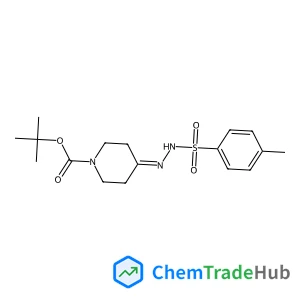
tert-Butyl 4-(2-(p-Tolylsulfonyl)hydrazono)piperidine-1-carboxylate
CAS Number:
1046478-89-0
Molecular Formula:
C17H25N3O4S
Recommended Suppliers






Disclaimer
This page provides academic journal information for reference and research purposes only. We are not affiliated with any journal publishers and do not handle publication submissions. For publication-related inquiries, please contact the respective journal publishers directly.
If you notice any inaccuracies in the information displayed, please contact us at support@chemtradehub.com. We will promptly review and address your concerns.