












Silver nanoparticles anchored on nitrogen-doped graphene as a novel electrochemical biosensing platform with enhanced sensitivity for aptamer-based pesticide assay
Literature Information
Publication Date
2015-07-27
DOI
10.1039/C5AN01084E
Impact Factor
4.616
Authors
Ding Jiang, Xiaojiao Du, Qian Liu, Lei Zhou, Liming Dai, Jing Qian
View Original
Abstract
Silver nanoparticles (NPs) decorated nitrogen doped graphene (NG) nanocomposites were prepared through a one-step thermal-treatment route using arginine as the nitrogen source. By integrating the excellent electrical properties and large surface area of Ag NPs and NG, the obtained Ag/NG nanocomposites show more effective electron transfer and high loading capacity than Ag–graphene and pure NG. In the presence of a target, the stronger interaction between the aptamer and the target promotes the formation of a target–aptamer complex on the electrode surface which blocks the electron transfer. Based on this sensing mechanism, a novel and highly sensitive biosensing platform by the use of Ag/NG as enhancing materials is demonstrated for detection of the model target, acetamiprid. The presented aptasensor exhibited a wide linear response for acetamiprid in the range of 1 × 10⁻¹³ M to 5 × 10⁻⁹ M with a low detection limit of 3.3 × 10⁻¹⁴ M (S/N = 3). Moreover, this electrochemical aptasensor avoided complicated labeling procedures and showed magnificent sensitivity, high selectivity and low cost, which made it not only convenient but also time-saving and applicable. Furthermore, the proposed design may offer a promising way to develop a new electrochemical aptasensor for sensitive and specific detection of a wide spectrum of analytes in food, medical and environmental fields.
Recommended Journals
Related Literature
Ni-Catalyzed direct iminoalkynylation of unactivated olefins with terminal alkynes: facile access to alkyne-labelled pyrrolines
Xingjie Zhang, Di Qi, Chenchen Jiao, Zhiguo Zhang, Xiaopan Liu, Guisheng Zhang
2021-09-24
Research Article
DOI: 10.1039/D1QO01217G
Phenolate anion-catalyzed direct activation of inert alkyl chlorides driven by visible light
Delian Wei, Xipan Li, Lei Shen, Yuzhen Ding, Kangjiang Liang, Chengfeng Xia
2021-09-17
Research Article
DOI: 10.1039/D1QO01128F
(−)-Cytisine: Access to a stereochemically defined and functionally flexible piperidine scaffold
Worawat Niwetmarin, Hugo Rego Campello, Hazel A. Sparkes, Varinder K. Aggarwal, Timothy Gallagher
2018-07-23
Paper
DOI: 10.1039/C8OB01456F
A silver catalyzed domino reaction of N-cyanamide alkenes and 1,3-dicarbonyls for the synthesis of quinazolinones
Gang Xu, Chaodi Tong, Sunliang Cui, Liyan Dai
2018-07-25
Paper
DOI: 10.1039/C8OB01252K
A new route to substituted furocoumarins via copper-catalyzed cyclization between 4-hydroxycoumarins and ketoximes
Tuong A. To, Yen H. Vo, Anh T. Nguyen, Anh N. Q. Phan, Thanh Truong, Nam T. S. Phan
2018-07-02
Communication
DOI: 10.1039/C8OB01064A
Carbenium ion formation by fragmentation of electrochemically generated oxonium ions
Anna Lielpetere, Aigars Jirgensons
2018-06-27
Communication
DOI: 10.1039/C8OB01339J
Multichromophore arrays of dibenzotetraaza[14]annulene: a promising platform for bioorganic chemistry
Krzysztof M. Zwoliński, Julita Eilmes
2018-07-11
Paper
DOI: 10.1039/C8OB01078A
Nα-Amino acid containing privileged structures: design, synthesis and use in solid-phase peptide synthesis
Eva Schütznerová, Adam Přibylka
2018-07-12
Paper
DOI: 10.1039/C8OB01485J
Electrophilic carbocyclization reactions of 2-(2-alkynylphenyl)amino-1,4-naphthoquinones
Chang-You Sie, Che-Ping Chuang
2018-07-19
Paper
DOI: 10.1039/C8OB01170B
Multigram synthesis of an orthogonally-protected pentasaccharide for use as a glycan precursor in a Shigella flexneri 3a conjugate vaccine: application to a ready-for-conjugation decasaccharide
Johan Cornil, Zhaoyu Hu, Marion Bouchet, Laurence A. Mulard
2021-07-21
Research Article
DOI: 10.1039/D1QO00761K
You might also like
Compound Q&A
What are the main uses of 4-Nitrophenyl phosphate disodium salt hexahydrate (CAS: 333338-18-4)?
4-Nitrophenyl phosphate disodium salt hexahydrate is primarily used as a substra...
333338-18-44-Nitrophenyl phosph...
Compound Q&A
What are the main uses of 2-(Trifluoromethyl)-1,3-oxazole-4-carboxylic Acid (CAS: 1060816-01-4)?
2-(Trifluoromethyl)-1,3-oxazole-4-carboxylic Acid (CAS: 1060816-01-4) is widely ...
1060816-01-42-(Trifluoromethyl)-...
Compound Q&A
How should 2-Fluoro-4-biphenylcarboxylic acid (CAS: 137045-30-8) be stored?
2-Fluoro-4-biphenylcarboxylic acid should be stored in a cool, dry place at room...
137045-30-82-Fluoro-4-biphenylc...
Compound Q&A
What industries use Prednisolone-21-Carboxylic Acid (CAS: 61549-70-0)?
Prednisolone-21-Carboxylic Acid is primarily used in the pharmaceutical industry...
61549-70-0Prednisolone-21-Carb...
Compound Q&A
How should 4-(Hydrazinomethyl)-1,2,3-benzenetriol (CAS: 3614-72-0) be stored?
4-(Hydrazinomethyl)-1,2,3-benzenetriol (CAS: 3614-72-0) should be stored in a co...
3614-72-04-(Hydrazinomethyl)-...
Compound Q&A
What industries use 4-Amino-1-methyl-1H-pyrazole-5-carboxylic acid hydrochloride (CAS: 92534-70-8)?
4-Amino-1-methyl-1H-pyrazole-5-carboxylic acid hydrochloride (CAS: 92534-70-8) i...
92534-70-84-Amino-1-methyl-1H-...
Compound Q&A
What regulatory guidelines apply to dehydropachymic acid (CAS: 77012-31-8)?
Dehydropachymic acid (CAS: 77012-31-8) is regulated by various agencies. It fall...
77012-31-8Dehydropachymic acid
Compound Q&A
What is the market or research trend for 6-[(2,2-Dimethylpropanoyl)amino]nicotinic acid (CAS: 898561-66-5)?
The market and research trends for 6-[(2,2-Dimethylpropanoyl)amino]nicotinic aci...
898561-66-56-[(2,2-Dimethylprop...
Compound Q&A
How should 1,10-Phenanthroline-2,9-dicarbaldehyde (CAS: 57709-62-3) be stored?
1,10-Phenanthroline-2,9-dicarbaldehyde should be stored in a cool, dry place awa...
57709-62-31,10-Phenanthroline-...
Compound Q&A
How is 5-Carbamoyl-11-oxo-10,11-dihydro-5H-dibenzo[b,f]azepin-10-yl acetate (CAS: 113952-21-9) typically synthesized?
5-Carbamoyl-11-oxo-10,11-dihydro-5H-dibenzo[b,f]azepin-10-yl acetate can be synt...
113952-21-95-Carbamoyl-11-oxo-1...
Source Journal
Analyst

CiteScore:
7.8
Self-citation Rate:
5.6%
Articles per Year:
653
Analyst publishes analytical and bioanalytical research that reports premier fundamental discoveries and inventions, and the applications of those discoveries, unconfined by traditional discipline barriers.
Recommended Compounds
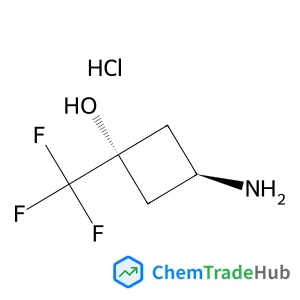
cis-3-Amino-1-(trifluoromethyl)cyclobutanol hydrochloride (1:1)
CAS Number:
1408075-16-0
Molecular Formula:
C5H9ClF3NO
Recommended Suppliers




Disclaimer
This page provides academic journal information for reference and research purposes only. We are not affiliated with any journal publishers and do not handle publication submissions. For publication-related inquiries, please contact the respective journal publishers directly.
If you notice any inaccuracies in the information displayed, please contact us at support@chemtradehub.com. We will promptly review and address your concerns.