












Nitroxide-mediated surfactant-free emulsion copolymerization of methyl methacrylate and styrene using poly(2-(diethyl)aminoethyl methacrylate-co-styrene) as a stimuli-responsive macroalkoxyamine
Literature Information
Publication Date
2014-07-14
DOI
10.1039/C4PY00684D
Impact Factor
5.582
Authors
Ali Darabi, Abbas Rezaee Shirin-Abadi, Julien Pinaud, Philip G. Jessop
View Original
Abstract
The SG1-mediated copolymerization of 2-(diethyl)aminoethyl methacrylate (DEAEMA) and a small percentage of styrene (S) was performed with different initiating systems including a monocomponent initiating system using an alkoxyamine of n-hydroxysuccinimidyl BlocBuilder (NHS-BlocBuilder) at 80 °C and a bicomponent initiating system using 2,2′-azobis[2-(2-imidazolin-2-yl)propane] (VA-061) as the initiator and N-tertbutyl-N-(1-diethylphosphono-2,2-dimethylpropyl)nitroxide (SG1) as the nitroxide at 100 °C. The resultant macroalkoxyamines, poly(DEAEMA-co-S)-SG1, were used as pH-sensitive macroinitiators in the nitroxide-mediated surfactant-free emulsion copolymerization of methyl methacrylate (MMA) and styrene at 90 °C, which proceeded via a polymerization-induced self-assembly (PISA) process, leading to the in situ formation of pH-responsive amphiphilic block copolymers. The reaction was well-controlled with high initiation efficiency and exhibited excellent livingness as evidenced by evolution of the molar mass distribution. The final latex particles were pH-sensitive with excellent colloidal stability and monomodal size distribution.
Related Literature
Physicochemical and microbiological effects of geological biomethane storage in deep aquifers: introduction of O2 as a cocontaminant
P. G. Haddad, M. Guignard, J. Mura, P. Sénéchal, M. Larregieu, M.-P. Isaure, P. Moonen, G. Hoareau, A. Petit
2023-10-31
Paper
DOI: 10.1039/D3VA00086A
Probing the structure–property relationships of supported copper oxide nanoclusters for methane activation
Xijun Wang, Kaihang Shi, Anyang Peng, Randall Q. Snurr
2023-11-16
Paper
DOI: 10.1039/D3EY00234A
Highly selective Ag foam gas diffusion electrodes for CO2 electroreduction by pulsed hydrogen bubble templation
Hendrik Hoffmann, Maximilian Kutter, Jens Osiewacz, Melanie-Cornelia Paulisch-Rinke, Steffen Lechner, Barbara Ellendorff, Annika Hilgert, Ingo Manke, Thomas Turek, Christina Roth
2023-10-09
Paper
DOI: 10.1039/D3EY00220A
Single atom catalysts for water electrolysis: from catalyst-coated substrate to catalyst-coated membrane
Sun Hwa Park, Ki Chang Kwon, Jong Hun Kang, Min Sang Kwon
2023-10-05
Review Article
DOI: 10.1039/D3EY00165B
Correction: Towards sustainable synthesis: a life cycle assessment of polymer of intrinsic microporosity (PIM-1) by green mechanosynthesis
Ching Yoong Loh, Rui Huang, Rory Bell, Ming Xie
2023-11-27
Correction
DOI: 10.1039/D3SU90054A
Evaluation of nitrogen fate from land-application wastewater treatment for cheese making and vegetable processing facilities
Geoffrey S. Siemering, Francisco J. Arriaga, Sarah L. Naatz
2023-11-27
Paper
DOI: 10.1039/D3VA00064H
Chitosan/PVA-supported silver nanoparticles for azo dyes removal: fabrication, characterization, and assessment of antioxidant activity
Ismet Meydan, Aysenur Aygun, Rima Nour Elhouda Tiri, Tugba Gur, Yılmaz Kocak, Hamdullah Seckin, Fatih Sen
2023-11-22
Paper
DOI: 10.1039/D3VA00224A
Macroporous hydrogels for soil water retention in arid and semi-arid regions
Ryan Zowada, Reza Foudazi
2023-09-04
Paper
DOI: 10.1039/D3LP00117B
You might also like
Compound Q&A
How should waste containing (6-Bromo-2-naphthyl)oxy](dimethyl)(2-methyl-2-propanyl)silane be handled?
Waste containing (6-Bromo-2-naphthyl)oxy](dimethyl)(2-methyl-2-propanyl)silane (...
100751-65-3[(6-Bromo-2-naphthyl...
Compound Q&A
How is 7-Fluoro-4-isoquinolinecarboxylic acid (CAS: 1841081-40-0) typically synthesized?
7-Fluoro-4-isoquinolinecarboxylic acid can be synthesized via a multi-step proce...
1841081-40-07-Fluoro-4-isoquinol...
Compound Q&A
What are the physical and chemical properties of 2,3,5,6-Tetrabromothieno[3,2-b]thiophene (CAS: 124638-53-5)?
2,3,5,6-Tetrabromothieno[3,2-b]thiophene is a crystalline compound with a high m...
124638-53-52,3,5,6-Tetrabromoth...
Compound Q&A
Is 1-[4-(Benzylamino)-7,8-dihydro-5H-pyrano[4,3-d]pyrimidin-2-yl]-2-methyl-1H-indole-4-carboxamide (CAS: 1542705-92-9) safe?
1-[4-(Benzylamino)-7,8-dihydro-5H-pyrano[4,3-d]pyrimidin-2-yl]-2-methyl-1H-indol...
1542705-92-91-[4-(Benzylamino)-7...
Compound Q&A
What is the market or research trend for imidazo[5,1-d]-1,2,3,5-tetrazine-8-carboxylic acid, 3,4-dihydro-3-methyl-4-oxo- (CAS: 113942-30-6)?
The market for imidazo[5,1-d]-1,2,3,5-tetrazine-8-carboxylic acid, 3,4-dihydro-3...
113942-30-6Imidazo[5,1-d]-1,2,3...
Compound Q&A
What is 3-(Triisopropylsilyl)propiolaldehyde (CAS: 163271-80-5)?
3-(Triisopropylsilyl)propiolaldehyde is a synthetic organic compound with the CA...
163271-80-53-(Triisopropylsilyl...
Compound Q&A
What regulatory guidelines apply to 6-Nitro-2H-1,4-benzoxazin-3(4H)-one (CAS: 81721-87-1)?
6-Nitro-2H-1,4-benzoxazin-3(4H)-one (CAS: 81721-87-1) is subject to various regu...
81721-87-16-Nitro-2H-1,4-benzo...
Compound Q&A
How should waste containing (3-Fluorophenyl)(4-{[(2-methyl-2-propanyl)oxy]carbonyl}-1-piperazinyl)acetic acid (CAS: 885272-91-3) be handled?
Waste containing (3-Fluorophenyl)(4-{[(2-methyl-2-propanyl)oxy]carbonyl}-1-piper...
885272-91-3(3-Fluorophenyl)(4-{...
Compound Q&A
What are the physical and chemical properties of N,N'-4,4'-Biphenyldiyldiisonicotinamide (CAS: 55119-40-9)?
N,N'-4,4'-Biphenyldiyldiisonicotinamide is a white crystalline solid with a mole...
55119-40-9N,N'-4,4'-Biphenyldi...
Compound Q&A
What industries use 6-Bromo-8-fluoro-2-quinazolinol (CAS: 1036756-15-6)?
6-Bromo-8-fluoro-2-quinazolinol is primarily used in the pharmaceutical industry...
1036756-15-66-Bromo-8-fluoro-2-q...
Source Journal
Polymer Chemistry

CiteScore:
8.6
Self-citation Rate:
7.3%
Articles per Year:
457
Polymer Chemistry welcomes submissions in all areas of polymer science that have a strong focus on macromolecular chemistry. Manuscripts may cover a broad range of fields, yet no direct application focus is required.
Recommended Compounds
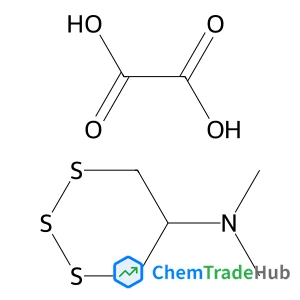
Oxalic acid compound with cyclohexylsulfamothioic O-acid (11)
CAS Number:
31895-22-4
Molecular Formula:
C7H13NO4S3
Recommended Suppliers





Disclaimer
This page provides academic journal information for reference and research purposes only. We are not affiliated with any journal publishers and do not handle publication submissions. For publication-related inquiries, please contact the respective journal publishers directly.
If you notice any inaccuracies in the information displayed, please contact us at support@chemtradehub.com. We will promptly review and address your concerns.