












On the direct scavenging activity of melatonin towards hydroxyl and a series of peroxyl radicals
Literature Information
Publication Date
2011-03-15
DOI
10.1039/C0CP02801K
Impact Factor
3.676
Authors
Annia Galano
View Original
Abstract
The reactions of melatonin (MLT) with hydroxyl and several peroxyl radicals have been studied using the Density Functional Theory, specifically the M05-2X functional. Five mechanisms of reaction have been considered: radical adduct formation (RAF), Hydrogen atom transfer (HAT), single electron transfer (SET), sequential electron proton transfer (SEPT) and proton coupled electron transfer (PCET). It has been found that MLT reacts with OH radicals in a diffusion-limited way, regardless of the polarity of the environment, which indicates that MLT is an excellent OH radical scavenger. The calculated values of the overall rate coefficient of MLT + ˙OH reaction in benzene and water solutions are 2.23 × 10¹⁰ and 1.85 × 10¹⁰ M−1 s−1, respectively. MLT is also predicted to be a very good ˙OOCCl3 scavenger but rather ineffective for scavenging less reactive peroxyl radicals, such as alkenyl peroxyl radicals and ˙OOH. Therefore it is concluded that the protective effect of MLT against lipid peroxidation does not take place by directly trapping peroxyl radicals, but rather by scavenging more reactive species, such as ˙OH, which can initiate the degradation process. Branching ratios for the different channels of reaction are reported for the first time. In aqueous solutions SEPT was found to be the main mechanism for the MLT + ˙OH reaction, accounting for about 44.1% of the overall reactivity of MLT towards this radical. The good agreement between the calculated and the available experimental data, on the studied processes, supports the reliability of the results presented in this work.
Related Literature
Effect of sodium salicylate and sodium deoxycholate on fibrillation of bovine serum albumin: comparison of fluorescence, SANS and DLS techniques
J. Dey, S. Kumar, V. K. Aswal, L. V. Panicker, K. Ismail, P. A. Hassan
2015-05-12
Paper
DOI: 10.1039/C5CP01666E
Towards an ab initio description of the optical spectra of light-harvesting antennae: application to the CP29 complex of photosystem II
Sandro Jurinovich, Lucas Viani, Ingrid G. Prandi, Thomas Renger, Benedetta Mennucci
2015-04-01
Paper
DOI: 10.1039/C4CP05647G
Phase separation induced shell thickness variations in electrospun hollow Bioglass 45S5 fiber mats for drug delivery applications
D. Durgalakshmi, S. Balakumar
2015-05-06
Paper
DOI: 10.1039/C5CP01738F
Optical properties of a conjugated-polymer-sensitised solar cell: the effect of interfacial structure
A. Bilic, Y. Tachibana, A. Miller, S. P. Russo
2015-04-13
Paper
DOI: 10.1039/C4CP05290K
Eu2+ luminescence in strontium aluminates
T. Jüstel, C. Ronda, A. Meijerink
2015-05-12
Paper
DOI: 10.1039/C5CP01095K
Molecular diffusion and dc conductivity perfectly correlated with molecular rotational dynamics in a plastic crystalline electrolyte
M. Zachariah, M. Romanini, P. Tripathi, J. Ll. Tamarit, R. Macovez
2015-05-20
Paper
DOI: 10.1039/C5CP02345A
Anion resonances and above-threshold dynamics of coenzyme Q0
James N. Bull, Christopher W. West, Jan R. R. Verlet
2015-05-27
Paper
DOI: 10.1039/C5CP02145F
Gated electron transfer reactions of truncated hemoglobin from Bacillus subtilis differently orientated on SAM-modified electrodes
Deby Fapyane, Andrey Kartashov, Claes von Wachenfeldt, Elena E. Ferapontova
2015-05-06
Paper
DOI: 10.1039/C5CP00960J
Electronic couplings for molecular charge transfer: benchmarking CDFT, FODFT and FODFTB against high-level ab initio calculations. II
Adam Kubas, Fruzsina Gajdos, Harald Oberhofer, Jochen Blumberger
2014-12-22
Paper
DOI: 10.1039/C4CP04749D
You might also like
Compound Q&A
How should 2-Methylbenzene-1,4-diamine dihydrochloride (CAS: 615-45-2) be stored?
2-Methylbenzene-1,4-diamine dihydrochloride (CAS: 615-45-2) should be stored in ...
615-45-22-Methylbenzene-1,4-...
Compound Q&A
Is (1S,4S)-2,5-Diazabicyclo[2.2.1]heptane dihydrobromide (CAS: 132747-20-7) safe?
(1S,4S)-2,5-Diazabicyclo[2.2.1]heptane dihydrobromide is generally considered sa...
132747-20-7(1S,4S)-2,5-Diazabic...
Compound Q&A
What industries use (6-Chloropyridazin-3-YL)methanamine (CAS: 871826-15-2)?
(6-Chloropyridazin-3-YL)methanamine finds applications in the pharmaceutical ind...
871826-15-2(6-Chloropyridazin-3...
Compound Q&A
What are the main uses of 2-Fluoro-3-methylphenol (CAS: 77772-72-6)?
2-Fluoro-3-methylphenol is primarily used in the synthesis of pharmaceuticals, p...
77772-72-62-Fluoro-3-methylphe...
Compound Q&A
What precautions should be taken when handling 3-Methoxy-4-nitrobenzonitrile (CAS: 177476-75-4)?
When handling 3-Methoxy-4-nitrobenzonitrile, it is important to wear appropriate...
177476-75-43-Methoxy-4-nitroben...
Compound Q&A
What precautions should be taken when handling 1,3-Oxazolo[4,5-b]pyridine-2(3H)-thione (CAS: 211949-57-4)?
When handling 1,3-Oxazolo[4,5-b]pyridine-2(3H)-thione (CAS: 211949-57-4), it is ...
211949-57-4[1,3]Oxazolo[4,5-b]p...
Compound Q&A
What regulatory guidelines apply to 4-Ethynylbenzamide (CAS: 90347-86-7)?
4-Ethynylbenzamide (CAS: 90347-86-7) falls under various regulatory guidelines i...
90347-86-74-Ethynylbenzamide
Compound Q&A
What are the main uses of 3-(2-Ethylphenyl)-2-thioxo-4-imidazolidinone (CAS: 186822-57-1)?
3-(2-Ethylphenyl)-2-thioxo-4-imidazolidinone is primarily used as an intermediat...
186822-57-13-(2-Ethylphenyl)-2-...
Compound Q&A
What is (2-Fluoro-6-methoxyphenyl)acetic acid (CAS: 500912-19-6)?
(2-Fluoro-6-methoxyphenyl)acetic acid, also known as 4-fluoro-3-methoxybenzoic a...
500912-19-6(2-Fluoro-6-methoxyp...
Compound Q&A
What is the market or research trend for 2-[4-(Hydroxymethyl)phenoxy]ethanol (CAS: 102196-18-9)?
Market trends for 2-[4-(Hydroxymethyl)phenoxy]ethanol (CAS: 102196-18-9) indicat...
102196-18-92-[4-(Hydroxymethyl)...
Source Journal
Physical Chemistry Chemical Physics

CiteScore:
5.5
Self-citation Rate:
10.3%
Articles per Year:
3036
Physical Chemistry Chemical Physics (PCCP) is an international journal co-owned by 19 physical chemistry and physics societies from around the world. This journal publishes original, cutting-edge research in physical chemistry, chemical physics and biophysical chemistry. To be suitable for publication in PCCP, articles must include significant innovation and/or insight into physical chemistry; this is the most important criterion that reviewers and Editors will judge against when evaluating submissions. The journal has a broad scope and welcomes contributions spanning experiment, theory, computation and data science. Topical coverage includes spectroscopy, dynamics, kinetics, statistical mechanics, thermodynamics, electrochemistry, catalysis, surface science, quantum mechanics, quantum computing and machine learning. Interdisciplinary research areas such as polymers and soft matter, materials, nanoscience, energy, surfaces/interfaces, and biophysical chemistry are welcomed if they demonstrate significant innovation and/or insight into physical chemistry. Joined experimental/theoretical studies are particularly appreciated when complementary and based on up-to-date approaches.
Recommended Compounds
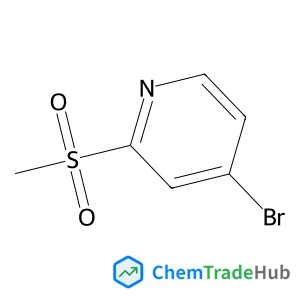


Methyl 2-amino-4-(4-chlorophenyl)-5-pyrimidinecarboxylate
CAS Number:
1133115-56-6
Molecular Formula:
C12H10ClN3O2
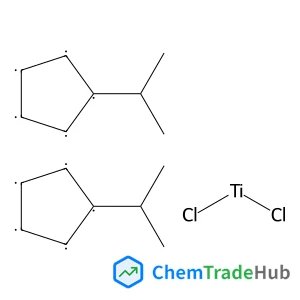
BIS(I-PROPYLCYCLOPENTADIENYL)TITANIUM DICHLORIDE
CAS Number:
12130-65-3
Molecular Formula:
C16H22Cl2Ti
Recommended Suppliers






Disclaimer
This page provides academic journal information for reference and research purposes only. We are not affiliated with any journal publishers and do not handle publication submissions. For publication-related inquiries, please contact the respective journal publishers directly.
If you notice any inaccuracies in the information displayed, please contact us at support@chemtradehub.com. We will promptly review and address your concerns.