












![5-Chloropyrrolo[2,1-f][1,2,4]triazin-4(3H)-one structure](https://static.chemtradehub.com/structs/888/888720-60-3-4f7c.webp "5-Chloropyrrolo[2,1-f][1,2,4]triazin-4(3H)-one structure")
Conformational steering in dicarboxy acids: the native structure of succinic acid‡
Literature Information
Publication Date
2015-03-13
DOI
10.1039/C4CP05905K
Impact Factor
3.676
Authors
Michaela K. Jahn, Estibaliz Méndez, K. P. Rajappan Nair, Peter D. Godfrey, Don McNaughton, Patricia Écija, Francisco J. Basterretxea, Emilio J. Cocinero, Jens-Uwe Grabow
View Original
Abstract
Succinic acid, a dicarboxylic acid molecule, has been investigated spectroscopically with computational support to elucidate the complex aspects of its conformational composition. Due to the torsional freedom of the carbon backbone and hydroxy groups, a large number of potentially plausible conformers can be generated with an indication that the gauche conformer is favored over the trans form. The microwave and millimeter wave spectra have been analyzed and accurate spectroscopic constants have been derived that correlate best with those of the lowest energy gauche conformer. For an unambiguous conformational identification measurements were extended to the monosubstituted isotopologues, precisely determining the structural properties. Besides bond distances and angles, particularly the dihedral angle has been determined to be 67.76(11)°, confirming the anomalous tendency of the methylene units to favor gauche conformers when a short aliphatic segment is placed between two carbonyl groups.
Related Literature
Ultrafast dynamics of a new class of highly fluorescent boron difluoride dyes
L. Wang, I.-S. Tamgho, L. A. Crandall, J. J. Rack, C. J. Ziegler
2014-12-04
Communication
DOI: 10.1039/C4CP04737K
Effects of repulsive interaction on the electric double layer of an imidazolium-based ionic liquid by molecular dynamics simulation
Wenyang Jin, Xiaohong Liu, Yining Han, Shu Li, Tianying Yan
2014-11-25
Paper
DOI: 10.1039/C4CP04853A
The electronic structure of metal–molecule hybrids in charged interfaces: surface-enhanced Raman selection rules derived from plasmon-like resonances
J. Román-Pérez, I. López-Tocón, J. L. Castro, J. F. Arenas, J. Soto, J. C. Otero
2014-10-30
Communication
DOI: 10.1039/C4CP04724A
Alginate electrodeposition onto three-dimensional porous Co–Ni films as drug delivery platforms
J. García-Torres, C. Gispert, E. Gómez, E. Vallés
2014-11-17
Paper
DOI: 10.1039/C4CP04389H
The local environment of the molecules in water–DMSO mixtures, as seen from computer simulations and Voronoi polyhedra analysis
Abdenacer Idrissi, B. Marekha, M. Kiselev
2014-12-11
Paper
DOI: 10.1039/C4CP04839C
Solution-phase hierarchical self-organization of ultralong Se nanowires into diverse macroarchitectures and their enhanced field emission
Xueli Guo, Lihui Fang, Yiwei Tan
2014-12-04
Paper
DOI: 10.1039/C4CP04051A
Carrier dynamics of a visible-light-responsive Ta3N5 photoanode for water oxidation
Ahmed Ziani, Ela Nurlaela, Dattatray S. Dhawale, Diego Alves Silva, Erkki Alarousu, Omar F. Mohammed, Kazuhiro Takanabe
2014-12-05
Paper
DOI: 10.1039/C4CP05616G
Nucleation and growth kinetics of zirconium-oxo-alkoxy nanoparticles
Sana Labidi, Zixian Jia, Mounir Ben Amar, Khay Chhor, Andrei Kanaev
2014-12-01
Paper
DOI: 10.1039/C4CP05149A
Predicting the voltage dependence of interfacial electrochemical processes at lithium-intercalated graphite edge planes
2014-11-21
Paper
DOI: 10.1039/C4CP04494K
Carbon nanotubes oxidized by a green method as efficient metal-free catalysts for nitroarene reduction
Shuchang Wu, Guodong Wen, Robert Schlögl, Dang Sheng Su
2014-11-26
Communication
DOI: 10.1039/C4CP04658G
You might also like
Compound Q&A
What are the main uses of (5-Sulfamoyl-3-pyridinyl)boronic acid (CAS: 951233-61-7)?
(5-Sulfamoyl-3-pyridinyl)boronic acid is primarily used in chemical synthesis, p...
951233-61-7(5-Sulfamoyl-3-pyrid...
Compound Q&A
How is Benzyl 2-methyl-2-(methylsulfonyl)-4-pentenoate (CAS: 1942858-50-5) typically synthesized?
Benzyl 2-methyl-2-(methylsulfonyl)-4-pentenoate is typically synthesized via est...
1942858-50-5Benzyl 2-methyl-2-(m...
Compound Q&A
What precautions should be taken when handling 8-Fluoroquinolin-6-ol (CAS: 209353-22-0)?
When handling 8-Fluoroquinolin-6-ol (CAS: 209353-22-0), it is important to use p...
209353-22-08-Fluoroquinolin-6-o...
Compound Q&A
What are the physical and chemical properties of 1,3-Dibromo-5-(2-methyl-2-propanyl)benzene (CAS: 129316-09-2)?
1,3-Dibromo-5-(2-methyl-2-propanyl)benzene (CAS: 129316-09-2) is a crystalline c...
129316-09-21,3-Dibromo-5-(2-met...
Compound Q&A
What industries use Ethyl 7-chloro-4-oxo-1-(1,3-thiazol-2-yl)-1,4-dihydro-1,8-naphthyridine-3-carboxylate (CAS: 174726-87-5)?
Ethyl 7-chloro-4-oxo-1-(1,3-thiazol-2-yl)-1,4-dihydro-1,8-naphthyridine-3-carbox...
174726-87-5Ethyl 7-chloro-4-oxo...
Compound Q&A
What precautions should be taken when handling Delta-7-Avenasterol (CAS: 23290-26-8)?
When handling Delta-7-Avenasterol (CAS: 23290-26-8), it is important to wear app...
23290-26-8Delta-7-Avenasterol
Compound Q&A
What precautions should be taken when handling N-({(5R)-3-[3-Fluoro-4-(4-morpholinyl)phenyl]-2-oxo-1,3-oxazolidin-5-yl}methyl)acetamide (CAS: 872992-20-6)?
Proper handling involves the use of personal protective equipment such as gloves...
872992-20-6N-({(5R)-3-[3-Fluoro...
Compound Q&A
What precautions should be taken when handling 2-Methyl-2-proanyl 4-[(2-aminophenyl)amino]-1-piperidinecarboxylate (CAS: 79099-00-6)?
When handling 2-Methyl-2-proanyl 4-[(2-aminophenyl)amino]-1-piperidinecarboxylat...
79099-00-62-Methyl-2-propanyl ...
Compound Q&A
What is N-Methyl-4-chlorobenzylamine hydrochloride (CAS: 65542-24-7)?
N-Methyl-4-chlorobenzylamine hydrochloride (CAS: 65542-24-7) is a organic compou...
65542-24-7N-Methyl-4-chloroben...
Compound Q&A
Is [2-(Dodecyloxy)ethoxy]acetic acid (CAS: 27306-90-7) safe?
[2-(Dodecyloxy)ethoxy]acetic acid (CAS: 27306-90-7) is generally considered safe...
27306-90-7[2-(Dodecyloxy)ethox...
Source Journal
Physical Chemistry Chemical Physics

CiteScore:
5.5
Self-citation Rate:
10.3%
Articles per Year:
3036
Physical Chemistry Chemical Physics (PCCP) is an international journal co-owned by 19 physical chemistry and physics societies from around the world. This journal publishes original, cutting-edge research in physical chemistry, chemical physics and biophysical chemistry. To be suitable for publication in PCCP, articles must include significant innovation and/or insight into physical chemistry; this is the most important criterion that reviewers and Editors will judge against when evaluating submissions. The journal has a broad scope and welcomes contributions spanning experiment, theory, computation and data science. Topical coverage includes spectroscopy, dynamics, kinetics, statistical mechanics, thermodynamics, electrochemistry, catalysis, surface science, quantum mechanics, quantum computing and machine learning. Interdisciplinary research areas such as polymers and soft matter, materials, nanoscience, energy, surfaces/interfaces, and biophysical chemistry are welcomed if they demonstrate significant innovation and/or insight into physical chemistry. Joined experimental/theoretical studies are particularly appreciated when complementary and based on up-to-date approaches.
Recommended Compounds
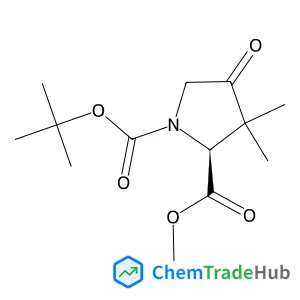
2-Methyl 1-(2-methyl-2-propanyl) (2S)-3,3-dimethyl-4-oxo-1,2-pyrrolidinedicarboxylate
CAS Number:
478698-30-5
Molecular Formula:
C13H21NO5
![2-(5-Bromo-1H-pyrrolo[2,3-B]pyridin-3-YL)acetic acid structure](https://static.chemtradehub.com/structs/106/1060795-03-0-0589.webp "2-(5-Bromo-1H-pyrrolo[2,3-B]pyridin-3-YL)acetic acid structure")
2-(5-Bromo-1H-pyrrolo[2,3-B]pyridin-3-YL)acetic acid
CAS Number:
1060795-03-0
Molecular Formula:
C9H7BrN2O2
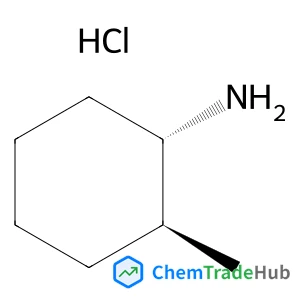
(1R,2R)-2-Methylcyclohexanamine hydrochloride (1:1)
CAS Number:
39558-31-1
Molecular Formula:
C7H16ClN
Recommended Suppliers





Disclaimer
This page provides academic journal information for reference and research purposes only. We are not affiliated with any journal publishers and do not handle publication submissions. For publication-related inquiries, please contact the respective journal publishers directly.
If you notice any inaccuracies in the information displayed, please contact us at support@chemtradehub.com. We will promptly review and address your concerns.