












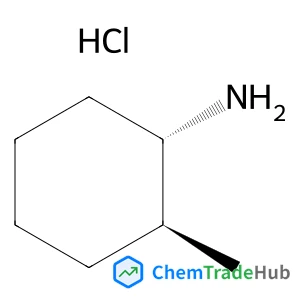
(1R,2R)-2-Methylcyclohexanamine hydrochloride (1:1)
CAS Number:
39558-31-1
Molecular Formula:
C7H16ClN
Shuchang Wu, Guodong Wen, Robert Schlögl, Dang Sheng Su
Hydrogen peroxide (H2O2) functionalized carbon nanotubes exhibited better catalytic performance than their nitric acid oxidized counterparts in the reduction of nitrobenzene. One important reason may be attributed to the notably less negative oxygenated groups on the surface of the former one.
Jianhai Zhou, Xiang Zhu, Jun Hu, Honglai Liu, Ying Hu, Jianwen Jiang
DOI: 10.1039/C3CP55498H
DOI: 10.1039/C4CP00353E
Seong-Taek Yun
DOI: 10.1039/C4CP02025A
Daniel Poetzsch, Rotraut Merkle, Joachim Maier
DOI: 10.1039/C4CP00459K
Tânia Lopes, Luísa Andrade, Florian Le Formal, Michael Gratzel, Kevin Sivula, Adélio Mendes
DOI: 10.1039/C3CP55473B
Roland Schmied, Johannes E. Fröch, Angelina Orthacker, Josephine Hobisch, Gregor Trimmel
DOI: 10.1039/C3CP55308F
Marcus Rohnke, Bert M. Weckhuysen
DOI: 10.1039/C3CP54337D
Sebastian Albert-Seifried, Sven Hüttner, Catherine Kanimozhi, Satish Patil, Richard H. Friend
DOI: 10.1039/C4CP00485J
(5-Sulfamoyl-3-pyridinyl)boronic acid is primarily used in chemical synthesis, p...
Benzyl 2-methyl-2-(methylsulfonyl)-4-pentenoate is typically synthesized via est...
When handling 8-Fluoroquinolin-6-ol (CAS: 209353-22-0), it is important to use p...
1,3-Dibromo-5-(2-methyl-2-propanyl)benzene (CAS: 129316-09-2) is a crystalline c...
Ethyl 7-chloro-4-oxo-1-(1,3-thiazol-2-yl)-1,4-dihydro-1,8-naphthyridine-3-carbox...
When handling Delta-7-Avenasterol (CAS: 23290-26-8), it is important to wear app...
Proper handling involves the use of personal protective equipment such as gloves...
When handling 2-Methyl-2-proanyl 4-[(2-aminophenyl)amino]-1-piperidinecarboxylat...
N-Methyl-4-chlorobenzylamine hydrochloride (CAS: 65542-24-7) is a organic compou...
[2-(Dodecyloxy)ethoxy]acetic acid (CAS: 27306-90-7) is generally considered safe...

Physical Chemistry Chemical Physics (PCCP) is an international journal co-owned by 19 physical chemistry and physics societies from around the world. This journal publishes original, cutting-edge research in physical chemistry, chemical physics and biophysical chemistry. To be suitable for publication in PCCP, articles must include significant innovation and/or insight into physical chemistry; this is the most important criterion that reviewers and Editors will judge against when evaluating submissions. The journal has a broad scope and welcomes contributions spanning experiment, theory, computation and data science. Topical coverage includes spectroscopy, dynamics, kinetics, statistical mechanics, thermodynamics, electrochemistry, catalysis, surface science, quantum mechanics, quantum computing and machine learning. Interdisciplinary research areas such as polymers and soft matter, materials, nanoscience, energy, surfaces/interfaces, and biophysical chemistry are welcomed if they demonstrate significant innovation and/or insight into physical chemistry. Joined experimental/theoretical studies are particularly appreciated when complementary and based on up-to-date approaches.
![2-Methyl-2-propanyl 4-oxo-3,9-diazabicyclo[4.2.1]nonane-9-carboxylate structure](https://static.chemtradehub.com/structs/131/1312456-05-5-9a15.webp "2-Methyl-2-propanyl 4-oxo-3,9-diazabicyclo[4.2.1]nonane-9-carboxylate structure")
![(4-Methyl-1H-benzo[d]imidazol-2-yl)methanamine structure](https://static.chemtradehub.com/structs/933/933756-31-1-7b0b.webp "(4-Methyl-1H-benzo[d]imidazol-2-yl)methanamine structure")






