













A spectroscopic study of the cis/trans-isomers of penta-2,4-dienoic acid attached to gold nanoclusters
Literature Information
Publication Date
2015-01-09
DOI
10.1039/C4CP05280C
Impact Factor
3.676
Authors
Julien Guthmuller, Philipp Marquetand
View Original
Abstract
In this theoretical work, we present a spectroscopic analysis of the cis/trans-isomers of a molecular switch, penta-2,4-dienoic acid, attached to gold clusters of different size (1, 2 and 20 gold atoms). We have simulated 4 different spectroscopic techniques: Infrared spectroscopy, normal Raman scattering, absorption spectra and resonance Raman scattering. We discuss how the position and the conformation of the molecule determine the electronic structure and hence, the spectra. The calculations have been performed using density functional theory for the properties of the ground state and time-dependent density functional theory for the excited-state properties. Special emphasis is put on the resonance Raman spectra for the study of the isomers. In the present case, resonance Raman scattering is best suited to discriminate between the isomers on the gold clusters.
Related Literature
Density functional theoretical (DFT) and surface-enhanced Raman spectroscopic study of guanine and its alkylated derivatives Part 1. DFT calculations on neutral, protonated and deprotonated guanine
Bernd Giese, Don McNaughton
2002-09-11
Paper
DOI: 10.1039/B203829C
Reaction and dissociation mechanism control: the H2 + H2 system
Ernesto Garcia, Antonio Laganà
2002-08-30
Paper
DOI: 10.1039/B205377B
Alternating stacks of neutral and ion-radical hydrocarbons. A feasible path to ferromagnetic materials?
Anela Ivanova, Martin Baumgarten, Stoyan Karabunarliev, Nikolai Tyutyulkov
2002-08-28
Paper
DOI: 10.1039/B204763B
Vibrational predissociation of ArHF: a test of global semiempirical potential energy surfaces
Roman V. Krems, Sture Nordholm
2002-08-23
Paper
DOI: 10.1039/B204480N
Investigations on the stability of thiol stabilized semiconductor nanoparticles
Herwig Döllefeld, Kathrin Hoppe, Joanna Kolny, Kristian Schilling, Horst Weller, Alexander Eychmüller
2002-09-02
Paper
DOI: 10.1039/B202101C
Temperature dependence of isotope fractionation in N2O photolysis
Jan Kaiser, Thomas Röckmann, Carl A. M. Brenninkmeijer
2002-08-02
Paper
DOI: 10.1039/B204837J
DFT study of the rate constants of the reactions CHClmF3−m + Cl = CClmF3−m + HCl (m = 3 − 1)
Chao Yang Wang
2002-08-19
Paper
DOI: 10.1039/B206133N
Analytical derivatives, π bonding and d–s mixing in the ligand field molecular mechanics method
Robert J. Deeth, David L. Foulis
2002-08-12
Paper
DOI: 10.1039/B203815C
Matrixinfrared spectra and ab initio calculations of the acetylene complexes with nitric and nitrous acids
Magdalena Krajewska, Adriana Olbert-Majkut, Zofia Mielke
2002-08-08
Paper
DOI: 10.1039/B203678A
You might also like
Compound Q&A
How should waste containing 2-Ethyl-4-Methyl-1H-Imidazole-5-Carbaldehyde (CAS: 88634-80-4) be handled?
Waste containing 2-Ethyl-4-Methyl-1H-Imidazole-5-Carbaldehyde (CAS: 88634-80-4) ...
88634-80-42-Ethyl-4-Methyl-1H-...
Compound Q&A
What industries use Triethoxy(octyl)silane (CAS: 1385031-14-0)?
Triethoxy(octyl)silane (CAS: 1385031-14-0) is widely used in the pharmaceuticals...
1385031-14-0Triethoxy(octyl)sila...
Compound Q&A
Are there alternatives to 3-iodo-7-nitro-1H-indazole (CAS: 864724-64-1) in synthesis?
Several alternatives to 3-iodo-7-nitro-1H-indazole (CAS: 864724-64-1) exist in t...
864724-64-13-iodo-7-nitro-1H-in...
Compound Q&A
Are there alternatives to Benzene, bis[(trimethoxysilyl)ethyl] (CAS: 266317-71-9) in synthesis?
Yes, there are alternatives to Benzene, bis[(trimethoxysilyl)ethyl] (CAS: 266317...
266317-71-9Benzene, bis[(trimet...
Compound Q&A
Is Isothiazole-3-carbonitrile (CAS: 1452-17-1) safe?
Isothiazole-3-carbonitrile (CAS: 1452-17-1) is generally considered safe when us...
1452-17-1Isothiazole-3-carbon...
Compound Q&A
Is (3-Chlorophenyl)methanol (CAS: 873-63-2) safe?
(3-Chlorophenyl)methanol (CAS: 873-63-2) is considered low to moderately toxic. ...
873-63-2(3-Chlorophenyl)meth...
Compound Q&A
How is (2S,3S)-2-Hydroxy-3-({[(2-methyl-2-propanyl)oxy]carbonyl}amino)-3-(2-naphthyl)propanoic acid (CAS: 959583-98-3) typically synthesized?
(2S,3S)-2-Hydroxy-3-({[(2-methyl-2-propanyl)oxy]carbonyl}amino)-3-(2-naphthyl)pr...
959583-98-3(2S,3S)-2-Hydroxy-3-...
Compound Q&A
What precautions should be taken when handling Methyl 2-(bromomethyl)-5-methoxybenzoate (CAS: 788081-99-2)?
Proper handling of methyl 2-(bromomethyl)-5-methoxybenzoate requires the use of ...
788081-99-2Methyl 2-(bromomethy...
Compound Q&A
What is 6,8-Dibromoimidazo[1,2-a]pyridine-2-carboxylic acid (CAS: 904805-36-3)?
6,8-Dibromoimidazo[1,2-a]pyridine-2-carboxylic acid (CAS: 904805-36-3) is an aro...
904805-36-36,8-Dibromoimidazo[1...
Compound Q&A
Is 3-Amino-5-bromo-2-pyridinecarbonitrile (CAS: 573675-27-1) safe?
3-Amino-5-bromo-2-pyridinecarbonitrile is considered safe when handled under pro...
573675-27-13-Amino-5-bromo-2-py...
Source Journal
Physical Chemistry Chemical Physics

CiteScore:
5.5
Self-citation Rate:
10.3%
Articles per Year:
3036
Physical Chemistry Chemical Physics (PCCP) is an international journal co-owned by 19 physical chemistry and physics societies from around the world. This journal publishes original, cutting-edge research in physical chemistry, chemical physics and biophysical chemistry. To be suitable for publication in PCCP, articles must include significant innovation and/or insight into physical chemistry; this is the most important criterion that reviewers and Editors will judge against when evaluating submissions. The journal has a broad scope and welcomes contributions spanning experiment, theory, computation and data science. Topical coverage includes spectroscopy, dynamics, kinetics, statistical mechanics, thermodynamics, electrochemistry, catalysis, surface science, quantum mechanics, quantum computing and machine learning. Interdisciplinary research areas such as polymers and soft matter, materials, nanoscience, energy, surfaces/interfaces, and biophysical chemistry are welcomed if they demonstrate significant innovation and/or insight into physical chemistry. Joined experimental/theoretical studies are particularly appreciated when complementary and based on up-to-date approaches.
Recommended Compounds
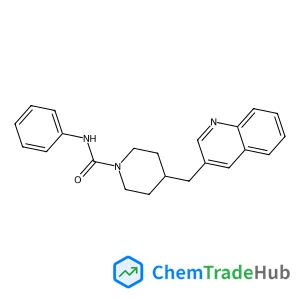
N-phenyl-4-(quinolin-3-ylmethyl)piperidine-1-carboxamide
CAS Number:
959151-50-9
Molecular Formula:
C22H23N3O
methanone structure](https://static.chemtradehub.com/structs/814/81449-01-6-786d.webp "[4-(Hydroxymethyl)phenyl](phenyl)methanone structure")
![4-Nitrophenyl N-{[(2-methyl-2-propanyl)oxy]carbonyl}-L-isoleucinate structure](https://static.chemtradehub.com/structs/169/16948-38-2-c88f.webp "4-Nitrophenyl N-{[(2-methyl-2-propanyl)oxy]carbonyl}-L-isoleucinate structure")
4-Nitrophenyl N-{[(2-methyl-2-propanyl)oxy]carbonyl}-L-isoleucinate
CAS Number:
16948-38-2
Molecular Formula:
C17H24N2O6
Recommended Suppliers






Disclaimer
This page provides academic journal information for reference and research purposes only. We are not affiliated with any journal publishers and do not handle publication submissions. For publication-related inquiries, please contact the respective journal publishers directly.
If you notice any inaccuracies in the information displayed, please contact us at support@chemtradehub.com. We will promptly review and address your concerns.