












An equation to calculate internuclear distances of covalent, ionic and metallic lattices
Literature Information
Publication Date
2014-12-16
DOI
10.1039/C4CP05135A
Impact Factor
3.676
Authors
Peter F. Lang, Barry C. Smith
View Original
Abstract
This paper briefly describes the many different sets of ionic and covalent radii available. A simple model of ionic and covalent bonding is proposed and an equation to calculate internuclear distances of covalent, ionic and metallic lattices is described. Derivation of covalent radii and the use of a proposed model of metallic structure and bonding to derive ionic radii are discussed. A brief summary of the development of the simple equation for calculating internuclear distances of ionic compounds is provided. Values of internuclear distances calculated from the derived radii are compared to observed values and give good agreement, showing strong evidence that ionic and covalent radii are not additive and electronegativity influences bonding and internuclear distances. Ionic radii derived from the proposed model are applied to calculate lattice energies which agree well with literature values/values calculated by the Born Haber cycle. Work functions of transition metals are shown to be simple inverse functions of the derived radii. Internuclear distances of inter-metallic compounds are calculated and compared with observed values to show good agreement. This work shows that the proposed model of metallic structure complements the band theory and expressions introduced in this work can be used to predict ionic and covalent bond lengths (in different environments) that have not yet been determined as well as being a method for resolving bond type.
Related Literature
Low intensity, continuous wave photodoping of ZnO quantum dots – photon energy and particle size effects
Matías E. Aguirre, S. Municoy, M. A. Grela, A. J. Colussi
2017-01-04
Paper
DOI: 10.1039/C6CP06829D
Coarse-grained molecular dynamics study on the self-assembly of Gemini surfactants: the effect of spacer length
Xiaoli Sun
2017-01-09
Paper
DOI: 10.1039/C6CP07690D
Effective pair potential between charged nanoparticles at high volume fractions
Guillaume Bareigts, Christophe Labbez
2017-01-20
Paper
DOI: 10.1039/C6CP08056A
Nonadiabatic Renner–Teller quantum dynamics of OH(X2Π) + H+ reactive collisions
Pablo Gamallo, Sinan Akpinar, Paolo Defazio, Carlo Petrongolo
2017-01-09
Paper
DOI: 10.1039/C6CP07756K
Single-molecule force spectroscopy of fast reversible bonds
Johanna Blass, Marcel Albrecht, Gerhard Wenz, Yan Nan Zang, Roland Bennewitz
2017-01-25
Paper
DOI: 10.1039/C6CP07532K
Electric field tunable half-metallic characteristic at Fe3O4/BaTiO3 interfaces‡
Xueyao Hou, Xiaocha Wang, Guifeng Chen, Wenbo Mi
2017-01-06
Paper
DOI: 10.1039/C6CP07858C
Mechanism and kinetics of the electrocatalytic reaction responsible for the high cost of hydrogen fuel cells
Tao Cheng, William A Goddard, III, Qi An, Hai Xiao, Boris Merinov, Sergey Morozov
2016-12-21
Communication
DOI: 10.1039/C6CP08055C
Charge transport mechanisms in sol–gel grown La0.7Pb0.3MnO3/LaAlO3 manganite films
Eesh Vaghela, M. J. Keshvani, Keval Gadani, Zalak Joshi, Hetal Boricha, K. Asokan, D. Venkateshwarlu, V. Ganesan, N. A. Shah, P. S. Solanki
2017-01-31
Paper
DOI: 10.1039/C6CP07730G
Toward full simulation of the electrochemical oxygen reduction reaction on Pt using first-principles and kinetic calculations
Minoru Otani
2017-01-04
Paper
DOI: 10.1039/C6CP08466D
You might also like
Compound Q&A
What precautions should be taken when handling 4-(2-Furylmethyl)thiomorpholine 1,1-dioxide (CAS: 79206-94-3)?
When handling 4-(2-Furylmethyl)thiomorpholine 1,1-dioxide (CAS: 79206-94-3), it ...
79206-94-34-(2-Furylmethyl)thi...
Compound Q&A
What precautions should be taken when handling 4-Chloro-N-[2-(4-morpholinyl)ethyl]benzamide (CAS: 71320-77-9)?
When handling 4-Chloro-N-[2-(4-morpholinyl)ethyl]benzamide (CAS: 71320-77-9), it...
71320-77-94-Chloro-N-[2-(4-mor...
Compound Q&A
How should waste containing 2-[2-(2-Methoxyethoxy)ethoxy]ethyl 4-methylbenzenesulfonate (CAS: 62921-74-8) be handled?
Waste containing this compound (CAS: 62921-74-8) should be handled according to ...
62921-74-82-[2-(2-Methoxyethox...
Compound Q&A
How should waste containing (S)-Methyl 2-amino-3-cyclohexylpropanoate be handled?
Waste containing (S)-Methyl 2-amino-3-cyclohexylpropanoate should be collected i...
40056-18-6(S)-Methyl 2-amino-3...
Compound Q&A
How is 5-({4-[(2S,4R)-4-Hydroxy-2-methyltetrahydro-2H-pyran-4-yl]-2-thienyl}sulfanyl)-1-methyl-1,3-dihydro-2H-indol-2-one (CAS: 166882-70-8) typically synthesized?
This compound can be synthesized using a multi-step process involving the conjug...
166882-70-85-({4-[(2S,4R)-4-Hyd...
Compound Q&A
Are there alternatives to (2E)-3-(3,4-Dichlorophenyl)acrylic acid (CAS: 7312-27-8) in synthesis?
There are several alternatives to (2E)-3-(3,4-Dichlorophenyl)acrylic acid in syn...
7312-27-8(2E)-3-(3,4-Dichloro...
Compound Q&A
How should Ethyl 6-(2-nitrophenyl)imidazo[2,1-b][1,3]thiazole-3-carboxylate (CAS: 925437-84-9) be stored?
Ethyl 6-(2-nitrophenyl)imidazo[2,1-b][1,3]thiazole-3-carboxylate (CAS: 925437-84...
925437-84-9Ethyl 6-(2-nitrophen...
Compound Q&A
How should waste containing 2-(1,3-Thiazol-2-yl)ethanamine (CAS: 18453-07-1) be handled?
Waste containing 2-(1,3-Thiazol-2-yl)ethanamine (CAS: 18453-07-1) should be coll...
18453-07-12-(1,3-Thiazol-2-yl)...
Compound Q&A
How is Methyl 5-iodo-2-methylbenzoate (CAS: 103440-54-6) typically synthesized?
Methyl 5-iodo-2-methylbenzoate can be synthesized through the iodination of meth...
103440-54-6Methyl 5-iodo-2-meth...
Compound Q&A
How is 5-Chloro[1,2,4]triazolo[1,5-a]pyridine (CAS: 1427399-34-5) typically synthesized?
5-Chloro[1,2,4]triazolo[1,5-a]pyridine is commonly synthesized via the condensat...
1427399-34-55-Chloro[1,2,4]triaz...
Source Journal
Physical Chemistry Chemical Physics

CiteScore:
5.5
Self-citation Rate:
10.3%
Articles per Year:
3036
Physical Chemistry Chemical Physics (PCCP) is an international journal co-owned by 19 physical chemistry and physics societies from around the world. This journal publishes original, cutting-edge research in physical chemistry, chemical physics and biophysical chemistry. To be suitable for publication in PCCP, articles must include significant innovation and/or insight into physical chemistry; this is the most important criterion that reviewers and Editors will judge against when evaluating submissions. The journal has a broad scope and welcomes contributions spanning experiment, theory, computation and data science. Topical coverage includes spectroscopy, dynamics, kinetics, statistical mechanics, thermodynamics, electrochemistry, catalysis, surface science, quantum mechanics, quantum computing and machine learning. Interdisciplinary research areas such as polymers and soft matter, materials, nanoscience, energy, surfaces/interfaces, and biophysical chemistry are welcomed if they demonstrate significant innovation and/or insight into physical chemistry. Joined experimental/theoretical studies are particularly appreciated when complementary and based on up-to-date approaches.
Recommended Compounds
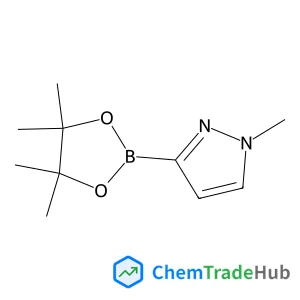
1-Methyl-3-(4,4,5,5-tetramethyl-1,3,2-dioxaborolan-2-yl)-1H-pyrazole
CAS Number:
1020174-04-2
Molecular Formula:
C10H17BN2O2


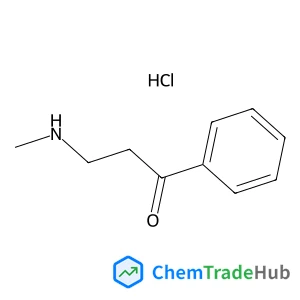
3-(Methylamino)-1-phenyl-1-propanone hydrochloride (1:1)
CAS Number:
2538-50-3
Molecular Formula:
C10H14ClNO
Recommended Suppliers





Disclaimer
This page provides academic journal information for reference and research purposes only. We are not affiliated with any journal publishers and do not handle publication submissions. For publication-related inquiries, please contact the respective journal publishers directly.
If you notice any inaccuracies in the information displayed, please contact us at support@chemtradehub.com. We will promptly review and address your concerns.