












Unusual solvent-dependent photophysical and self-assembly properties of NO2 substituted T-shaped phenazines
Literature Information
Publication Date
2014-12-02
DOI
10.1039/C4CP05090H
Impact Factor
3.676
Authors
Dong-Chan Lee, Lacie V. Brownell, Kyoungmi Jang, Seung Ju Han, Kathleen A. Robins
View Original
Abstract
This paper investigates the importance of substituent placement when designing low-molecular mass π-organogelators. The electron-deficient NO2 substituent was systematically added to novel T-shaped phenazines to examine electronic as well as assembly properties. This T-shaped molecular platform promotes selective electronic tuning, which can be theoretically analyzed by examining the system's frontier molecular orbitals. Electronic properties were characterized by UV-vis spectroscopy and cyclic voltammetry, and comparisons were made based on number and placement of the NO2 group. Computational chemistry (B3LYP/6-31G*) was employed for geometry optimizations, and to generate molecular orbital diagrams for all systems. The most noticeable influence of NO2 position was found for two molecules with four NO2 groups placed at different locations about the molecule (T-34dNT and T-35dNT). A 0.13 eV difference in ELUMO was observed while EHOMO was not significantly impacted by this change only in NO2 placement. Interestingly and unexpectedly, the photophysical properties and solvent-dependent gelation properties were considerably different for T-34dNT and T-35dNT. T-34dNT exhibited a unique fluorescence (FL) solvatochromism, with FL intensity and maxima dependent on solvent polarity. This result is indicative of intramolecular charge transfer. In addition, long tailing at the solid-state absorption of T-34dNT suggests the presence of intermolecular charge transfer. The gelation of T-34dNT produced chromism ranging from red to orange to yellow when the solvents changed from acetonitrile to ethyl acetate to cyclohexane, respectively. T-35dNT gels in these solvents did not exhibit any of the same properties. Xerogel morphology characterizations were carried out using three different solvents for both T-34dNT and T-35dNT. In the case of T-34dNT, striking differences in the morphology were detected by field-emission scanning electron microscopy (FE-SEM). We conclude that numbers of substituents are not the only consideration in effective molecular design for organogelators, but that substituent position plays a critical role in certain fundamental properties of these systems.
Related Literature
Atmospheric aqueous phase radical chemistry of the isoprene oxidation products methacrolein, methyl vinyl ketone, methacrylic acid and acrylic acid – kinetics and product studies
Luisa Schöne, Janine Schindelka, Edyta Szeremeta, Thomas Schaefer, Dirk Hoffmann, Krzysztof J. Rudzinski, Rafal Szmigielski, Hartmut Herrmann
2014-02-04
Paper
DOI: 10.1039/C3CP54859G
Stability of Pt near surface alloys under electrochemical conditions: a model study
Xiaoming Zhang, Shansheng Yu, Weitao Zheng, Ping Liu
2014-06-27
Paper
DOI: 10.1039/C4CP01942C
Shear induced crystallization in different polymorphic forms of PVDF induced by surface functionalized MWNTs in PVDF/PMMA blends
Maya Sharma, Giridhar Madras, Suryasarathi Bose
2014-06-25
Paper
DOI: 10.1039/C4CP01930J
Pushing the limits in accurate vibrational structure calculations: anharmonic frequencies of lithium fluoride clusters (LiF)n, n = 2–10
Dominik Oschetzki, Guntram Rauhut
2014-06-26
Paper
DOI: 10.1039/C4CP02264E
A computational study on the complexation of Np(v) with N,N,N′,N′-tetramethyl-3-oxa-glutaramide (TMOGA) and its carboxylate analogs
Xia Yang, Jiali Liao, Ning Liu, Yuanyou Yang, Dongqi Wang
2014-05-28
Paper
DOI: 10.1039/C4CP01381F
Effect of electrolyte bleaching on the stability and performance of dye solar cells
Simone Mastroianni, Imran Asghar, Kati Miettunen, Janne Halme, Alessandro Lanuti, Thomas M. Brown, Peter Lund
2014-02-04
Paper
DOI: 10.1039/C3CP55342F
Structural distortions in molecular-based quantum cellular automata: a minimal model based study
Rafael Gutierrez, Daijiro Nozaki, Alessandro Paolo Bramanti
2014-07-11
Paper
DOI: 10.1039/C4CP02458C
Raman spectroscopy studies of dopant activation and free electron density of In0.53Ga0.47As via sulfur monolayer doping
Kenneth R. Kort, P. Y. Hung, Patrick D. Lysaght, Wei-Yip Loh, Gennadi Bersuker, Sarbajit Banerjee
2014-02-13
Communication
DOI: 10.1039/C4CP00111G
Recent advances in secondary ion mass spectrometry of solid acid catalysts: large zeolite crystals under bombardment
Marcus Rohnke, Bert M. Weckhuysen
2014-01-28
Perspective
DOI: 10.1039/C3CP54337D
You might also like
Compound Q&A
What are the main uses of (5-Sulfamoyl-3-pyridinyl)boronic acid (CAS: 951233-61-7)?
(5-Sulfamoyl-3-pyridinyl)boronic acid is primarily used in chemical synthesis, p...
951233-61-7(5-Sulfamoyl-3-pyrid...
Compound Q&A
How is Benzyl 2-methyl-2-(methylsulfonyl)-4-pentenoate (CAS: 1942858-50-5) typically synthesized?
Benzyl 2-methyl-2-(methylsulfonyl)-4-pentenoate is typically synthesized via est...
1942858-50-5Benzyl 2-methyl-2-(m...
Compound Q&A
What precautions should be taken when handling 8-Fluoroquinolin-6-ol (CAS: 209353-22-0)?
When handling 8-Fluoroquinolin-6-ol (CAS: 209353-22-0), it is important to use p...
209353-22-08-Fluoroquinolin-6-o...
Compound Q&A
What are the physical and chemical properties of 1,3-Dibromo-5-(2-methyl-2-propanyl)benzene (CAS: 129316-09-2)?
1,3-Dibromo-5-(2-methyl-2-propanyl)benzene (CAS: 129316-09-2) is a crystalline c...
129316-09-21,3-Dibromo-5-(2-met...
Compound Q&A
What industries use Ethyl 7-chloro-4-oxo-1-(1,3-thiazol-2-yl)-1,4-dihydro-1,8-naphthyridine-3-carboxylate (CAS: 174726-87-5)?
Ethyl 7-chloro-4-oxo-1-(1,3-thiazol-2-yl)-1,4-dihydro-1,8-naphthyridine-3-carbox...
174726-87-5Ethyl 7-chloro-4-oxo...
Compound Q&A
What precautions should be taken when handling Delta-7-Avenasterol (CAS: 23290-26-8)?
When handling Delta-7-Avenasterol (CAS: 23290-26-8), it is important to wear app...
23290-26-8Delta-7-Avenasterol
Compound Q&A
What precautions should be taken when handling N-({(5R)-3-[3-Fluoro-4-(4-morpholinyl)phenyl]-2-oxo-1,3-oxazolidin-5-yl}methyl)acetamide (CAS: 872992-20-6)?
Proper handling involves the use of personal protective equipment such as gloves...
872992-20-6N-({(5R)-3-[3-Fluoro...
Compound Q&A
What precautions should be taken when handling 2-Methyl-2-proanyl 4-[(2-aminophenyl)amino]-1-piperidinecarboxylate (CAS: 79099-00-6)?
When handling 2-Methyl-2-proanyl 4-[(2-aminophenyl)amino]-1-piperidinecarboxylat...
79099-00-62-Methyl-2-propanyl ...
Compound Q&A
What is N-Methyl-4-chlorobenzylamine hydrochloride (CAS: 65542-24-7)?
N-Methyl-4-chlorobenzylamine hydrochloride (CAS: 65542-24-7) is a organic compou...
65542-24-7N-Methyl-4-chloroben...
Compound Q&A
Is [2-(Dodecyloxy)ethoxy]acetic acid (CAS: 27306-90-7) safe?
[2-(Dodecyloxy)ethoxy]acetic acid (CAS: 27306-90-7) is generally considered safe...
27306-90-7[2-(Dodecyloxy)ethox...
Source Journal
Physical Chemistry Chemical Physics

CiteScore:
5.5
Self-citation Rate:
10.3%
Articles per Year:
3036
Physical Chemistry Chemical Physics (PCCP) is an international journal co-owned by 19 physical chemistry and physics societies from around the world. This journal publishes original, cutting-edge research in physical chemistry, chemical physics and biophysical chemistry. To be suitable for publication in PCCP, articles must include significant innovation and/or insight into physical chemistry; this is the most important criterion that reviewers and Editors will judge against when evaluating submissions. The journal has a broad scope and welcomes contributions spanning experiment, theory, computation and data science. Topical coverage includes spectroscopy, dynamics, kinetics, statistical mechanics, thermodynamics, electrochemistry, catalysis, surface science, quantum mechanics, quantum computing and machine learning. Interdisciplinary research areas such as polymers and soft matter, materials, nanoscience, energy, surfaces/interfaces, and biophysical chemistry are welcomed if they demonstrate significant innovation and/or insight into physical chemistry. Joined experimental/theoretical studies are particularly appreciated when complementary and based on up-to-date approaches.
Recommended Compounds
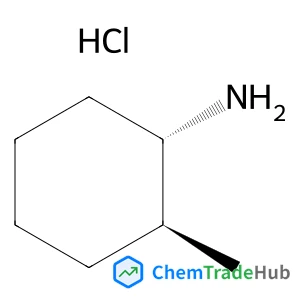
(1R,2R)-2-Methylcyclohexanamine hydrochloride (1:1)
CAS Number:
39558-31-1
Molecular Formula:
C7H16ClN
Recommended Suppliers





Disclaimer
This page provides academic journal information for reference and research purposes only. We are not affiliated with any journal publishers and do not handle publication submissions. For publication-related inquiries, please contact the respective journal publishers directly.
If you notice any inaccuracies in the information displayed, please contact us at support@chemtradehub.com. We will promptly review and address your concerns.