












Investigation of the electromagnetic absorption properties of Ni@TiO2 and Ni@SiO2 composite microspheres with core–shell structure
Literature Information
Publication Date
2014-12-02
DOI
10.1039/C4CP05031B
Impact Factor
3.676
Authors
Biao Zhao, Gang Shao, Bingbing Fan, Wanyu Zhao
View Original
Abstract
In this work, amorphous TiO2 and SiO2-coated Ni composite microspheres were successfully prepared by a two-step method. The phase purity, morphology, and structure of composite microspheres are characterized by X-ray diffraction (XRD), field emission scanning electron microscopy (FESEM), energy dispersive X-ray spectroscopy (EDS), thermogravimetric analysis (TGA), and transmission electron microscopy (TEM). Due to the presence of the insulator SiO2 shell, the core–shell Ni–SiO2 composite microspheres exhibit better antioxidation capability than that of pure Ni microspheres. The core–shell Ni–SiO2 composite microspheres show the best microwave absorption properties than those of pure Ni microspheres and Ni–TiO2 composites. For Ni–SiO2 composite microspheres, an optimal reflection loss (RL) as low as −40.0 dB (99.99% absorption) was observed at 12.6 GHz with an absorber thickness of only 1.5 mm. The effective absorption (below −10 dB, 90% microwave absorption) bandwidth can be adjusted between 3.1 GHz and 14.4 GHz by tuning the absorber thickness in the range of 1.5–4.5 mm. The excellent microwave absorption abilities of Ni–SiO2 composite microspheres are attributed to a higher attenuation constant, Debye relaxation, interface polarization of the core–shell structure and synergistic effects between high dielectric loss and high magnetic loss.
Related Literature
Poly(vinylidene fluoride)–La0.5Sr0.5CoO3−δ composites: the influence of LSCO particle size on the structure and dielectric properties
K. S. Deepa, P. Shaiju, M. T. Sebastian, E. Bhoje Gowd, J. James
2014-07-02
Paper
DOI: 10.1039/C4CP01924E
Mimicking anesthetic–receptor interactions in jets: the propofol–isopropanol cluster
Iker León, Imanol Usabiaga, Judith Millán, Emilio J. Cocinero, Alberto Lesarri, José A. Fernández
2014-06-24
Paper
DOI: 10.1039/C4CP01702A
Effect of electrolyte bleaching on the stability and performance of dye solar cells
Simone Mastroianni, Imran Asghar, Kati Miettunen, Janne Halme, Alessandro Lanuti, Thomas M. Brown, Peter Lund
2014-02-04
Paper
DOI: 10.1039/C3CP55342F
The effects of polydimethylsiloxane on transparent and hydrophobic waterborne polyurethane coatings containing polydimethylsiloxane
Zhaofeng Wu, Hua Wang, Xingyou Tian, Ping Cui, Xin Ding, Xianzhu Ye
2014-01-28
Paper
DOI: 10.1039/C3CP54429J
Electron induced single strand break and cyclization: a DFT study on the radiosensitization mechanism of the nucleotide of 8-bromoguanine
Lidia Chomicz, Al'ona Furmanchuk, Jerzy Leszczynski, Janusz Rak
2014-02-06
Paper
DOI: 10.1039/C3CP55411B
The single GUV method for revealing the functions of antimicrobial, pore-forming toxin, and cell-penetrating peptides or proteins
Md. Zahidul Islam, Jahangir Md. Alam, Yukihiro Tamba, Mohammad Abu Sayem Karal
2014-06-11
Perspective
DOI: 10.1039/C4CP00717D
Boron doped defective graphene as a potential anode material for Li-ion batteries
Rahul P. Hardikar, Deya Das, Sang Soo Han, Kwang-Ryeol Lee, Abhishek K. Singh
2014-06-27
Paper
DOI: 10.1039/C4CP01412J
An intriguing pH-triggered FRET-based biosensor emission of a pyrazoline–doxorubicin couple and its application in living cells
Sayaree Dhar, Subhash Chandra Bhattacharya
2014-01-06
Communication
DOI: 10.1039/C3CP54527J
Magnetic edge-states in nanographene, HNO3-doped nanographene and its residue compounds of nanographene-based nanoporous carbon
Si-Jia Hao, V. L. Joseph Joly, Satoshi Kaneko, Jun-ichi Takashiro, Kazuyuki Takai, Hitoshi Hayashi, Toshiaki Enoki, Manabu Kiguchi
2014-02-07
Paper
DOI: 10.1039/C4CP00199K
Pushing the limits in accurate vibrational structure calculations: anharmonic frequencies of lithium fluoride clusters (LiF)n, n = 2–10
Dominik Oschetzki, Guntram Rauhut
2014-06-26
Paper
DOI: 10.1039/C4CP02264E
You might also like
Compound Q&A
What are the main uses of (5-Sulfamoyl-3-pyridinyl)boronic acid (CAS: 951233-61-7)?
(5-Sulfamoyl-3-pyridinyl)boronic acid is primarily used in chemical synthesis, p...
951233-61-7(5-Sulfamoyl-3-pyrid...
Compound Q&A
How is Benzyl 2-methyl-2-(methylsulfonyl)-4-pentenoate (CAS: 1942858-50-5) typically synthesized?
Benzyl 2-methyl-2-(methylsulfonyl)-4-pentenoate is typically synthesized via est...
1942858-50-5Benzyl 2-methyl-2-(m...
Compound Q&A
What precautions should be taken when handling 8-Fluoroquinolin-6-ol (CAS: 209353-22-0)?
When handling 8-Fluoroquinolin-6-ol (CAS: 209353-22-0), it is important to use p...
209353-22-08-Fluoroquinolin-6-o...
Compound Q&A
What are the physical and chemical properties of 1,3-Dibromo-5-(2-methyl-2-propanyl)benzene (CAS: 129316-09-2)?
1,3-Dibromo-5-(2-methyl-2-propanyl)benzene (CAS: 129316-09-2) is a crystalline c...
129316-09-21,3-Dibromo-5-(2-met...
Compound Q&A
What industries use Ethyl 7-chloro-4-oxo-1-(1,3-thiazol-2-yl)-1,4-dihydro-1,8-naphthyridine-3-carboxylate (CAS: 174726-87-5)?
Ethyl 7-chloro-4-oxo-1-(1,3-thiazol-2-yl)-1,4-dihydro-1,8-naphthyridine-3-carbox...
174726-87-5Ethyl 7-chloro-4-oxo...
Compound Q&A
What precautions should be taken when handling Delta-7-Avenasterol (CAS: 23290-26-8)?
When handling Delta-7-Avenasterol (CAS: 23290-26-8), it is important to wear app...
23290-26-8Delta-7-Avenasterol
Compound Q&A
What precautions should be taken when handling N-({(5R)-3-[3-Fluoro-4-(4-morpholinyl)phenyl]-2-oxo-1,3-oxazolidin-5-yl}methyl)acetamide (CAS: 872992-20-6)?
Proper handling involves the use of personal protective equipment such as gloves...
872992-20-6N-({(5R)-3-[3-Fluoro...
Compound Q&A
What precautions should be taken when handling 2-Methyl-2-proanyl 4-[(2-aminophenyl)amino]-1-piperidinecarboxylate (CAS: 79099-00-6)?
When handling 2-Methyl-2-proanyl 4-[(2-aminophenyl)amino]-1-piperidinecarboxylat...
79099-00-62-Methyl-2-propanyl ...
Compound Q&A
What is N-Methyl-4-chlorobenzylamine hydrochloride (CAS: 65542-24-7)?
N-Methyl-4-chlorobenzylamine hydrochloride (CAS: 65542-24-7) is a organic compou...
65542-24-7N-Methyl-4-chloroben...
Compound Q&A
Is [2-(Dodecyloxy)ethoxy]acetic acid (CAS: 27306-90-7) safe?
[2-(Dodecyloxy)ethoxy]acetic acid (CAS: 27306-90-7) is generally considered safe...
27306-90-7[2-(Dodecyloxy)ethox...
Source Journal
Physical Chemistry Chemical Physics

CiteScore:
5.5
Self-citation Rate:
10.3%
Articles per Year:
3036
Physical Chemistry Chemical Physics (PCCP) is an international journal co-owned by 19 physical chemistry and physics societies from around the world. This journal publishes original, cutting-edge research in physical chemistry, chemical physics and biophysical chemistry. To be suitable for publication in PCCP, articles must include significant innovation and/or insight into physical chemistry; this is the most important criterion that reviewers and Editors will judge against when evaluating submissions. The journal has a broad scope and welcomes contributions spanning experiment, theory, computation and data science. Topical coverage includes spectroscopy, dynamics, kinetics, statistical mechanics, thermodynamics, electrochemistry, catalysis, surface science, quantum mechanics, quantum computing and machine learning. Interdisciplinary research areas such as polymers and soft matter, materials, nanoscience, energy, surfaces/interfaces, and biophysical chemistry are welcomed if they demonstrate significant innovation and/or insight into physical chemistry. Joined experimental/theoretical studies are particularly appreciated when complementary and based on up-to-date approaches.
Recommended Compounds

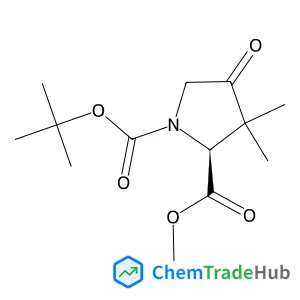
2-Methyl 1-(2-methyl-2-propanyl) (2S)-3,3-dimethyl-4-oxo-1,2-pyrrolidinedicarboxylate
CAS Number:
478698-30-5
Molecular Formula:
C13H21NO5
![(4-Methyl-1H-benzo[d]imidazol-2-yl)methanamine structure](https://static.chemtradehub.com/structs/933/933756-31-1-7b0b.webp "(4-Methyl-1H-benzo[d]imidazol-2-yl)methanamine structure")
Recommended Suppliers






Disclaimer
This page provides academic journal information for reference and research purposes only. We are not affiliated with any journal publishers and do not handle publication submissions. For publication-related inquiries, please contact the respective journal publishers directly.
If you notice any inaccuracies in the information displayed, please contact us at support@chemtradehub.com. We will promptly review and address your concerns.