












Self-assembly polymorphism of 2,7-bis-nonyloxy-9-fluorenone: solvent induced the diversity of intermolecular dipole–dipole interactions
Literature Information
Publication Date
2014-12-09
DOI
10.1039/C4CP04773G
Impact Factor
3.676
Authors
Lihua Cui, Xinrui Miao, Li Xu, Yi Hu, Wenli Deng
View Original
Abstract
In this present work, a scanning tunneling microscope (STM) operated under ambient conditions was utilized to probe the self-assembly behavior of 2,7-bis-nonyloxy-9-fluorenone (F–OC9) at the liquid–solid (l/s) interface. On the highly oriented pyrolytic graphite (HOPG) surface, two-dimensional (2D) polymorphism with diversity of intermolecular dipole interactions induced by solvent was found. Solvents ranged from hydrophilic solvating properties with high polarity, such as viscous alkylated acids, to nonpolar alkylated aromatics and alkanes. 1-Octanol and dichloromethane were used to detect the assembly of F–OC9 at the gas–solid (g/s) interface. The opto-electronic properties of F–OC9 were determined by UV-vis and fluorescence spectroscopy in solution. Our results showed that there were tremendous solvent-dependent self-assemblies in 2D ordering for the surface-confined target molecules. When a homologous series of alkanoic acids ranging from heptanoic to nonanoic acid were employed as solvents, the self-assembled monolayer evolved from low-density coadsorbed linear lamellae to a semi-circle-like pattern at relatively high concentrations, which was proven to be the thermodynamic state as it was the sole phase observed at the g/s interface after the evaporation of solvent. Moreover, by increasing the chain length of the alkylated acids, the weight of the carboxylic group, also being the group responsible for the dielectric properties, diminished from heptanoic to nonanoic acid, which could make the easier/earlier appearance of a linear coadsorption effect. However, this was not the case for nonpolar 1-phenyloctane and n-tetradecane: no concentration effect was detected. It showed a strong tendency to aggregate to generate coexistence of separate domains of different phases due to the fast nucleation sites. Furthermore, thermodynamic calculations indicated that the stable structural coexistence of the fluorenone derivative was attributed to synergistic intermolecular dipole–dipole and van der Waals (vdWs) forces at l/s interface. It is believed that the results are of significance to the fields of solvent induced polymorphism assembly and surface science.
Related Literature
Modeling the abnormally slow infiltration rate in mesoporous films
Claudio L. A. Berli, Magalí Mercuri, Martín G. Bellino
2016-12-12
Communication
DOI: 10.1039/C6CP06602J
Collective proton transfer in ordinary ice: local environments, temperature dependence and deuteration effects
Christof Drechsel-Grau, Dominik Marx
2016-11-07
Perspective
DOI: 10.1039/C6CP05679B
Interpolated energy densities, correlation indicators and lower bounds from approximations to the strong coupling limit of DFT
Stefan Vuckovic, Tom J. P. Irons, Lucas O. Wagner, Andrew M. Teale, Paola Gori-Giorgi
2017-02-06
Paper
DOI: 10.1039/C6CP08704C
A cationic naphthyl derivative defies the non-equilibrated excited rotamers principle
A. Cesaretti, B. Carlotti, F. Elisei, C. G. Fortuna, G. Consiglio, A. Spalletti
2017-01-16
Paper
DOI: 10.1039/C6CP08311K
Probing the degradation and homogeneity of embedded perovskite semiconducting layers in photovoltaic devices by Raman spectroscopy
K. E. A. Hooper, H. K. H. Lee, M. J. Newman, S. Meroni, J. Baker, T. M. Watson, W. C. Tsoi
2017-02-02
Paper
DOI: 10.1039/C6CP05123E
Hydration of the simplest α-keto acid: a rotational spectroscopic and ab initio study of the pyruvic acid–water complex
Elijah G. Schnitzler, Nathan A. Seifert, Supriya Ghosh, Javix Thomas, Yunjie Xu, Wolfgang Jäger
2017-01-17
Paper
DOI: 10.1039/C6CP08741H
Molecular interactions of organic molecules at the air/water interface investigated by sum frequency generation vibrational spectroscopy
2017-01-05
Paper
DOI: 10.1039/C6CP07827C
Temperature-dependent ESR and computational studies on antiferromagnetic electron transfer in the yeast NADH dehydrogenase Ndi1
Kaiqi Wu, Wenfei Li, Lu Yu, Wei Tong, Yue Feng, Shenglong Ling, Longhua Zhang, Xiao Zheng, Maojun Yang
2017-01-09
Paper
DOI: 10.1039/C6CP08107J
Molecular dynamics simulations of the effect of waviness and agglomeration of CNTs on interface strength of thermoset nanocomposites
A. R. Alian, S. A. Meguid
2017-01-13
Paper
DOI: 10.1039/C6CP07464B
You might also like
Compound Q&A
What precautions should be taken when handling 4-(2-Furylmethyl)thiomorpholine 1,1-dioxide (CAS: 79206-94-3)?
When handling 4-(2-Furylmethyl)thiomorpholine 1,1-dioxide (CAS: 79206-94-3), it ...
79206-94-34-(2-Furylmethyl)thi...
Compound Q&A
What precautions should be taken when handling 4-Chloro-N-[2-(4-morpholinyl)ethyl]benzamide (CAS: 71320-77-9)?
When handling 4-Chloro-N-[2-(4-morpholinyl)ethyl]benzamide (CAS: 71320-77-9), it...
71320-77-94-Chloro-N-[2-(4-mor...
Compound Q&A
How should waste containing 2-[2-(2-Methoxyethoxy)ethoxy]ethyl 4-methylbenzenesulfonate (CAS: 62921-74-8) be handled?
Waste containing this compound (CAS: 62921-74-8) should be handled according to ...
62921-74-82-[2-(2-Methoxyethox...
Compound Q&A
How should waste containing (S)-Methyl 2-amino-3-cyclohexylpropanoate be handled?
Waste containing (S)-Methyl 2-amino-3-cyclohexylpropanoate should be collected i...
40056-18-6(S)-Methyl 2-amino-3...
Compound Q&A
How is 5-({4-[(2S,4R)-4-Hydroxy-2-methyltetrahydro-2H-pyran-4-yl]-2-thienyl}sulfanyl)-1-methyl-1,3-dihydro-2H-indol-2-one (CAS: 166882-70-8) typically synthesized?
This compound can be synthesized using a multi-step process involving the conjug...
166882-70-85-({4-[(2S,4R)-4-Hyd...
Compound Q&A
Are there alternatives to (2E)-3-(3,4-Dichlorophenyl)acrylic acid (CAS: 7312-27-8) in synthesis?
There are several alternatives to (2E)-3-(3,4-Dichlorophenyl)acrylic acid in syn...
7312-27-8(2E)-3-(3,4-Dichloro...
Compound Q&A
How should Ethyl 6-(2-nitrophenyl)imidazo[2,1-b][1,3]thiazole-3-carboxylate (CAS: 925437-84-9) be stored?
Ethyl 6-(2-nitrophenyl)imidazo[2,1-b][1,3]thiazole-3-carboxylate (CAS: 925437-84...
925437-84-9Ethyl 6-(2-nitrophen...
Compound Q&A
How should waste containing 2-(1,3-Thiazol-2-yl)ethanamine (CAS: 18453-07-1) be handled?
Waste containing 2-(1,3-Thiazol-2-yl)ethanamine (CAS: 18453-07-1) should be coll...
18453-07-12-(1,3-Thiazol-2-yl)...
Compound Q&A
How is Methyl 5-iodo-2-methylbenzoate (CAS: 103440-54-6) typically synthesized?
Methyl 5-iodo-2-methylbenzoate can be synthesized through the iodination of meth...
103440-54-6Methyl 5-iodo-2-meth...
Compound Q&A
How is 5-Chloro[1,2,4]triazolo[1,5-a]pyridine (CAS: 1427399-34-5) typically synthesized?
5-Chloro[1,2,4]triazolo[1,5-a]pyridine is commonly synthesized via the condensat...
1427399-34-55-Chloro[1,2,4]triaz...
Source Journal
Physical Chemistry Chemical Physics

CiteScore:
5.5
Self-citation Rate:
10.3%
Articles per Year:
3036
Physical Chemistry Chemical Physics (PCCP) is an international journal co-owned by 19 physical chemistry and physics societies from around the world. This journal publishes original, cutting-edge research in physical chemistry, chemical physics and biophysical chemistry. To be suitable for publication in PCCP, articles must include significant innovation and/or insight into physical chemistry; this is the most important criterion that reviewers and Editors will judge against when evaluating submissions. The journal has a broad scope and welcomes contributions spanning experiment, theory, computation and data science. Topical coverage includes spectroscopy, dynamics, kinetics, statistical mechanics, thermodynamics, electrochemistry, catalysis, surface science, quantum mechanics, quantum computing and machine learning. Interdisciplinary research areas such as polymers and soft matter, materials, nanoscience, energy, surfaces/interfaces, and biophysical chemistry are welcomed if they demonstrate significant innovation and/or insight into physical chemistry. Joined experimental/theoretical studies are particularly appreciated when complementary and based on up-to-date approaches.
Recommended Compounds
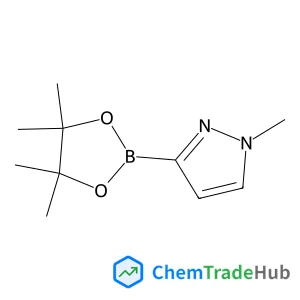
1-Methyl-3-(4,4,5,5-tetramethyl-1,3,2-dioxaborolan-2-yl)-1H-pyrazole
CAS Number:
1020174-04-2
Molecular Formula:
C10H17BN2O2
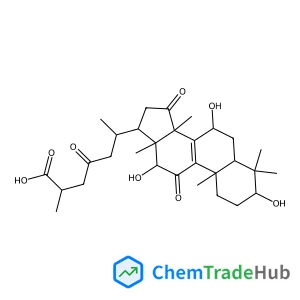
(3beta,7beta,12beta)-3,7,12-Trihydroxy-11,15,23-trioxolanost-8-en-26-oic acid
CAS Number:
98665-22-6
Molecular Formula:
C30H44O8
Recommended Suppliers






Disclaimer
This page provides academic journal information for reference and research purposes only. We are not affiliated with any journal publishers and do not handle publication submissions. For publication-related inquiries, please contact the respective journal publishers directly.
If you notice any inaccuracies in the information displayed, please contact us at support@chemtradehub.com. We will promptly review and address your concerns.