













Noteworthy performance of La1−xCaxMnO3 perovskites in generating H2 and CO by the thermochemical splitting of H2O and CO2
Literature Information
Publication Date
2014-11-05
DOI
10.1039/C4CP04578E
Impact Factor
3.676
Authors
Sunita Dey, B. S. Naidu
View Original
Abstract
Perovskite oxides of the composition La1−xCaxMnO3 (LCM) have been investigated for the thermochemical splitting of H2O and CO2 to produce H2 and CO, respectively. The study was carried out in comparison with La1−xSrxMnO3, CeO2 and other oxides. The LCM system exhibits superior characteristics in high-temperature evolution of oxygen, and in reducing CO2 to CO and H2O to H2. The best results were obtained with La0.5Ca0.5MnO3 whose performance is noteworthy compared to that of other oxides including ceria. The orthorhombic structure of LCM seems to be a crucial factor.
Related Literature
Design of iron atom modified thiophene-linked metalloporphyrin 2D conjugated microporous polymer as CO2 reduction photocatalyst
Chongyang Chen, Chao Tang, Weiwei Xu, Youyong Li, Lai Xu
2018-03-12
Paper
DOI: 10.1039/C8CP00974K
Prediction of optimal structural water concentration for maximized performance in tunnel manganese oxide electrodes
Nathan C. Frey, Bryan W. Byles, Hemant Kumar, Dequan Er, Ekaterina Pomerantseva, Vivek B. Shenoy
2018-03-16
Paper
DOI: 10.1039/C8CP00761F
Nitric oxide oxidation of a Ta encapsulating Si cage nanocluster superatom (Ta@Si16) deposited on an organic substrate; a Si cage collapse indicator
Masahiro Shibuta, Toshiki Niikura, Toshiaki Kamoshida, Hironori Tsunoyama
2018-10-01
Paper
DOI: 10.1039/C8CP05580G
Role of cationic groups on structural and dynamical correlations in hydrated quaternary ammonium-functionalized poly(p-phenylene oxide)-based anion exchange membranes
Dengpan Dong, Xiaoyu Wei, Justin B. Hooper, Hongchao Pan, Dmitry Bedrov
2018-06-26
Paper
DOI: 10.1039/C8CP02211A
Effects of thermal disorder on the electronic structure of halide perovskites: insights from MD simulations
Marko Mladenović, Nenad Vukmirović
2018-09-20
Paper
DOI: 10.1039/C8CP03726D
Static and dynamic properties of a semiflexible polymer in a crowded environment with randomly distributed immobile nanoparticles
Dessalegne A. Tsehay
2018-03-12
Paper
DOI: 10.1039/C7CP08341F
Site-selective bond scission of methylbenzoate following core excitation
Osamu Takahashi, Hanna Myllynen, Joakim Laksman, Elisabeth Rachlew, Edwin Kukk
2018-03-06
Paper
DOI: 10.1039/C7CP08428E
Synthesis of corrugated C-based nanostructures by Br-corannulene oligomerization
Marco Smerieri, Lara Ferrighi, Silvia Nappini, Luca Vaghi, Antonio Papagni, Cristiana Di Valentin, Federica Bondino, Letizia Savio
2018-09-25
Paper
DOI: 10.1039/C8CP04791J
Correction: Unravelling the impact of hydrocarbon structure on the fumarate addition mechanism – a gas-phase ab initio study
Vivek S. Bharadwaj, Stephanie M. Villano, C. Mark Maupin, Anthony M. Dean
2018-03-22
Correction
DOI: 10.1039/C8CP90064G
A theoretical study on lidocaine solubility in deep eutectic solvents
Alberto Gutiérrez, Santiago Aparicio
2018-10-10
Paper
DOI: 10.1039/C8CP05641B
You might also like
Compound Q&A
What are the main uses of 1-(3-Aminophenyl)-3-[(3R)-1-(3,3-dimethyl-2-oxobutyl)-2-oxo-5-(2-pyridinyl)-2,3-dihydro-1H-1,4-benzodiazepin-3-yl]urea (CAS: 155412-88-7)?
This compound is mainly used as an intermediate in the synthesis of antipsychoti...
155412-88-71-(3-Aminophenyl)-3-...
Compound Q&A
How should waste containing 1-(D-Ribofuranosyl)-1,4-dihydro-3-pyridinecarboxamide (CAS: 19132-12-8) be handled?
Waste containing 1-(D-Ribofuranosyl)-1,4-dihydro-3-pyridinecarboxamide (CAS: 191...
19132-12-81-(D-Ribofuranosyl)-...
Compound Q&A
What regulatory guidelines apply to 2-Methyl-2-propanyl 3-bromo-3-(hydroxymethyl)-1-azetidinecarboxylate (CAS: 2007919-81-3)?
2-Methyl-2-propanyl 3-bromo-3-(hydroxymethyl)-1-azetidinecarboxylate (CAS: 20079...
2007919-81-32-Methyl-2-propanyl ...
Compound Q&A
What is N-(4-Chloro-2-pyridinyl)acetamide (CAS: 245056-66-0)?
N-(4-Chloro-2-pyridinyl)acetamide (CAS: 245056-66-0) is a chemical compound with...
245056-66-0N-(4-Chloro-2-pyridi...
Compound Q&A
What is 5-Chloro-2-hydroxybenzoic acid (CAS: 321-14-2)?
5-Chloro-2-hydroxybenzoic acid, also known as 5-chlorosalicylic acid, is an arom...
321-14-25-Chloro-2-hydroxybe...
Compound Q&A
What precautions should be taken when handling 1,1-Dichloro-1-fluoroethane (CAS: 1717-00-6)?
When handling 1,1-Dichloro-1-fluoroethane (CAS: 1717-00-6), it is important to u...
1717-00-61,1-Dichloro-1-fluor...
Compound Q&A
What are the physical and chemical properties of Fmoc-(2S,3R)-3-phenylpyrrolidine-2-carboxylic acid (CAS: 281655-32-1)?
Fmoc-(2S,3R)-3-phenylpyrrolidine-2-carboxylic acid is a white crystalline solid ...
281655-32-1Fmoc-(2S,3R)-3-pheny...
Compound Q&A
What are the main uses of 4-Amino-5-bromo-2-pyridinecarboxylic acid (CAS: 1363381-01-4)?
4-Amino-5-bromo-2-pyridinecarboxylic acid is primarily used as a precursor in th...
1363381-01-44-Amino-5-bromo-2-py...
Compound Q&A
What precautions should be taken when handling (S)-tert-butyl 2-((2-(4-bromophenyl)-2-oxoethyl)carbamoyl)pyrrolidine-1-carboxylate (CAS: 1007881-98-2)?
Handling this compound should be done with personal protective equipment (PPE) i...
1007881-98-2(S)-tert-butyl 2-((2...
Compound Q&A
What precautions should be taken when handling 8-bromo-2,2-dimethyl-3,4-dihydro-2H-1,4-benzoxazin-3-one (CAS: 688363-73-7)?
When handling 8-bromo-2,2-dimethyl-3,4-dihydro-2H-1,4-benzoxazin-3-one, use prop...
688363-73-78-bromo-2,2-dimethyl...
Source Journal
Physical Chemistry Chemical Physics

CiteScore:
5.5
Self-citation Rate:
10.3%
Articles per Year:
3036
Physical Chemistry Chemical Physics (PCCP) is an international journal co-owned by 19 physical chemistry and physics societies from around the world. This journal publishes original, cutting-edge research in physical chemistry, chemical physics and biophysical chemistry. To be suitable for publication in PCCP, articles must include significant innovation and/or insight into physical chemistry; this is the most important criterion that reviewers and Editors will judge against when evaluating submissions. The journal has a broad scope and welcomes contributions spanning experiment, theory, computation and data science. Topical coverage includes spectroscopy, dynamics, kinetics, statistical mechanics, thermodynamics, electrochemistry, catalysis, surface science, quantum mechanics, quantum computing and machine learning. Interdisciplinary research areas such as polymers and soft matter, materials, nanoscience, energy, surfaces/interfaces, and biophysical chemistry are welcomed if they demonstrate significant innovation and/or insight into physical chemistry. Joined experimental/theoretical studies are particularly appreciated when complementary and based on up-to-date approaches.
Recommended Compounds

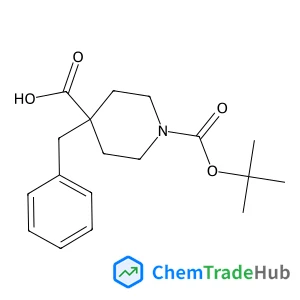
4-Benzyl-1-(tert-butoxycarbonyl)piperidine-4-carboxylic acid
CAS Number:
170838-87-6
Molecular Formula:
C18H25NO4
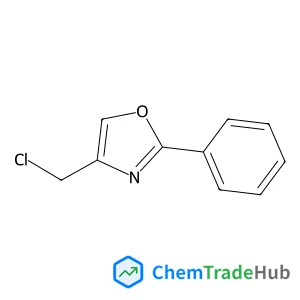
![Pyrazolo[1,5-a]pyridine-3-carbothioamide structure](https://static.chemtradehub.com/structs/885/885275-44-5-aae0.webp "Pyrazolo[1,5-a]pyridine-3-carbothioamide structure")
Recommended Suppliers






Disclaimer
This page provides academic journal information for reference and research purposes only. We are not affiliated with any journal publishers and do not handle publication submissions. For publication-related inquiries, please contact the respective journal publishers directly.
If you notice any inaccuracies in the information displayed, please contact us at support@chemtradehub.com. We will promptly review and address your concerns.