












Graphene magnetism induced by covalent adsorption of aromatic radicals
Literature Information
Publication Date
2014-11-26
DOI
10.1039/C4CP04476B
Impact Factor
3.676
Authors
He Lin, Gian Paolo Brivio
View Original
Abstract
We report a computational study of adsorption of aromatic radicals onto graphene, with the aim of understanding the effect of covalent molecular functionalization on the magnetic and structural properties of graphene. Our results show that the adsorption of an aromatic radical like phenyl also functionalized with donor or acceptor groups generates a band gap and two spin-dependent midgap states, one located above and the other below the Fermi energy of pristine graphene, which cause a net magnetic moment. Due to the interaction between the radical and graphene, we find that the carbon atom on the adsorption site is lifted out of the graphene plane, and its pz orbital is removed from the π band system, leaving the electrons in the other sublattice unpaired, which results in nonzero magnetism. But the band gap of the full system is insensitive to the different attached species and the midgap states are independent of the alignment of the molecular orbitals, so that the magnetic moment is the same for the various radicals studied. The net result of the radical adsorption is to have almost the same aromatic species as those in the gas phase but anchored on a surface.
Recommended Journals
Related Literature
High-throughput amperometric determination of tetracycline residues in milk and quality control of pharmaceutical formulations: flow-injection versus batch-injection analysis
Lucas V. Faria, Ana P. Lima, Fausto M. Araújo, Thalles P. Lisboa, Maria A. C. Matos, Rodrigo A. A. Munoz, Renato C. Matos
2019-10-02
Paper
DOI: 10.1039/C9AY01759C
Study on the affinity characteristics of proteins on the immobilized metal affinity chromatography column
Rong Li, Peng Chen, Ning Zhang, Bin Chen
2019-08-15
Paper
DOI: 10.1039/C9AY01469A
Droplet incubation and splitting in open microfluidic channels
Samuel B. Berry, Jing J. Lee, Jean Berthier, Erwin Berthier
2019-08-28
Paper
DOI: 10.1039/C9AY00758J
Facile synthesis of yellow fluorescent carbon dots for highly sensitive sensing of cobalt ions and biological imaging
Min Tian, Yaoming Liu, Yingte Wang, Yong Zhang
2019-07-25
Communication
DOI: 10.1039/C9AY01244C
A novel highly selective fluorescent probe for imaging of cysteine both in living cells and zebrafish
Li Wang, Mingguang Ren, Zihong Li, Lixuan Dai, Weiying Lin
2019-07-24
Communication
DOI: 10.1039/C9AY01167F
Highly isoselective ring-opening polymerization of rac-O-carboxyanhydrides using a zinc alkoxide initiator
Yaqin Cui, Jinxing Jiang, Xiaobo Pan, Jincai Wu
2019-10-02
Communication
DOI: 10.1039/C9CC06108H
Photoelectrochemical-assisted determination of caffeic acid exploiting a composite based on carbon nanotubes, cadmium telluride quantum dots, and titanium dioxide
Chirlene Nascimento Botelho, Neuma das Mercês Pereira, Glaura Goulart Silva, Alan Silva de Menezes, Cícero Wellington Brito Bezerra, Flavio Santos Damos, Rita de Cássia Silva Luz
2019-08-26
Paper
DOI: 10.1039/C9AY01422E
You might also like
Compound Q&A
What are the main uses of 1H-Indazole-6-carbonitrile (CAS: 141290-59-7)?
1H-Indazole-6-carbonitrile finds applications in pharmaceuticals, where it serve...
141290-59-71H-Indazole-6-carbon...
Compound Q&A
How should waste containing Dioctyl (2E)-2-butenedioate (CAS: 2997-85-5) be handled?
Waste containing Dioctyl (2E)-2-butenedioate (CAS: 2997-85-5) should be collecte...
2997-85-5Dioctyl (2E)-2-buten...
Compound Q&A
What industries use Sodium [(1,2-benzoxazol-3-ylmethyl)sulfonyl]azanide (CAS: 68291-98-5)?
Sodium [(1,2-benzoxazol-3-ylmethyl)sulfonyl]azanide is primarily used in pharmac...
68291-98-5Sodium [(1,2-benzoxa...
Compound Q&A
Are there alternatives to Dimethyl 4-(4,4,5,5-tetramethyl-1,3,2-dioxaborolan-2-yl)-2,6-pyridinedicarboxylate (CAS: 741709-66-0) in synthesis?
Dimethyl 4-(4,4,5,5-tetramethyl-1,3,2-dioxaborolan-2-yl)-2,6-pyridinedicarboxyla...
741709-66-0Dimethyl 4-(4,4,5,5-...
Compound Q&A
How should waste containing 2-Fluoro-6-hydrazinopyridine (CAS: 80714-39-2) be handled?
Waste containing 2-Fluoro-6-hydrazinopyridine (CAS: 80714-39-2) should be manage...
80714-39-22-Fluoro-6-hydrazino...
Compound Q&A
What is 6-Formyl-2-pyridinecarboxylic acid (CAS: 499214-11-8)?
6-Formyl-2-pyridinecarboxylic acid is an organic compound with the molecular for...
499214-11-86-Formyl-2-pyridinec...
Compound Q&A
What is the market or research trend for 3-(3,4-dimethoxyphenyl)-2,5-dimethyl-N-(2-morpholin-4-ylethyl)pyrazolo[1,5-a]pyrimidin-7-amine (CAS: 900874-91-1)?
Research trends for this compound indicate a focus on its potential applications...
900874-91-13-(3,4-dimethoxyphen...
Compound Q&A
How is 9H-Tribenzo[b,d,f]azepine (CAS: 29875-73-8) typically synthesized?
9H-Tribenzo[b,d,f]azepine is typically synthesized via a multi-step process invo...
29875-73-89H-Tribenzo[b,d,f]az...
Compound Q&A
How is 1-Cyclopropyl-7-ethoxy-6-fluoro-8-methoxy-4-oxo-1,4-dihydro-3-quinolinecarboxylic acid (CAS: 1797982-51-4) typically synthesized?
1-Cyclopropyl-7-ethoxy-6-fluoro-8-methoxy-4-oxo-1,4-dihydro-3-quinolinecarboxyli...
1797982-51-41-Cyclopropyl-7-etho...
Compound Q&A
How should waste containing Methyl 3-oxo-1,2,3,4-tetrahydro-6-quinoxalinecarboxylate (CAS: 671820-52-3) be handled?
Waste containing Methyl 3-oxo-1,2,3,4-tetrahydro-6-quinoxalinecarboxylate (CAS: ...
671820-52-3Methyl 3-oxo-1,2,3,4...
Source Journal
Physical Chemistry Chemical Physics

CiteScore:
5.5
Self-citation Rate:
10.3%
Articles per Year:
3036
Physical Chemistry Chemical Physics (PCCP) is an international journal co-owned by 19 physical chemistry and physics societies from around the world. This journal publishes original, cutting-edge research in physical chemistry, chemical physics and biophysical chemistry. To be suitable for publication in PCCP, articles must include significant innovation and/or insight into physical chemistry; this is the most important criterion that reviewers and Editors will judge against when evaluating submissions. The journal has a broad scope and welcomes contributions spanning experiment, theory, computation and data science. Topical coverage includes spectroscopy, dynamics, kinetics, statistical mechanics, thermodynamics, electrochemistry, catalysis, surface science, quantum mechanics, quantum computing and machine learning. Interdisciplinary research areas such as polymers and soft matter, materials, nanoscience, energy, surfaces/interfaces, and biophysical chemistry are welcomed if they demonstrate significant innovation and/or insight into physical chemistry. Joined experimental/theoretical studies are particularly appreciated when complementary and based on up-to-date approaches.
Recommended Compounds
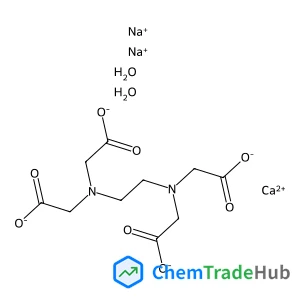
EthylenediaminetetraaceticacidcalciumDisodiumsalthydrate
CAS Number:
23411-34-9
Molecular Formula:
C10H16CaN2Na2O10

Trichloro(3,3,4,4,5,5,6,6,7,7,8,8,8-tridecafluorooctyl)silane
CAS Number:
78560-45-9
Molecular Formula:
C8H4Cl3F13Si
Recommended Suppliers






Disclaimer
This page provides academic journal information for reference and research purposes only. We are not affiliated with any journal publishers and do not handle publication submissions. For publication-related inquiries, please contact the respective journal publishers directly.
If you notice any inaccuracies in the information displayed, please contact us at support@chemtradehub.com. We will promptly review and address your concerns.