












Direct vs. indirect pathway for nitrobenzene reduction reaction on a Ni catalyst surface: a density functional study
Literature Information
Publication Date
2014-10-21
DOI
10.1039/C4CP04355C
Impact Factor
3.676
Authors
Arup Mahata, Rohit K. Rai, Indrani Choudhuri, Sanjay K. Singh, Biswarup Pathak
View Original
Abstract
Density functional theory (DFT) calculations are performed to understand and address the previous experimental results that showed the reduction of nitrobenzene to aniline prefers direct over indirect reaction pathways irrespective of the catalyst surface. Nitrobenzene to aniline conversion occurs via the hydroxyl amine intermediate (direct pathway) or via the azoxybenzene intermediate (indirect pathway). Through our computational study we calculated the spin polarized and dispersion corrected reaction energies and activation barriers corresponding to various reaction pathways for the reduction of nitrobenzene to aniline over a Ni catalyst surface. The adsorption behaviour of the substrate, nitrobenzene, on the catalyst surface was also considered and the energetically most preferable structural orientation was elucidated. Our study indicates that the parallel adsorption behaviour of the molecules over a catalyst surface is preferable over vertical adsorption behaviour. Based on the reaction energies and activation barrier of the various elementary steps involved in direct or indirect reaction pathways, we find that the direct reduction pathway of nitrobenzene over the Ni(111) catalyst surface is more favourable than the indirect reaction pathway.
Related Literature
Correction: Effects of p-substituents on electrochemical CO oxidation by Rh porphyrin-based catalysts
Shin-ichi Yamazaki, Yusuke Yamada, Sahori Takeda, Midori Goto, Tsutomu Ioroi, Zyun Siroma, Kazuaki Yasuda
2016-04-15
Correction
DOI: 10.1039/C6CP90101H
The use of the Rx spin label in orientation measurement on proteins, by EPR
M. A. Stevens, J. E. McKay, J. L. S. Robinson, H. EL Mkami, G. M. Smith, D. G. Norman
2015-09-25
Paper
DOI: 10.1039/C5CP04753F
Oxygen vacancies as active sites for H2S dissociation on the rutile TiO2(110) surface: a first-principles study
Shiqian Wei, Zhi Zhang, Great R. Patzke
2016-02-03
Paper
DOI: 10.1039/C5CP06835E
Cyanophenyl vs. pyridine substituent: impact on the adlayer structure and formation on HOPG and Au(111)
B. Eggers, M. Metzler, D. Künzel, A. Groß, T. Jacob, U. Ziener
2016-02-01
Paper
DOI: 10.1039/C5CP07853A
Electrochemical synthesis of poly(3-aminophenylboronic acid) in ethylene glycol without exogenous protons
Feifan Wang, Feixue Zou, Xinxin Yu, Zhenyu Feng, Na Du, Yaohua Zhong
2016-03-11
Paper
DOI: 10.1039/C6CP00800C
Self-assembled nanoparticle patterns on carbon nanowall surfaces
N. V. Suetin, S. A. Evlashin, A. V. Egorov, K. V. Mironovich, S. A. Dagesyan, L. V. Yashina, E. A. Goodilin, V. A. Krivchenko
2016-03-31
Paper
DOI: 10.1039/C6CP01638C
Underlying mechanisms of the synergistic role of Li2MnO3 and LiNi1/3Co1/3Mn1/3O2 in high-Mn, Li-rich oxides
Jin-Myoung Lim, Duho Kim, Maenghyo Cho
2016-03-18
Paper
DOI: 10.1039/C6CP00088F
Global optimization of small bimetallic Pd–Co binary nanoalloy clusters: a genetic algorithm approach at the DFT level
Mikail Aslan, Jack B. A. Davis, Roy L. Johnston
2016-02-04
Paper
DOI: 10.1039/C6CP00342G
Plutonium and transplutonium element trioxides: molecular structures, chemical bonding, and isomers
2015-08-21
Paper
DOI: 10.1039/C5CP02190A
Molecular structure and vibrations of NTCDA monolayers on Ag(111) from density-functional theory and infrared absorption spectroscopy
Phil Rosenow
2016-02-03
Paper
DOI: 10.1039/C5CP06619K
You might also like
Compound Q&A
What are the main uses of 1-(3-Aminophenyl)-3-[(3R)-1-(3,3-dimethyl-2-oxobutyl)-2-oxo-5-(2-pyridinyl)-2,3-dihydro-1H-1,4-benzodiazepin-3-yl]urea (CAS: 155412-88-7)?
This compound is mainly used as an intermediate in the synthesis of antipsychoti...
155412-88-71-(3-Aminophenyl)-3-...
Compound Q&A
How should waste containing 1-(D-Ribofuranosyl)-1,4-dihydro-3-pyridinecarboxamide (CAS: 19132-12-8) be handled?
Waste containing 1-(D-Ribofuranosyl)-1,4-dihydro-3-pyridinecarboxamide (CAS: 191...
19132-12-81-(D-Ribofuranosyl)-...
Compound Q&A
What regulatory guidelines apply to 2-Methyl-2-propanyl 3-bromo-3-(hydroxymethyl)-1-azetidinecarboxylate (CAS: 2007919-81-3)?
2-Methyl-2-propanyl 3-bromo-3-(hydroxymethyl)-1-azetidinecarboxylate (CAS: 20079...
2007919-81-32-Methyl-2-propanyl ...
Compound Q&A
What is N-(4-Chloro-2-pyridinyl)acetamide (CAS: 245056-66-0)?
N-(4-Chloro-2-pyridinyl)acetamide (CAS: 245056-66-0) is a chemical compound with...
245056-66-0N-(4-Chloro-2-pyridi...
Compound Q&A
What is 5-Chloro-2-hydroxybenzoic acid (CAS: 321-14-2)?
5-Chloro-2-hydroxybenzoic acid, also known as 5-chlorosalicylic acid, is an arom...
321-14-25-Chloro-2-hydroxybe...
Compound Q&A
What precautions should be taken when handling 1,1-Dichloro-1-fluoroethane (CAS: 1717-00-6)?
When handling 1,1-Dichloro-1-fluoroethane (CAS: 1717-00-6), it is important to u...
1717-00-61,1-Dichloro-1-fluor...
Compound Q&A
What are the physical and chemical properties of Fmoc-(2S,3R)-3-phenylpyrrolidine-2-carboxylic acid (CAS: 281655-32-1)?
Fmoc-(2S,3R)-3-phenylpyrrolidine-2-carboxylic acid is a white crystalline solid ...
281655-32-1Fmoc-(2S,3R)-3-pheny...
Compound Q&A
What are the main uses of 4-Amino-5-bromo-2-pyridinecarboxylic acid (CAS: 1363381-01-4)?
4-Amino-5-bromo-2-pyridinecarboxylic acid is primarily used as a precursor in th...
1363381-01-44-Amino-5-bromo-2-py...
Compound Q&A
What precautions should be taken when handling (S)-tert-butyl 2-((2-(4-bromophenyl)-2-oxoethyl)carbamoyl)pyrrolidine-1-carboxylate (CAS: 1007881-98-2)?
Handling this compound should be done with personal protective equipment (PPE) i...
1007881-98-2(S)-tert-butyl 2-((2...
Compound Q&A
What precautions should be taken when handling 8-bromo-2,2-dimethyl-3,4-dihydro-2H-1,4-benzoxazin-3-one (CAS: 688363-73-7)?
When handling 8-bromo-2,2-dimethyl-3,4-dihydro-2H-1,4-benzoxazin-3-one, use prop...
688363-73-78-bromo-2,2-dimethyl...
Source Journal
Physical Chemistry Chemical Physics

CiteScore:
5.5
Self-citation Rate:
10.3%
Articles per Year:
3036
Physical Chemistry Chemical Physics (PCCP) is an international journal co-owned by 19 physical chemistry and physics societies from around the world. This journal publishes original, cutting-edge research in physical chemistry, chemical physics and biophysical chemistry. To be suitable for publication in PCCP, articles must include significant innovation and/or insight into physical chemistry; this is the most important criterion that reviewers and Editors will judge against when evaluating submissions. The journal has a broad scope and welcomes contributions spanning experiment, theory, computation and data science. Topical coverage includes spectroscopy, dynamics, kinetics, statistical mechanics, thermodynamics, electrochemistry, catalysis, surface science, quantum mechanics, quantum computing and machine learning. Interdisciplinary research areas such as polymers and soft matter, materials, nanoscience, energy, surfaces/interfaces, and biophysical chemistry are welcomed if they demonstrate significant innovation and/or insight into physical chemistry. Joined experimental/theoretical studies are particularly appreciated when complementary and based on up-to-date approaches.
Recommended Compounds
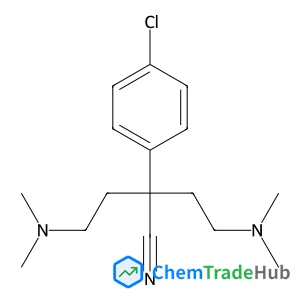
2-(4-Chlorophenyl)-4-(dimethylamino)-2-(2-(dimethylamino)ethyl)butanenitrile
CAS Number:
1246816-57-8
Molecular Formula:
C16H24ClN3
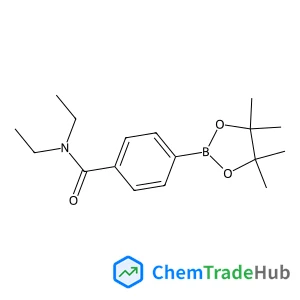
N,N-Diethyl-4-(4,4,5,5-tetramethyl-1,3,2-dioxaborolan-2-yl)benzamide
CAS Number:
325142-99-2
Molecular Formula:
C17H26BNO3
Recommended Suppliers





Disclaimer
This page provides academic journal information for reference and research purposes only. We are not affiliated with any journal publishers and do not handle publication submissions. For publication-related inquiries, please contact the respective journal publishers directly.
If you notice any inaccuracies in the information displayed, please contact us at support@chemtradehub.com. We will promptly review and address your concerns.