












Evidence of “new hot spots” from determining the nonlinear optical behavior of materials: mechanistic studies of the vanadium borate crystal, Na3VO2B6O11
Literature Information
Publication Date
2015-01-05
DOI
10.1039/C4CP04248D
Impact Factor
3.676
Authors
Zhihua Yang, Shilie Pan, Xiaoyun Fan
View Original
Abstract
A novel mechanism for the nonlinear optical (NLO) effects of vanadium borate crystals, Na3VO2B6O11 (NVB), with distorted VO4 groups was investigated. A comprehensive analysis of the structure–property relationship was performed by combining the experimental measurements, the electronic structures calculations, the SHG-weighted electron density and the real-space atom-contribution analysis to yield the linear and nonlinear optical properties. The contribution of a (VO4)3− anionic group to the second harmonic generation (SHG) response was more pronounced than that of the (BO3)3− anionic group, which plays a virtual role in the SHG effects in NVB. The anionic (BO3)3− groups make dominant contributions to the birefringence, whereas the contribution of the V5+ cations to these linear optical effects is negligible.
Recommended Journals
Related Literature
Vibrational spectroscopy and DFT calculations of the di-amino acid peptidel-aspartyl-l-glutamic acid in the zwitterionic state
Nighat Kausar, Trevor J. Dines, Babur Z. Chowdhry, Bruce D. Alexander
2009-06-11
Paper
DOI: 10.1039/B903131F
The origin of the large bending enhancement of the reaction of C2H2+ with methane: the effects of bending momentum, ruling out the precursor mechanism, and steps toward “Polanyi rules” for polyatomic reactions
Jianbo Liu, Scott L. Anderson
2009-07-28
Paper
DOI: 10.1039/B908328F
Supramolecular self-assembly nature of a novel thermotropic liquid crystalline polymer containing no conventional mesogens
Shengtong Sun, Hui Tang, Peiyi Wu, Xinhua Wan
2009-08-04
Paper
DOI: 10.1039/B909914J
The CO–Ne van der Waals complex: ab initio intermolecular potential energy, interaction induced electric dipole moment and polarizability surfaces, and second virial coefficients
Angelika Baranowska, Berta Fernández, Antonio Rizzo, Branislav Jansík
2009-08-20
Paper
DOI: 10.1039/B905806K
Reevaluation of absolute luminescence quantum yields of standard solutions using a spectrometer with an integrating sphere and a back-thinned CCD detector
Kengo Suzuki, Atsushi Kobayashi, Shigeo Kaneko, Kazuyuki Takehira, Toshitada Yoshihara, Hitoshi Ishida, Yoshimi Shiina, Shigero Oishi, Seiji Tobita
2009-09-17
Paper
DOI: 10.1039/B912178A
The interplay of van der Waals and weak chemical forces in the adsorption of salicylic acid on NaCl(001)
Wei Chen, Christoph Tegenkamp, Herbert Pfnür, Thomas Bredow
2009-08-24
Communication
DOI: 10.1039/B911944B
Spin-component scaled coupled-clusters singles and doubles optimized towards calculation of noncovalent interactions
Jan Řezáč
2010-07-12
Communication
DOI: 10.1039/C0CP00158A
Hydrothermal synthesis of new wolframite type trimetallic materials and their use in oxidative dehydrogenation of propane
Maurin Salamanca, Yordy E. Licea, Adriana Echavarría, Arnaldo C. Faro Jr., Luz A. Palacio
2009-08-25
Paper
DOI: 10.1039/B907679D
You might also like
Compound Q&A
How should waste containing N-Methoxy-N-methyl-1,3-thiazole-5-carboxamide (CAS: 898825-89-3) be handled?
Waste containing N-Methoxy-N-methyl-1,3-thiazole-5-carboxamide (CAS: 898825-89-3...
898825-89-3N-Methoxy-N-methyl-1...
Compound Q&A
How should N-(4-Biphenylyl)dibenzo[b,d]furan-4-amine (CAS: 1318338-47-4) be stored?
N-(4-Biphenylyl)dibenzo[b,d]furan-4-amine should be stored in a tightly sealed c...
1318338-47-4N-(4-Biphenylyl)dibe...
Compound Q&A
What is the market or research trend for 3-Acetamido-5-amino-2,4,6-triiodobenzoic acid (CAS: 1713-07-1)?
The market for 3-Acetamido-5-amino-2,4,6-triiodobenzoic acid (CAS: 1713-07-1) is...
1713-07-13-Acetamido-5-amino-...
Compound Q&A
How should Benzyl 2-O-acetyl-3,4,6-tri-O-benzyl-beta-D-galactopyranoside (CAS: 61820-03-9) be stored?
Benzyl 2-O-acetyl-3,4,6-tri-O-benzyl-beta-D-galactopyranoside (CAS: 61820-03-9) ...
61820-03-9Benzyl 2-O-acetyl-3,...
Compound Q&A
What regulatory guidelines apply to 2-Ethylpiperazine dihydrochloride (CAS: 438050-52-3)?
2-Ethylpiperazine dihydrochloride (CAS: 438050-52-3) is regulated under the Glob...
438050-52-32-Ethylpiperazine di...
Compound Q&A
What regulatory guidelines apply to 1,1'-[1,3-Phenylenebis(methylene)]bis(3-methyl-1H-pyrrole-2,5-dione) (CAS: 119462-56-5)?
1,1'-[1,3-Phenylenebis(methylene)]bis(3-methyl-1H-pyrrole-2,5-dione) (CAS: 11946...
119462-56-51,1'-[1,3-Phenyleneb...
Compound Q&A
Are there alternatives to 5-Fluoro-2-(1-pyrrolidinyl)pyridine (CAS: 1287217-79-1) in synthesis?
Several alternatives can be used in the synthesis of 5-Fluoro-2-(1-pyrrolidinyl)...
1287217-79-15-Fluoro-2-(1-pyrrol...
Compound Q&A
What precautions should be taken when handling 1-((2R,3R,4R,5R)-5-((bis(4-methoxyphenyl)(phenyl)methoxy)methyl)-4-hydroxy-3-methoxytetrahydrofuran-2-yl)-5-methylpyrimidine-2,4(1H,3H)-dione (CAS: 153631-19-7)?
Proper personal protective equipment (PPE) must be worn when handling this compo...
153631-19-71-((2R,3R,4R,5R)-5-(...
Compound Q&A
What precautions should be taken when handling 6-Bromoimidazo[1,2-a]pyridin-8-amine (CAS: 676371-00-9)?
When handling 6-Bromoimidazo[1,2-a]pyridin-8-amine, it is important to wear appr...
676371-00-96-Bromoimidazo[1,2-a...
Compound Q&A
Are there alternatives to (2S,4R)-4-(4-Nitrobenzyl)pyrrolidine-2-carboxylic acid hydrochloride (CAS: 1049740-22-8) in synthesis?
Alternatives to (2S,4R)-4-(4-Nitrobenzyl)pyrrolidine-2-carboxylic acid hydrochlo...
1049740-22-8(2S,4R)-4-(4-Nitrobe...
Source Journal
Physical Chemistry Chemical Physics

CiteScore:
5.5
Self-citation Rate:
10.3%
Articles per Year:
3036
Physical Chemistry Chemical Physics (PCCP) is an international journal co-owned by 19 physical chemistry and physics societies from around the world. This journal publishes original, cutting-edge research in physical chemistry, chemical physics and biophysical chemistry. To be suitable for publication in PCCP, articles must include significant innovation and/or insight into physical chemistry; this is the most important criterion that reviewers and Editors will judge against when evaluating submissions. The journal has a broad scope and welcomes contributions spanning experiment, theory, computation and data science. Topical coverage includes spectroscopy, dynamics, kinetics, statistical mechanics, thermodynamics, electrochemistry, catalysis, surface science, quantum mechanics, quantum computing and machine learning. Interdisciplinary research areas such as polymers and soft matter, materials, nanoscience, energy, surfaces/interfaces, and biophysical chemistry are welcomed if they demonstrate significant innovation and/or insight into physical chemistry. Joined experimental/theoretical studies are particularly appreciated when complementary and based on up-to-date approaches.
Recommended Compounds
![[4-(Heptyloxy)phenyl]boronic acid structure](https://static.chemtradehub.com/structs/136/136370-19-9-ad33.webp "[4-(Heptyloxy)phenyl]boronic acid structure")
![N-[(Benzyloxy)carbonyl]serine structure](https://static.chemtradehub.com/structs/276/2768-56-1-77f7.webp "N-[(Benzyloxy)carbonyl]serine structure")
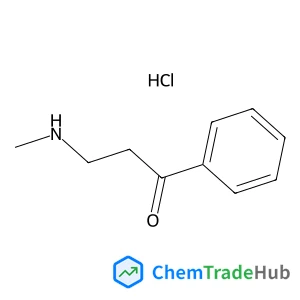
3-(Methylamino)-1-phenyl-1-propanone hydrochloride (1:1)
CAS Number:
2538-50-3
Molecular Formula:
C10H14ClNO
Recommended Suppliers





Disclaimer
This page provides academic journal information for reference and research purposes only. We are not affiliated with any journal publishers and do not handle publication submissions. For publication-related inquiries, please contact the respective journal publishers directly.
If you notice any inaccuracies in the information displayed, please contact us at support@chemtradehub.com. We will promptly review and address your concerns.