












Modeling of catalytically active metal complex species and intermediates in reactions of organic halides electroreduction
Literature Information
Publication Date
2015-01-05
DOI
10.1039/C4CP04218B
Impact Factor
3.676
Authors
Anton S. Lytvynenko, Sergey V. Kolotilov, Mikhail A. Kiskin, Igor L. Eremenko, Vladimir M. Novotortsev
View Original
Abstract
The results of quantum chemical modeling of organic and metal-containing intermediates that occur in electrocatalytic dehalogenation reactions of organic chlorides are presented. Modeling of processes that take place in successive steps of the electrochemical reduction of representative C1 and C2 chlorides – CHCl3 and Freon R113 (1,1,2-trifluoro-1,2,2-trichloroethane) – was carried out by density functional theory (DFT) and second-order Møller–Plesset perturbation theory (MP2). It was found that taking solvation into account using an implicit solvent model (conductor-like screening model, COSMO) or considering explicit solvent molecules gave similar results. In addition to modeling of simple non-catalytic dehalogenation, processes with a number of complexes and their reduced forms, some of which were catalytically active, were investigated by DFT. Complexes M(L1)2 (M = Fe, Co, Ni, Cu, Zn, L1H = Schiff base from 2-pyridinecarbaldehyde and the hydrazide of 4-pyridinecarboxylic acid), Ni(L2) (H2L2 is the Schiff base from salicylaldehyde and 1,2-ethylenediamine, known as salen) and Co(L3)2Cl2, representing a fragment of a redox-active coordination polymer [Co(L3)Cl2]n (L3 is the dithioamide of 1,3-benzenedicarboxylic acid), were considered. Gradual changes in electronic structure in a series of compounds M(L1)2 were observed, and correlations between [M(L1)2]0 spin-up and spin-down LUMO energies and the relative energies of the corresponding high-spin and low-spin reduced forms, as well as the shape of the orbitals, were proposed. These results can be helpful for determination of the nature of redox-processes in similar systems by DFT. No specific covalent interactions between [M(L1)2]− and the R113 molecule (M = Fe, Co, Ni, Zn) were found, which indicates that M(L1)2 electrocatalysts act rather like electron transfer mediators via outer-shell electron transfer. A relaxed surface scan of the adducts {M(L1)2·R113}− (M = Ni or Co) versus the distance between the chlorine atom leaving during reduction and the corresponding carbon atom showed an energy barrier to electron transfer (the first stage of R113 catalytic reduction), while DFT optimization of the {Ni(L2)·R113}− adduct showed barrier-free decomposition. The difference between the stabilities of the {Ni(L1)2·R113}− and {Ni(L2)·R113}− adducts correlates with the difference between the catalytic activities of Ni(L1)2 and Ni(L2) in the electrochemical reduction of R113.
Related Literature
Sugar–peptidic bond interactions: spectroscopic characterization of a model system
Ander Camiruaga, Imanol Usabiaga, Aran Insausti, José A. Fernández
2017-04-11
Paper
DOI: 10.1039/C7CP00615B
Mechanical and vibrational characterization of amyloid-like HET-s nanosheets based on the skewed plate theory
Hyun Joon Chang, Myeongsang Lee, Jae In Kim, Sungsoo Na
2017-04-03
Paper
DOI: 10.1039/C7CP01418J
A theoretical study of complexes formed between cations and curved aromatic systems: electrostatics does not always control cation–π interaction
Jorge A. Carrazana-García, Enrique M. Cabaleiro-Lago, Jesús Rodríguez-Otero
2017-03-24
Paper
DOI: 10.1039/C7CP01491K
Multichromophoric hybrid species made of perylene bisimide derivatives and Ru(ii) and Os(ii) polypyridine subunits
Francesco Nastasi, Giuseppina La Ganga, Sebastiano Campagna, Zois Syrgiannis, Francesco Rigodanza, Stefania Vitale, Antonino Licciardello
2017-05-03
Paper
DOI: 10.1039/C7CP01597F
Unexpected coordination number and phase diagram of niobium diselenide under compression
Zhong-Li Liu, Hong Jia, Rui Li, Xiu-Lu Zhang, Ling-Cang Cai
2017-05-03
Paper
DOI: 10.1039/C7CP00805H
Structural control of side-chain chromophores to achieve highly efficient electro-optic activity
Zhuo Chen, Jialei Liu, Hongyan Xiao, Zhen Zhen, Xinhou Liu
2017-03-31
Paper
DOI: 10.1039/C7CP01582H
Water-repellent hydrophilic nanogrooves
Yu-Hsuan Weng, I-Fan Hsieh, Yu-Jane Sheng
2017-04-27
Paper
DOI: 10.1039/C7CP01409K
CH stretching excitation promotes its cleavage in the F + CHD3(ν1 = 1) → HF + CD3 reaction at low collision energies
Jiayue Yang, Bo Jiang
2017-04-27
Paper
DOI: 10.1039/C7CP01428G
Path integral-GC-AdResS simulation of a large hydrophobic solute in water: a tool to investigate the interplay between local microscopic structures and quantum delocalization of atoms in space
Animesh Agarwal, Cecilia Clementi, Luigi Delle Site
2017-04-28
Paper
DOI: 10.1039/C7CP01629H
Rational molecular design enhancing the photonic performance of red-emitting perylene bisimide dyes
E. Avellanal-Zaballa, G. Durán-Sampedro, A. Prieto-Castañeda, A. R. Agarrabeitia, I. García-Moreno, I. López-Arbeloa, J. Bañuelos, M. J. Ortiz
2017-04-25
Paper
DOI: 10.1039/C7CP01626C
You might also like
Compound Q&A
How should waste containing N-Methoxy-N-methyl-1,3-thiazole-5-carboxamide (CAS: 898825-89-3) be handled?
Waste containing N-Methoxy-N-methyl-1,3-thiazole-5-carboxamide (CAS: 898825-89-3...
898825-89-3N-Methoxy-N-methyl-1...
Compound Q&A
How should N-(4-Biphenylyl)dibenzo[b,d]furan-4-amine (CAS: 1318338-47-4) be stored?
N-(4-Biphenylyl)dibenzo[b,d]furan-4-amine should be stored in a tightly sealed c...
1318338-47-4N-(4-Biphenylyl)dibe...
Compound Q&A
What is the market or research trend for 3-Acetamido-5-amino-2,4,6-triiodobenzoic acid (CAS: 1713-07-1)?
The market for 3-Acetamido-5-amino-2,4,6-triiodobenzoic acid (CAS: 1713-07-1) is...
1713-07-13-Acetamido-5-amino-...
Compound Q&A
How should Benzyl 2-O-acetyl-3,4,6-tri-O-benzyl-beta-D-galactopyranoside (CAS: 61820-03-9) be stored?
Benzyl 2-O-acetyl-3,4,6-tri-O-benzyl-beta-D-galactopyranoside (CAS: 61820-03-9) ...
61820-03-9Benzyl 2-O-acetyl-3,...
Compound Q&A
What regulatory guidelines apply to 2-Ethylpiperazine dihydrochloride (CAS: 438050-52-3)?
2-Ethylpiperazine dihydrochloride (CAS: 438050-52-3) is regulated under the Glob...
438050-52-32-Ethylpiperazine di...
Compound Q&A
What regulatory guidelines apply to 1,1'-[1,3-Phenylenebis(methylene)]bis(3-methyl-1H-pyrrole-2,5-dione) (CAS: 119462-56-5)?
1,1'-[1,3-Phenylenebis(methylene)]bis(3-methyl-1H-pyrrole-2,5-dione) (CAS: 11946...
119462-56-51,1'-[1,3-Phenyleneb...
Compound Q&A
Are there alternatives to 5-Fluoro-2-(1-pyrrolidinyl)pyridine (CAS: 1287217-79-1) in synthesis?
Several alternatives can be used in the synthesis of 5-Fluoro-2-(1-pyrrolidinyl)...
1287217-79-15-Fluoro-2-(1-pyrrol...
Compound Q&A
What precautions should be taken when handling 1-((2R,3R,4R,5R)-5-((bis(4-methoxyphenyl)(phenyl)methoxy)methyl)-4-hydroxy-3-methoxytetrahydrofuran-2-yl)-5-methylpyrimidine-2,4(1H,3H)-dione (CAS: 153631-19-7)?
Proper personal protective equipment (PPE) must be worn when handling this compo...
153631-19-71-((2R,3R,4R,5R)-5-(...
Compound Q&A
What precautions should be taken when handling 6-Bromoimidazo[1,2-a]pyridin-8-amine (CAS: 676371-00-9)?
When handling 6-Bromoimidazo[1,2-a]pyridin-8-amine, it is important to wear appr...
676371-00-96-Bromoimidazo[1,2-a...
Compound Q&A
Are there alternatives to (2S,4R)-4-(4-Nitrobenzyl)pyrrolidine-2-carboxylic acid hydrochloride (CAS: 1049740-22-8) in synthesis?
Alternatives to (2S,4R)-4-(4-Nitrobenzyl)pyrrolidine-2-carboxylic acid hydrochlo...
1049740-22-8(2S,4R)-4-(4-Nitrobe...
Source Journal
Physical Chemistry Chemical Physics

CiteScore:
5.5
Self-citation Rate:
10.3%
Articles per Year:
3036
Physical Chemistry Chemical Physics (PCCP) is an international journal co-owned by 19 physical chemistry and physics societies from around the world. This journal publishes original, cutting-edge research in physical chemistry, chemical physics and biophysical chemistry. To be suitable for publication in PCCP, articles must include significant innovation and/or insight into physical chemistry; this is the most important criterion that reviewers and Editors will judge against when evaluating submissions. The journal has a broad scope and welcomes contributions spanning experiment, theory, computation and data science. Topical coverage includes spectroscopy, dynamics, kinetics, statistical mechanics, thermodynamics, electrochemistry, catalysis, surface science, quantum mechanics, quantum computing and machine learning. Interdisciplinary research areas such as polymers and soft matter, materials, nanoscience, energy, surfaces/interfaces, and biophysical chemistry are welcomed if they demonstrate significant innovation and/or insight into physical chemistry. Joined experimental/theoretical studies are particularly appreciated when complementary and based on up-to-date approaches.
Recommended Compounds
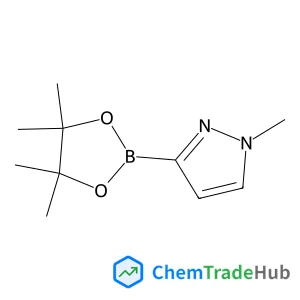
1-Methyl-3-(4,4,5,5-tetramethyl-1,3,2-dioxaborolan-2-yl)-1H-pyrazole
CAS Number:
1020174-04-2
Molecular Formula:
C10H17BN2O2

3-(3-Ethyl-1-methyl-3-azepanyl)phenol hydrochloride (1:1)
CAS Number:
59263-76-2
Molecular Formula:
C15H24ClNO
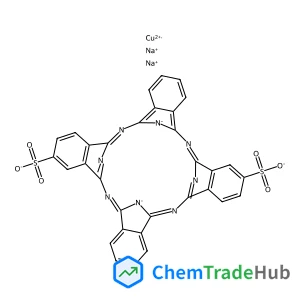

(1H-Benzotriazol-1-yloxy)(di-1-pyrrolidinyl)methylium hexafluorophosphate
CAS Number:
105379-24-6
Molecular Formula:
C15H21F6N5OP
Recommended Suppliers



Disclaimer
This page provides academic journal information for reference and research purposes only. We are not affiliated with any journal publishers and do not handle publication submissions. For publication-related inquiries, please contact the respective journal publishers directly.
If you notice any inaccuracies in the information displayed, please contact us at support@chemtradehub.com. We will promptly review and address your concerns.