












Selective nucleation of iron phthalocyanine crystals on micro-structured copper iodide
Literature Information
Publication Date
2014-10-20
DOI
10.1039/C4CP04217D
Impact Factor
3.676
Authors
Luke A. Rochford, Alexandra J. Ramadan, Sandrine Heutz, Tim S. Jones
View Original
Abstract
Morphological and structural control of organic semiconductors through structural templating is an efficient route by which to tune their physical properties. The preparation and characterisation of iron phthalocyanine (FePc)窶田opper iodide (CuI) bilayers at elevated substrate temperatures is presented. Thin CuI(111) layers are prepared which are composed of isolated islands rather than continuous films previously employed in device structures. Nucleation in the early stages of FePc growth is observed at the edges of islands rather than on the top (111) faces with the use of field emission scanning electron microscopy (FE-SEM). Structural measurements show two distinct polymorphs of FePc, with CuI islands edges nucleating high aspect ratio FePc crystallites with modified intermolecular spacing. By combining high substrate temperature growth and micro-structuring of the templating CuI(111) layer structural and morphological control of the organic film is demonstrated.
Related Literature
Evaluation of electronic polarization energy in oligoacene molecular crystals using the solvated supermolecular approach
Tao Xu, Wenliang Wang, Shiwei Yin, Yun Wang
2017-05-08
Paper
DOI: 10.1039/C7CP01534H
Composition-dependent electronic energy relaxation dynamics of metal domains as revealed by bimetallic Au144−xAgx(SC8H9)60 monolayer-protected clusters
Hongjun Zheng, Marcus A. Tofanelli, Christopher J. Ackerson
2017-05-03
Paper
DOI: 10.1039/C7CP00884H
Investigating the effect of ionic strength on the suppression of dendrite formation during metal electrodeposition
Andrew K. Pearson, Pon Kao, Anthony P. O'Mullane, Anand I. Bhatt
2017-05-11
Paper
DOI: 10.1039/C7CP00839B
Understanding the adsorptive interactions of arsenate–iron nanoparticles with curved fullerene-like sheets in activated carbon using a quantum mechanics/molecular mechanics computational approach
Le Minh Cam, Nguyen Thi Thu Ha, Bee-Min Goh, Martin Saunders, Zhong-Tao Jiang, Mohammednoor Altarawneh, Bogdan Z. Dlugogorski, Mohanad El-Harbawi, Chun-Yang Yin
2017-05-08
Paper
DOI: 10.1039/C7CP02006F
Ionic hydration-induced evolution of decane–water interfacial tension
Boyao Wen, Chengzhen Sun, Bofeng Bai
2017-05-08
Paper
DOI: 10.1039/C7CP01826F
Elastic properties and short-range structural order in mixed network former glasses
Weimin Wang, Randilynn Christensen, Brittany Curtis, David Hynek, Sydney Keizer, James Wang, Steve Feller, Steve W. Martin, John Kieffer
2017-05-15
Paper
DOI: 10.1039/C6CP08939A
Rehybridization-induced charge density oscillations in the long-range corrugated silicene
Agata Podsiadły-Paszkowska, Mariusz Krawiec
2017-05-08
Paper
DOI: 10.1039/C7CP02352A
Drop spreading on a superhydrophobic surface: pinned contact line and bending liquid surface
Yanbin Wang, Joseph Eugene Andrews, Liangbing Hu, Siddhartha Das
2017-05-08
Paper
DOI: 10.1039/C7CP01777D
The effect of anions on the electrochemical properties of polyaniline for supercapacitors
Ji Xing, Maoying Liao, Min Yin, Dongdong Li, Ye Song
2017-04-28
Paper
DOI: 10.1039/C7CP02016C
Surface-induced assembly of sophorolipids
Jessie Peyre, Marco Faustini, Vincent Humblot, Niki Baccile
2017-06-01
Paper
DOI: 10.1039/C7CP01339F
You might also like
Compound Q&A
What are the main uses of 1-(3-Aminophenyl)-3-[(3R)-1-(3,3-dimethyl-2-oxobutyl)-2-oxo-5-(2-pyridinyl)-2,3-dihydro-1H-1,4-benzodiazepin-3-yl]urea (CAS: 155412-88-7)?
This compound is mainly used as an intermediate in the synthesis of antipsychoti...
155412-88-71-(3-Aminophenyl)-3-...
Compound Q&A
How should waste containing 1-(D-Ribofuranosyl)-1,4-dihydro-3-pyridinecarboxamide (CAS: 19132-12-8) be handled?
Waste containing 1-(D-Ribofuranosyl)-1,4-dihydro-3-pyridinecarboxamide (CAS: 191...
19132-12-81-(D-Ribofuranosyl)-...
Compound Q&A
What regulatory guidelines apply to 2-Methyl-2-propanyl 3-bromo-3-(hydroxymethyl)-1-azetidinecarboxylate (CAS: 2007919-81-3)?
2-Methyl-2-propanyl 3-bromo-3-(hydroxymethyl)-1-azetidinecarboxylate (CAS: 20079...
2007919-81-32-Methyl-2-propanyl ...
Compound Q&A
What is N-(4-Chloro-2-pyridinyl)acetamide (CAS: 245056-66-0)?
N-(4-Chloro-2-pyridinyl)acetamide (CAS: 245056-66-0) is a chemical compound with...
245056-66-0N-(4-Chloro-2-pyridi...
Compound Q&A
What is 5-Chloro-2-hydroxybenzoic acid (CAS: 321-14-2)?
5-Chloro-2-hydroxybenzoic acid, also known as 5-chlorosalicylic acid, is an arom...
321-14-25-Chloro-2-hydroxybe...
Compound Q&A
What precautions should be taken when handling 1,1-Dichloro-1-fluoroethane (CAS: 1717-00-6)?
When handling 1,1-Dichloro-1-fluoroethane (CAS: 1717-00-6), it is important to u...
1717-00-61,1-Dichloro-1-fluor...
Compound Q&A
What are the physical and chemical properties of Fmoc-(2S,3R)-3-phenylpyrrolidine-2-carboxylic acid (CAS: 281655-32-1)?
Fmoc-(2S,3R)-3-phenylpyrrolidine-2-carboxylic acid is a white crystalline solid ...
281655-32-1Fmoc-(2S,3R)-3-pheny...
Compound Q&A
What are the main uses of 4-Amino-5-bromo-2-pyridinecarboxylic acid (CAS: 1363381-01-4)?
4-Amino-5-bromo-2-pyridinecarboxylic acid is primarily used as a precursor in th...
1363381-01-44-Amino-5-bromo-2-py...
Compound Q&A
What precautions should be taken when handling (S)-tert-butyl 2-((2-(4-bromophenyl)-2-oxoethyl)carbamoyl)pyrrolidine-1-carboxylate (CAS: 1007881-98-2)?
Handling this compound should be done with personal protective equipment (PPE) i...
1007881-98-2(S)-tert-butyl 2-((2...
Compound Q&A
What precautions should be taken when handling 8-bromo-2,2-dimethyl-3,4-dihydro-2H-1,4-benzoxazin-3-one (CAS: 688363-73-7)?
When handling 8-bromo-2,2-dimethyl-3,4-dihydro-2H-1,4-benzoxazin-3-one, use prop...
688363-73-78-bromo-2,2-dimethyl...
Source Journal
Physical Chemistry Chemical Physics

CiteScore:
5.5
Self-citation Rate:
10.3%
Articles per Year:
3036
Physical Chemistry Chemical Physics (PCCP) is an international journal co-owned by 19 physical chemistry and physics societies from around the world. This journal publishes original, cutting-edge research in physical chemistry, chemical physics and biophysical chemistry. To be suitable for publication in PCCP, articles must include significant innovation and/or insight into physical chemistry; this is the most important criterion that reviewers and Editors will judge against when evaluating submissions. The journal has a broad scope and welcomes contributions spanning experiment, theory, computation and data science. Topical coverage includes spectroscopy, dynamics, kinetics, statistical mechanics, thermodynamics, electrochemistry, catalysis, surface science, quantum mechanics, quantum computing and machine learning. Interdisciplinary research areas such as polymers and soft matter, materials, nanoscience, energy, surfaces/interfaces, and biophysical chemistry are welcomed if they demonstrate significant innovation and/or insight into physical chemistry. Joined experimental/theoretical studies are particularly appreciated when complementary and based on up-to-date approaches.
Recommended Compounds

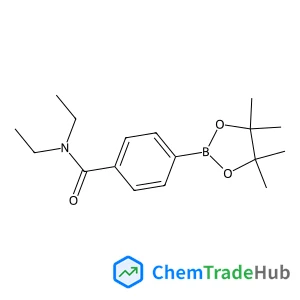
N,N-Diethyl-4-(4,4,5,5-tetramethyl-1,3,2-dioxaborolan-2-yl)benzamide
CAS Number:
325142-99-2
Molecular Formula:
C17H26BNO3
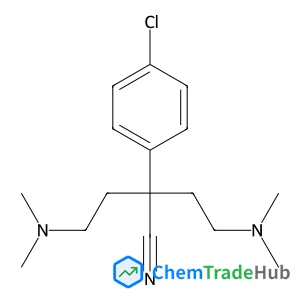
2-(4-Chlorophenyl)-4-(dimethylamino)-2-(2-(dimethylamino)ethyl)butanenitrile
CAS Number:
1246816-57-8
Molecular Formula:
C16H24ClN3

Recommended Suppliers





Disclaimer
This page provides academic journal information for reference and research purposes only. We are not affiliated with any journal publishers and do not handle publication submissions. For publication-related inquiries, please contact the respective journal publishers directly.
If you notice any inaccuracies in the information displayed, please contact us at support@chemtradehub.com. We will promptly review and address your concerns.