












Functionalization of nanostructured cerium oxide films with histidine
Literature Information
Publication Date
2014-12-01
DOI
10.1039/C4CP03780D
Impact Factor
3.676
Authors
Nataliya Tsud, Sofiia Bercha, Robert G. Acres, Mykhailo Vorokhta, Ivan Khalakhan, Vladimír Matolín
View Original
Abstract
The surfaces of polycrystalline cerium oxide films were modified by histidine adsorption under vacuum and characterized by the synchrotron based techniques of core and valence level photoemission, resonant photoemission and near edge X-ray absorption spectroscopy, as well as atomic force microscopy. Histidine is strongly bound to the oxide surface in the anionic form through the deprotonated carboxylate group, and forms a disordered molecular adlayer. The imidazole ring and the amino side group do not form bonds with the substrate but are involved in the intermolecular hydrogen bonding which stabilizes the molecular adlayer. The surface reaction with histidine results in water desorption accompanied by oxide reduction, which is propagated into the bulk of the film. Previously studied, well-characterized surfaces are a guide to the chemistry of the present polycrystalline surface and histidine bonds via the carboxylate group in both cases. In contrast, bonding via the imidazole group occurs on the well-ordered surface but not in the present case. The morphology and structure of the cerium oxide are decisive factors which define the adsorption geometry of the histidine adlayer.
Related Literature
High throughput first-principles calculations of bixbyite oxides for TCO applications
Nasrin Sarmadian, Rolando Saniz, Bart Partoens, Dirk Lamoen, Kalpana Volety, Guido Huyberechts, Johan Paul
2014-07-07
Paper
DOI: 10.1039/C4CP02788D
Use of side-chain for rational design of n-type diketopyrrolopyrrole-based conjugated polymers: what did we find out?
Catherine Kanimozhi, Nir Yaacobi-Gross, Edmund K. Burnett, Alejandro L. Briseno, Thomas D. Anthopoulos, Ulrike Salzner, Satish Patil
2014-07-14
Paper
DOI: 10.1039/C4CP02322F
Reaction mediated artificial cell termination: control of vesicle viability using Rh(i)-catalyzed hydrogenation
Hirokazu Komatsu, Yuki Daimon, Kohsaku Kawakami, Motomu Kanai
2014-06-20
Paper
DOI: 10.1039/C4CP02255F
Design considerations for enhancing absorption in semiconductors on metals through surface plasmon polaritons
Christopher D. Bohn, Amit Agrawal, Youngmin Lee, Charles J. Choi, Matthew S. Davis, Paul M. Haney, Henri J. Lezec, Veronika A. Szalai
2014-02-07
Paper
DOI: 10.1039/C4CP00017J
Outer Co(ii) ions in Co-ZIF-67 reversibly adsorb oxygen from both gas phase and liquid water
Guido Saracco, Svetoslava Vankova, Cristina Pagliano, Barbara Bonelli, Edoardo Garrone
2014-01-13
Paper
DOI: 10.1039/C3CP54896A
Enhanced photocatalytic performance at a Au/N–TiO2 hollow nanowire array by a combination of light scattering and reduced recombination
Taeseup Song, P. Lakshmipathiraj, Hyungkyu Han, Volodymyr V. Lysak, C. Terashima, Kazuya Nakata, A. Fujishima, Yong Soo Kang
2014-06-24
Paper
DOI: 10.1039/C4CP02009J
Proton conductivity in mixed-conducting BSFZ perovskite from thermogravimetric relaxation
Daniel Poetzsch, Rotraut Merkle, Joachim Maier
2014-06-16
Paper
DOI: 10.1039/C4CP00459K
Stability of Pt near surface alloys under electrochemical conditions: a model study
Xiaoming Zhang, Shansheng Yu, Weitao Zheng, Ping Liu
2014-06-27
Paper
DOI: 10.1039/C4CP01942C
An energetic evaluation of dissolution corrosion capabilities of liquid metals on iron surface
Yichun Xu, Chi Song, Yange Zhang, C. S. Liu, B. C. Pan, Zhiguang Wang
2014-06-18
Paper
DOI: 10.1039/C4CP01224K
You might also like
Compound Q&A
What are the main uses of (5-Sulfamoyl-3-pyridinyl)boronic acid (CAS: 951233-61-7)?
(5-Sulfamoyl-3-pyridinyl)boronic acid is primarily used in chemical synthesis, p...
951233-61-7(5-Sulfamoyl-3-pyrid...
Compound Q&A
How is Benzyl 2-methyl-2-(methylsulfonyl)-4-pentenoate (CAS: 1942858-50-5) typically synthesized?
Benzyl 2-methyl-2-(methylsulfonyl)-4-pentenoate is typically synthesized via est...
1942858-50-5Benzyl 2-methyl-2-(m...
Compound Q&A
What precautions should be taken when handling 8-Fluoroquinolin-6-ol (CAS: 209353-22-0)?
When handling 8-Fluoroquinolin-6-ol (CAS: 209353-22-0), it is important to use p...
209353-22-08-Fluoroquinolin-6-o...
Compound Q&A
What are the physical and chemical properties of 1,3-Dibromo-5-(2-methyl-2-propanyl)benzene (CAS: 129316-09-2)?
1,3-Dibromo-5-(2-methyl-2-propanyl)benzene (CAS: 129316-09-2) is a crystalline c...
129316-09-21,3-Dibromo-5-(2-met...
Compound Q&A
What industries use Ethyl 7-chloro-4-oxo-1-(1,3-thiazol-2-yl)-1,4-dihydro-1,8-naphthyridine-3-carboxylate (CAS: 174726-87-5)?
Ethyl 7-chloro-4-oxo-1-(1,3-thiazol-2-yl)-1,4-dihydro-1,8-naphthyridine-3-carbox...
174726-87-5Ethyl 7-chloro-4-oxo...
Compound Q&A
What precautions should be taken when handling Delta-7-Avenasterol (CAS: 23290-26-8)?
When handling Delta-7-Avenasterol (CAS: 23290-26-8), it is important to wear app...
23290-26-8Delta-7-Avenasterol
Compound Q&A
What precautions should be taken when handling N-({(5R)-3-[3-Fluoro-4-(4-morpholinyl)phenyl]-2-oxo-1,3-oxazolidin-5-yl}methyl)acetamide (CAS: 872992-20-6)?
Proper handling involves the use of personal protective equipment such as gloves...
872992-20-6N-({(5R)-3-[3-Fluoro...
Compound Q&A
What precautions should be taken when handling 2-Methyl-2-proanyl 4-[(2-aminophenyl)amino]-1-piperidinecarboxylate (CAS: 79099-00-6)?
When handling 2-Methyl-2-proanyl 4-[(2-aminophenyl)amino]-1-piperidinecarboxylat...
79099-00-62-Methyl-2-propanyl ...
Compound Q&A
What is N-Methyl-4-chlorobenzylamine hydrochloride (CAS: 65542-24-7)?
N-Methyl-4-chlorobenzylamine hydrochloride (CAS: 65542-24-7) is a organic compou...
65542-24-7N-Methyl-4-chloroben...
Compound Q&A
Is [2-(Dodecyloxy)ethoxy]acetic acid (CAS: 27306-90-7) safe?
[2-(Dodecyloxy)ethoxy]acetic acid (CAS: 27306-90-7) is generally considered safe...
27306-90-7[2-(Dodecyloxy)ethox...
Source Journal
Physical Chemistry Chemical Physics

CiteScore:
5.5
Self-citation Rate:
10.3%
Articles per Year:
3036
Physical Chemistry Chemical Physics (PCCP) is an international journal co-owned by 19 physical chemistry and physics societies from around the world. This journal publishes original, cutting-edge research in physical chemistry, chemical physics and biophysical chemistry. To be suitable for publication in PCCP, articles must include significant innovation and/or insight into physical chemistry; this is the most important criterion that reviewers and Editors will judge against when evaluating submissions. The journal has a broad scope and welcomes contributions spanning experiment, theory, computation and data science. Topical coverage includes spectroscopy, dynamics, kinetics, statistical mechanics, thermodynamics, electrochemistry, catalysis, surface science, quantum mechanics, quantum computing and machine learning. Interdisciplinary research areas such as polymers and soft matter, materials, nanoscience, energy, surfaces/interfaces, and biophysical chemistry are welcomed if they demonstrate significant innovation and/or insight into physical chemistry. Joined experimental/theoretical studies are particularly appreciated when complementary and based on up-to-date approaches.
Recommended Compounds

4-(4-Chloro-2-methoxyphenyl)-3-fluorobenzoic acid
CAS Number:
1261970-23-3
Molecular Formula:
C14H10ClFO3
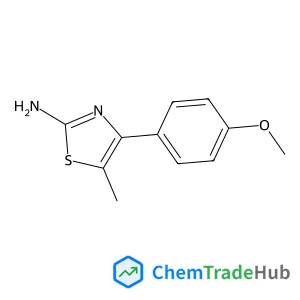
4-(4-Methoxyphenyl)-5-methyl-1,3-thiazol-2-amine
CAS Number:
105512-88-7
Molecular Formula:
C11H12N2OS
Recommended Suppliers







Disclaimer
This page provides academic journal information for reference and research purposes only. We are not affiliated with any journal publishers and do not handle publication submissions. For publication-related inquiries, please contact the respective journal publishers directly.
If you notice any inaccuracies in the information displayed, please contact us at support@chemtradehub.com. We will promptly review and address your concerns.