













Ordering kinetics of lamella-forming block copolymers under the guidance of various external fields studied by dynamic self-consistent field theory
Literature Information
Publication Date
2017-02-02
DOI
10.1039/C6CP08726D
Impact Factor
3.676
Authors
Xiaomin Wan, Tong Gao, Liangshun Zhang, Jiaping Lin
View Original
Abstract
Self-consistent field theory with a dynamic extension is exploited to investigate the kinetics of the lamellar formation of symmetric block copolymers under the direction of external fields. In particular, three types of directed self-assembly methods – a permanent field for chemo-epitaxy, a dynamic field for zone annealing and an integrated permanent/dynamic field – are examined. For the chemo-epitaxy involving sparsely prepatterned substrates or zone annealing, the block copolymers generally develop into polycrystalline nanostructures with multiple orientations due to the lack of strong driving forces for eliminating the long-lived imperfections in a limited time. As the integrated chemo-epitaxy and zone annealing method is applied to the block copolymer systems, single-crystalline nanostructures with precisely registered orientations are achieved in a short annealing time owing to the mutual acceleration of defect annihilations, which cannot be produced by the conventional techniques alone. Furthermore, the integrated method allows the rapid fabrication of well-ordered nanostructures on the extremely sparse prepatterned substrates. Our theoretical work may serve to rationalize the faster modern nanolithographic fabrication of smaller microelectronic components using lower-spatial-frequency templates.
Related Literature
Intrinsic magnetism and biaxial strain tuning in two-dimensional metal halides V3X8 (X = F, Cl, Br, I) from first principles and Monte Carlo simulation
Haibo Xiao, Xiaonan Wang, Ruilong Wang, Lingfang Xu, Shiheng Liang, Changping Yang
2019-05-09
Paper
DOI: 10.1039/C9CP00850K
Mixtures of LiTFSI and urea: ideal thermodynamic behavior as key to the formation of deep eutectic solvents?
2019-05-23
Paper
DOI: 10.1039/C9CP01440C
Role of the hydrogen bond lifetimes and rotations at the water/amorphous silica interface on proton transport
Jesse Lentz, Stephen H. Garofalini
2019-05-23
Paper
DOI: 10.1039/C9CP01994D
High bond difference parameter-induced low thermal transmission in carbon allotropes with sp2 and sp3 hybridization
Shenghong Ju, Bin Wen, Yuwen Zhang, Roderick Melnik
2019-05-13
Paper
DOI: 10.1039/C9CP01029G
Current-constrained one-electron reduced density-matrix theory for non-equilibrium steady-state molecular conductivity
Alexandra E. Raeber, David A. Mazziotti
2019-06-03
Paper
DOI: 10.1039/C9CP01678C
Solvation structure of lanthanide(iii) bistriflimide salts in acetonitrile solution: a molecular dynamics simulation and EXAFS investigation
Valentina Migliorati, Adriano Filipponi, Francesco Sessa, Alessandra Serva, Paola D'Angelo
2019-05-28
Paper
DOI: 10.1039/C9CP01417A
Modulating the electronic structures of blue phosphorene towards spintronics
Xiang-Qian Lu, Chuan-Kui Wang, Xiao-Xiao Fu
2019-05-08
Paper
DOI: 10.1039/C9CP01684H
Non-adiabatic molecular dynamics investigation of the size dependence of the electronic relaxation in polyacenes
Evgeny Posenitskiy, Mathias Rapacioli, Bruno Lepetit, Didier Lemoine, Fernand Spiegelman
2019-05-17
Paper
DOI: 10.1039/C9CP00603F
Elusive hypervalent phosphorus⋯π interactions: evidence for paradigm transformation from hydrogen to phosphorus bonding at low temperatures
P. K. Sruthi, Shubhra Sarkar, N. Ramanathan, K. Sundararajan
2019-05-14
Paper
DOI: 10.1039/C9CP01925A
Organic salts utilising the hexamethylguanidinium cation: the influence of the anion on the structural, physical and thermal properties
Ruhamah Yunis, Anthony F. Hollenkamp, Craig Forsyth, Cara M. Doherty, Danah Al-Masri, Jennifer M. Pringle
2019-05-29
Paper
DOI: 10.1039/C9CP01740B
You might also like
Compound Q&A
What are the main uses of 1H-Indazole-6-carbonitrile (CAS: 141290-59-7)?
1H-Indazole-6-carbonitrile finds applications in pharmaceuticals, where it serve...
141290-59-71H-Indazole-6-carbon...
Compound Q&A
How should waste containing Dioctyl (2E)-2-butenedioate (CAS: 2997-85-5) be handled?
Waste containing Dioctyl (2E)-2-butenedioate (CAS: 2997-85-5) should be collecte...
2997-85-5Dioctyl (2E)-2-buten...
Compound Q&A
What industries use Sodium [(1,2-benzoxazol-3-ylmethyl)sulfonyl]azanide (CAS: 68291-98-5)?
Sodium [(1,2-benzoxazol-3-ylmethyl)sulfonyl]azanide is primarily used in pharmac...
68291-98-5Sodium [(1,2-benzoxa...
Compound Q&A
Are there alternatives to Dimethyl 4-(4,4,5,5-tetramethyl-1,3,2-dioxaborolan-2-yl)-2,6-pyridinedicarboxylate (CAS: 741709-66-0) in synthesis?
Dimethyl 4-(4,4,5,5-tetramethyl-1,3,2-dioxaborolan-2-yl)-2,6-pyridinedicarboxyla...
741709-66-0Dimethyl 4-(4,4,5,5-...
Compound Q&A
How should waste containing 2-Fluoro-6-hydrazinopyridine (CAS: 80714-39-2) be handled?
Waste containing 2-Fluoro-6-hydrazinopyridine (CAS: 80714-39-2) should be manage...
80714-39-22-Fluoro-6-hydrazino...
Compound Q&A
What is 6-Formyl-2-pyridinecarboxylic acid (CAS: 499214-11-8)?
6-Formyl-2-pyridinecarboxylic acid is an organic compound with the molecular for...
499214-11-86-Formyl-2-pyridinec...
Compound Q&A
What is the market or research trend for 3-(3,4-dimethoxyphenyl)-2,5-dimethyl-N-(2-morpholin-4-ylethyl)pyrazolo[1,5-a]pyrimidin-7-amine (CAS: 900874-91-1)?
Research trends for this compound indicate a focus on its potential applications...
900874-91-13-(3,4-dimethoxyphen...
Compound Q&A
How is 9H-Tribenzo[b,d,f]azepine (CAS: 29875-73-8) typically synthesized?
9H-Tribenzo[b,d,f]azepine is typically synthesized via a multi-step process invo...
29875-73-89H-Tribenzo[b,d,f]az...
Compound Q&A
How is 1-Cyclopropyl-7-ethoxy-6-fluoro-8-methoxy-4-oxo-1,4-dihydro-3-quinolinecarboxylic acid (CAS: 1797982-51-4) typically synthesized?
1-Cyclopropyl-7-ethoxy-6-fluoro-8-methoxy-4-oxo-1,4-dihydro-3-quinolinecarboxyli...
1797982-51-41-Cyclopropyl-7-etho...
Compound Q&A
How should waste containing Methyl 3-oxo-1,2,3,4-tetrahydro-6-quinoxalinecarboxylate (CAS: 671820-52-3) be handled?
Waste containing Methyl 3-oxo-1,2,3,4-tetrahydro-6-quinoxalinecarboxylate (CAS: ...
671820-52-3Methyl 3-oxo-1,2,3,4...
Source Journal
Physical Chemistry Chemical Physics

CiteScore:
5.5
Self-citation Rate:
10.3%
Articles per Year:
3036
Physical Chemistry Chemical Physics (PCCP) is an international journal co-owned by 19 physical chemistry and physics societies from around the world. This journal publishes original, cutting-edge research in physical chemistry, chemical physics and biophysical chemistry. To be suitable for publication in PCCP, articles must include significant innovation and/or insight into physical chemistry; this is the most important criterion that reviewers and Editors will judge against when evaluating submissions. The journal has a broad scope and welcomes contributions spanning experiment, theory, computation and data science. Topical coverage includes spectroscopy, dynamics, kinetics, statistical mechanics, thermodynamics, electrochemistry, catalysis, surface science, quantum mechanics, quantum computing and machine learning. Interdisciplinary research areas such as polymers and soft matter, materials, nanoscience, energy, surfaces/interfaces, and biophysical chemistry are welcomed if they demonstrate significant innovation and/or insight into physical chemistry. Joined experimental/theoretical studies are particularly appreciated when complementary and based on up-to-date approaches.
Recommended Compounds

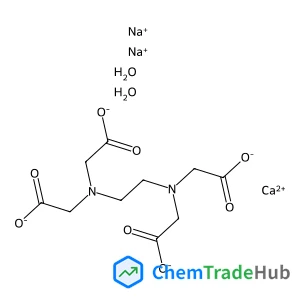
EthylenediaminetetraaceticacidcalciumDisodiumsalthydrate
CAS Number:
23411-34-9
Molecular Formula:
C10H16CaN2Na2O10


Recommended Suppliers



Disclaimer
This page provides academic journal information for reference and research purposes only. We are not affiliated with any journal publishers and do not handle publication submissions. For publication-related inquiries, please contact the respective journal publishers directly.
If you notice any inaccuracies in the information displayed, please contact us at support@chemtradehub.com. We will promptly review and address your concerns.