













Assessing the performance of MM/PBSA and MM/GBSA methods. 5. Improved docking performance using high solute dielectric constant MM/GBSA and MM/PBSA rescoring
Literature Information
Publication Date
2014-08-18
DOI
10.1039/C4CP03179B
Impact Factor
3.676
Authors
Youyong Li, Mingyun Shen, Sheng Tian, Lei Xu, Peichen Pan, Yan Guan
View Original
Abstract
With the rapid development of computational techniques and hardware, more rigorous and precise theoretical models have been used to predict the binding affinities of a large number of small molecules to biomolecules. By employing continuum solvation models, the MM/GBSA and MM/PBSA methodologies achieve a good balance between low computational cost and reasonable prediction accuracy. In this study, we have thoroughly investigated the effects of interior dielectric constant, molecular dynamics (MD) simulations, and the number of top-scored docking poses on the performance of the MM/GBSA and MM/PBSA rescoring of docking poses for three tyrosine kinases, including ABL, ALK, and BRAF. Overall, the MM/PBSA and MM/GBSA rescoring achieved comparative accuracies based on a relatively higher solute (or interior) dielectric constant (i.e. ε = 2, or 4), and could markedly improve the ‘screening power’ and ‘ranking power’ given by Autodock. Moreover, with a relatively higher solute dielectric constant, the MM/PBSA or MM/GBSA rescoring based on the best scored docking poses and the multiple top-scored docking poses gave similar predictions, implying that much computational cost can be saved by considering the best scored docking poses only. Besides, compared with the rescoring based on the minimized structures, the rescoring based on the MD simulations might not be completely necessary due to its negligible impact on the docking performance. Considering the much higher computational demand of MM/PBSA, MM/GBSA with a high solute dielectric constant (ε = 2 or 4) is recommended for the virtual screening of tyrosine kinases.
Related Literature
Chiral azide-bridged two-dimensional Cu(ii) compounds showing a field-induced spin–flop transition
Young Sin You, Jung Hee Yoon, Hyoung Chan Kim, Chang Seop Hong
2005-07-15
Communication
DOI: 10.1039/B507051A
Efficient two-step synthesis of 3-halo-3-enals or 2-halo-2-alkenyl ketones from propargylic bromides via a unique cationic 1,2-aryl or proton shift in electrophilic addition reaction of 2,3-allenols with X+
Chunling Fu, Jing Li
2005-07-13
Communication
DOI: 10.1039/B508069J
Polymer vesicles formed by amphiphilic diblock copolymers containing a thermotropic liquid crystalline polymer block
Jing Yang, Daniel Lévy, Wei Deng, Patrick Keller, Min-Hui Li
2005-08-01
Communication
DOI: 10.1039/B508034G
μ-η3:η4-Lithiocene and η3:η3-zincocene incorporating 1,2-diaza-3,5-diborolyl, a cyclopentadienyl analog
Hanh. V. Ly, Taryn. D. Forster, Darren Maley, Masood Parvez, Roland Roesler
2005-08-09
Communication
DOI: 10.1039/B508152A
CdTe@Co(OH)2 (core–shell) nanoparticles: aqueous synthesis and characterization
Liang Li, Huifeng Qian, Jicun Ren
2005-07-13
Communication
DOI: 10.1039/B505791D
Highly luminescent water-soluble CdTe nanowires as fluorescent probe to detect copper(ii)
Bo Tang, Jinye Niu, Chengguang Yu, Linhai Zhuo, Jiechao Ge
2005-07-19
Communication
DOI: 10.1039/B502978C
Effects of nanoconfinement on the morphology and reactivity of organic materials
2005-07-19
Feature Article
DOI: 10.1039/B502849N
Ru(iv)-catalyzed isomerization of allylamines in water: A highly efficient procedure for the deprotection of N-allylic amines
Victorio Cadierno, Sergio E. García-Garrido, José Gimeno, Noel Nebra
2005-07-13
Communication
DOI: 10.1039/B506788J
Entropy-controlled supramolecular photochirogenesis: enantiodifferentiating Z–E photoisomerization of cyclooctene included and sensitized by permethylated 6-O-benzoyl-β-cyclodextrin
Gaku Fukuhara, Tadashi Mori
2005-07-21
Communication
DOI: 10.1039/B504948B
You might also like
Compound Q&A
How should waste containing N-Methoxy-N-methyl-1,3-thiazole-5-carboxamide (CAS: 898825-89-3) be handled?
Waste containing N-Methoxy-N-methyl-1,3-thiazole-5-carboxamide (CAS: 898825-89-3...
898825-89-3N-Methoxy-N-methyl-1...
Compound Q&A
How should N-(4-Biphenylyl)dibenzo[b,d]furan-4-amine (CAS: 1318338-47-4) be stored?
N-(4-Biphenylyl)dibenzo[b,d]furan-4-amine should be stored in a tightly sealed c...
1318338-47-4N-(4-Biphenylyl)dibe...
Compound Q&A
What is the market or research trend for 3-Acetamido-5-amino-2,4,6-triiodobenzoic acid (CAS: 1713-07-1)?
The market for 3-Acetamido-5-amino-2,4,6-triiodobenzoic acid (CAS: 1713-07-1) is...
1713-07-13-Acetamido-5-amino-...
Compound Q&A
How should Benzyl 2-O-acetyl-3,4,6-tri-O-benzyl-beta-D-galactopyranoside (CAS: 61820-03-9) be stored?
Benzyl 2-O-acetyl-3,4,6-tri-O-benzyl-beta-D-galactopyranoside (CAS: 61820-03-9) ...
61820-03-9Benzyl 2-O-acetyl-3,...
Compound Q&A
What regulatory guidelines apply to 2-Ethylpiperazine dihydrochloride (CAS: 438050-52-3)?
2-Ethylpiperazine dihydrochloride (CAS: 438050-52-3) is regulated under the Glob...
438050-52-32-Ethylpiperazine di...
Compound Q&A
What regulatory guidelines apply to 1,1'-[1,3-Phenylenebis(methylene)]bis(3-methyl-1H-pyrrole-2,5-dione) (CAS: 119462-56-5)?
1,1'-[1,3-Phenylenebis(methylene)]bis(3-methyl-1H-pyrrole-2,5-dione) (CAS: 11946...
119462-56-51,1'-[1,3-Phenyleneb...
Compound Q&A
Are there alternatives to 5-Fluoro-2-(1-pyrrolidinyl)pyridine (CAS: 1287217-79-1) in synthesis?
Several alternatives can be used in the synthesis of 5-Fluoro-2-(1-pyrrolidinyl)...
1287217-79-15-Fluoro-2-(1-pyrrol...
Compound Q&A
What precautions should be taken when handling 1-((2R,3R,4R,5R)-5-((bis(4-methoxyphenyl)(phenyl)methoxy)methyl)-4-hydroxy-3-methoxytetrahydrofuran-2-yl)-5-methylpyrimidine-2,4(1H,3H)-dione (CAS: 153631-19-7)?
Proper personal protective equipment (PPE) must be worn when handling this compo...
153631-19-71-((2R,3R,4R,5R)-5-(...
Compound Q&A
What precautions should be taken when handling 6-Bromoimidazo[1,2-a]pyridin-8-amine (CAS: 676371-00-9)?
When handling 6-Bromoimidazo[1,2-a]pyridin-8-amine, it is important to wear appr...
676371-00-96-Bromoimidazo[1,2-a...
Compound Q&A
Are there alternatives to (2S,4R)-4-(4-Nitrobenzyl)pyrrolidine-2-carboxylic acid hydrochloride (CAS: 1049740-22-8) in synthesis?
Alternatives to (2S,4R)-4-(4-Nitrobenzyl)pyrrolidine-2-carboxylic acid hydrochlo...
1049740-22-8(2S,4R)-4-(4-Nitrobe...
Source Journal
Physical Chemistry Chemical Physics

CiteScore:
5.5
Self-citation Rate:
10.3%
Articles per Year:
3036
Physical Chemistry Chemical Physics (PCCP) is an international journal co-owned by 19 physical chemistry and physics societies from around the world. This journal publishes original, cutting-edge research in physical chemistry, chemical physics and biophysical chemistry. To be suitable for publication in PCCP, articles must include significant innovation and/or insight into physical chemistry; this is the most important criterion that reviewers and Editors will judge against when evaluating submissions. The journal has a broad scope and welcomes contributions spanning experiment, theory, computation and data science. Topical coverage includes spectroscopy, dynamics, kinetics, statistical mechanics, thermodynamics, electrochemistry, catalysis, surface science, quantum mechanics, quantum computing and machine learning. Interdisciplinary research areas such as polymers and soft matter, materials, nanoscience, energy, surfaces/interfaces, and biophysical chemistry are welcomed if they demonstrate significant innovation and/or insight into physical chemistry. Joined experimental/theoretical studies are particularly appreciated when complementary and based on up-to-date approaches.
Recommended Compounds


1-(3-Fluorophenyl)-1H-1,2,4-triazole-3-carboxylic acid
CAS Number:
1292369-51-7
Molecular Formula:
C9H6FN3O2
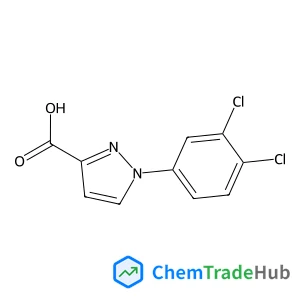
1-(3,4-Dichlorophenyl)-1H-pyrazole-3-carboxylic acid
CAS Number:
1152949-12-6
Molecular Formula:
C10H6Cl2N2O2
Recommended Suppliers




Disclaimer
This page provides academic journal information for reference and research purposes only. We are not affiliated with any journal publishers and do not handle publication submissions. For publication-related inquiries, please contact the respective journal publishers directly.
If you notice any inaccuracies in the information displayed, please contact us at support@chemtradehub.com. We will promptly review and address your concerns.