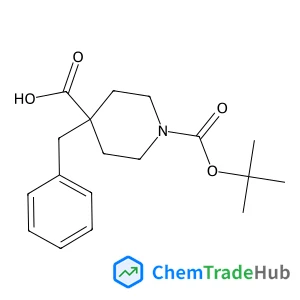
4-Benzyl-1-(tert-butoxycarbonyl)piperidine-4-carboxylic acid
CAS Number:
170838-87-6
Molecular Formula:
C18H25NO4
Xiuli Hou, Jianli Mi, Yanqiong He, Lin Lin, Qing Jiang, Mingdong Dong
For the goal of practical industrial development of fuel cells, inexpensive, sustainable, and highly efficient electrocatalysts for oxygen reduction reactions (ORR) are highly desirable alternatives to platinum (Pt) and other rare metals. In this work, based on density functional theory, silicon (Si)-doped carbon nanotubes (CNTs) and graphene as metal-free, low cost, and high-performance electrocatalysts for ORR are studied systematically. It is found that the curvature effect plays an important role in the adsorption and reduction of oxygen. The adsorption of O2 becomes weaker as the curvature varies from positive values (outside CNTs) to negative values (inside CNTs). The free energy change of the rate-determining step of ORR on the concave inner surface of Si-doped CNTs is smaller than that on the counterpart of Si-doped graphene, while that on the convex outer surface of Si-doped CNTs is larger than that on Si-doped graphene. Uncovering this new ORR mechanism on silicon-doped carbon electrodes is significant as the same principle could be applied to the development of various other metal-free efficient ORR catalysts for fuel cell applications.
Nickolas D. Charistos, Alvaro Muñoz-Castro
DOI: 10.1039/D0CP01252A
Xiao-Ming Cao, Zheng-Jiang Shao
DOI: 10.1039/D0CP00554A
DOI: 10.1039/D0CP00524J
Andika Asyuda, Xianglong Wan, Michael Zharnikov
DOI: 10.1039/D0CP01740J
Maxim V. Shugaev, Chengping Wu, Leonid V. Zhigilei
DOI: 10.1039/D0CP00608D
Yanan Tang, Weiguang Chen, Yi Li, Renyi Li, Yaqiang Ma, Xianqi Dai
DOI: 10.1039/D0CP00722F
Eugenii Ya. Misochko, Alexander V. Akimov, Denis V. Korchagin, Yulia S. Ganushevich, Egor A. Melnikov, Vasili A. Miluykov
DOI: 10.1039/D0CP05254J
Mark DelloStritto, Jianhang Xu, Xifan Wu, Michael L. Klein
DOI: 10.1039/C9CP06821J
Bhaskar Rana, John M. Herbert
DOI: 10.1039/D0CP05216G
This compound is mainly used as an intermediate in the synthesis of antipsychoti...
Waste containing 1-(D-Ribofuranosyl)-1,4-dihydro-3-pyridinecarboxamide (CAS: 191...
2-Methyl-2-propanyl 3-bromo-3-(hydroxymethyl)-1-azetidinecarboxylate (CAS: 20079...
N-(4-Chloro-2-pyridinyl)acetamide (CAS: 245056-66-0) is a chemical compound with...
5-Chloro-2-hydroxybenzoic acid, also known as 5-chlorosalicylic acid, is an arom...
When handling 1,1-Dichloro-1-fluoroethane (CAS: 1717-00-6), it is important to u...
Fmoc-(2S,3R)-3-phenylpyrrolidine-2-carboxylic acid is a white crystalline solid ...
4-Amino-5-bromo-2-pyridinecarboxylic acid is primarily used as a precursor in th...
Handling this compound should be done with personal protective equipment (PPE) i...
When handling 8-bromo-2,2-dimethyl-3,4-dihydro-2H-1,4-benzoxazin-3-one, use prop...

Physical Chemistry Chemical Physics (PCCP) is an international journal co-owned by 19 physical chemistry and physics societies from around the world. This journal publishes original, cutting-edge research in physical chemistry, chemical physics and biophysical chemistry. To be suitable for publication in PCCP, articles must include significant innovation and/or insight into physical chemistry; this is the most important criterion that reviewers and Editors will judge against when evaluating submissions. The journal has a broad scope and welcomes contributions spanning experiment, theory, computation and data science. Topical coverage includes spectroscopy, dynamics, kinetics, statistical mechanics, thermodynamics, electrochemistry, catalysis, surface science, quantum mechanics, quantum computing and machine learning. Interdisciplinary research areas such as polymers and soft matter, materials, nanoscience, energy, surfaces/interfaces, and biophysical chemistry are welcomed if they demonstrate significant innovation and/or insight into physical chemistry. Joined experimental/theoretical studies are particularly appreciated when complementary and based on up-to-date approaches.