



Towards the ionic limit of two-dimensional materials: monolayer alkaline earth and transition metal halides
Literature Information
Publication Date
2014-08-12
DOI
10.1039/C4CP02048K
Impact Factor
3.676
Authors
Shi-Hsin Lin, Jer-Lai Kuo
View Original
Abstract
We theoretically explored new two-dimensional materials near the ionic instability (three-dimensional structures are favored), with covalent bonded systems (graphene) sitting at the opposite end of the spectrum. Accordingly, monolayer alkaline earth and transition metal halides, many of their bulk forms being layered structures, were investigated by density functional calculations. We thus predicted a new class of two-dimensional materials by performing structure relaxation, cohesive/formation energy and full phonon dispersion calculations. These materials exhibit strong ionic bonding character, as revealed by significant charge transfers. The superior charge donating/accepting abilities and the large specific area make these new materials promising for adsorption and catalytic reactions. We demonstrated adsorption and diffusion of Li on these materials, which are relevant for Li ion battery electrodes and hydrogen storage. Also the new materials with varied charge donating abilities and their nanostructures can enhance and tune catalytic reactions, such as Ziegler–Natta catalysts. Moreover, they exhibit diverse electronic properties that can be of great application interest, ranging from insulators to metals, and even spin-polarized semiconductors.
Recommended Journals

Bioorganic & Medicinal Chemistry Letters

Journal of the Indian Institute of Science

Colloid Journal

Atomization and Sprays

Polycyclic Aromatic Compounds

Chinese Journal of Chemistry

Medicinal Chemistry Research

Journal of Asian Natural Products Research

Acta Metallurgica Sinica-English Letters

Heteroatom Chemistry
Related Literature
Nanoparticles and intracellular applications of surface-enhanced Raman spectroscopy
Jack Taylor, Li Li, Jonathan Wingfield, Sumeet Mahajan
2016-07-19
Critical Review
DOI: 10.1039/C6AN01003B
An experimental study on the influence of trace impurities on ionization of atmospheric noble gas dielectric barrier discharges
F. D. Klute, A. Schütz, A. Michels, C. Vadla, D. Veza, V. Horvatic, J. Franzke
2016-08-04
Paper
DOI: 10.1039/C6AN01352J
Isotope-filtered nD NMR spectroscopy of complex mixtures to unravel the molecular structures of phenolic compounds in tagged soil organic matter
N. G. A. Bell, M. C. Graham, D. Uhrín
2016-06-01
Paper
DOI: 10.1039/C6AN00999A
Silver colloids as plasmonic substrates for direct label-free surface-enhanced Raman scattering analysis of DNA
K. Faulds, D. Graham
2016-05-12
Paper
DOI: 10.1039/C6AN00911E
A tunable Au core–Ag shell nanoparticle tip for tip-enhanced spectroscopy
Woong Kim, Nara Kim, Eunbyoul Lee, Duckhoe Kim, Zee Hwan Kim, Joon Won Park
2016-02-17
Communication
DOI: 10.1039/C6AN00035E
Sensitive fluorescence assay of organophosphorus pesticides based on the fluorescence resonance energy transfer between CdTe quantum dots and porphyrin
Gao Xue, Zhao Yue, Zhang Bing, Tang Yiwei, Liu Xiuying, Li Jianrong
2016-06-06
Paper
DOI: 10.1039/C6AN00626D
A sandwich-like strategy for the label-free detection of oligonucleotides by surface plasmon fluorescence spectroscopy (SPFS)
Qiang Su, Gilbert Nöll
2016-07-25
Paper
DOI: 10.1039/C6AN01129B
Preparation of an aptamer based organic–inorganic hybrid monolithic column with gold nanoparticles as an intermediary for the enrichment of proteins
Jin-cheng Zhao, Qing-yun Zhu, Ling-yu Zhao, Hong-zhen Lian, Hong-yuan Chen
2016-06-03
Paper
DOI: 10.1039/C6AN00957C
Where is it and how much? Mapping and quantifying elements in single cells
Emil Malucelli, Andrea Notargiacomo, Alessandra Gianoncelli, Lucia Merolle, Azzurra Sargenti, Concettina Cappadone
2016-07-12
Critical Review
DOI: 10.1039/C6AN01091A
Investigating non-specific binding to chemically engineered sensor surfaces using liposomes as models
C. Fenzl, C. Genslein, C. Domonkos, K. A. Edwards, T. Hirsch
2016-06-15
Paper
DOI: 10.1039/C6AN00820H
You might also like
Compound Q&A
What precautions should be taken when handling 2-Chloro-1,2-bis(4-methylphenyl)ethanone (CAS: 71193-32-3)?
When handling 2-Chloro-1,2-bis(4-methylphenyl)ethanone (CAS: 71193-32-3), it is ...
71193-32-32-Chloro-1,2-bis(4-m...
Compound Q&A
What industries use 4-Ethoxy-3-(5-methyl-4-oxo-7-propyl-1,4-dihydroimidazo[5,1-f][1,2,4]triazin-2-yl)benzenesulfonyl chloride (CAS: 224789-26-8)?
4-Ethoxy-3-(5-methyl-4-oxo-7-propyl-1,4-dihydroimidazo[5,1-f][1,2,4]triazin-2-yl...
224789-26-84-Ethoxy-3-(5-methyl...
Compound Q&A
How should Methyl 3-Oxo-4-Androsten-17-Carboxylate (CAS: 2681-55-2) be stored?
Methyl 3-Oxo-4-Androsten-17-Carboxylate (CAS: 2681-55-2) should be stored in a c...
2681-55-2Methyl 3-Oxo-4-Andro...
Compound Q&A
What are the main uses of (R)-3-Amino-4-(3-hexylphenylamino)-4-oxobutylphosphonic acid (CAS: 909725-61-7)?
(R)-3-Amino-4-(3-hexylphenylamino)-4-oxobutylphosphonic acid is primarily used i...
909725-61-7(R)-3-Amino-4-(3-hex...
Compound Q&A
What regulatory guidelines apply to 2-Methyl-2-propanyl 3-amino-3-carbamoyl-1-azetidinecarboxylate (CAS: 1254120-14-3)?
2-Methyl-2-propanyl 3-amino-3-carbamoyl-1-azetidinecarboxylate (CAS: 1254120-14-...
1254120-14-32-Methyl-2-propanyl ...
Compound Q&A
Are there alternatives to (E)-4-(tert-Butoxy)-4-oxobut-2-enoic acid (CAS: 135355-96-3) in synthesis?
There are alternative reagents that can be used in synthesis instead of (E)-4-(t...
135355-96-3(E)-4-(tert-Butoxy)-...
Compound Q&A
What are the physical and chemical properties of [2-(3-Chlorophenyl)-1,3-thiazol-4-yl]methanol (CAS: 121202-20-8)?
[2-(3-Chlorophenyl)-1,3-thiazol-4-yl]methanol (CAS: 121202-20-8) is a crystallin...
121202-20-8[2-(3-Chlorophenyl)-...
Compound Q&A
What is the market or research trend for Methyl (2S)-[(4S)-2,2-dimethyl-1,3-dioxolan-4-yl]{[(4-methylphenyl)sulfonyl]oxy}acetate (CAS: 166249-17-8)?
The market and research trends for Methyl (2S)-[(4S)-2,2-dimethyl-1,3-dioxolan-4...
166249-17-8Methyl (2S)-[(4S)-2,...
Compound Q&A
What is the market or research trend for 1-Bromo-2-isocyanatoethane (CAS: 42865-19-0)?
The market for 1-Bromo-2-isocyanatoethane (CAS: 42865-19-0) is driven by its use...
42865-19-01-Bromo-2-isocyanato...
Compound Q&A
What are the main uses of 4-Nitro-D-phenylalanine hydrochloride (CAS: 147065-06-3)?
4-Nitro-D-phenylalanine hydrochloride (CAS: 147065-06-3) is primarily used in re...
147065-06-34-Nitro-D-phenylalan...
Source Journal
Physical Chemistry Chemical Physics

CiteScore:
5.5
Self-citation Rate:
10.3%
Articles per Year:
3036
Physical Chemistry Chemical Physics (PCCP) is an international journal co-owned by 19 physical chemistry and physics societies from around the world. This journal publishes original, cutting-edge research in physical chemistry, chemical physics and biophysical chemistry. To be suitable for publication in PCCP, articles must include significant innovation and/or insight into physical chemistry; this is the most important criterion that reviewers and Editors will judge against when evaluating submissions. The journal has a broad scope and welcomes contributions spanning experiment, theory, computation and data science. Topical coverage includes spectroscopy, dynamics, kinetics, statistical mechanics, thermodynamics, electrochemistry, catalysis, surface science, quantum mechanics, quantum computing and machine learning. Interdisciplinary research areas such as polymers and soft matter, materials, nanoscience, energy, surfaces/interfaces, and biophysical chemistry are welcomed if they demonstrate significant innovation and/or insight into physical chemistry. Joined experimental/theoretical studies are particularly appreciated when complementary and based on up-to-date approaches.
Recommended Compounds
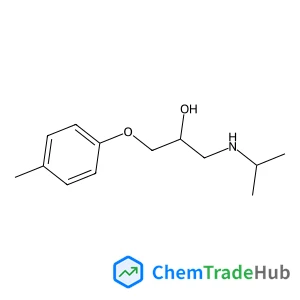
1-(4-Methylphenoxy)-3-(propan-2-ylamino)propan-2-ol
CAS Number:
5790-46-5
Molecular Formula:
C13H21NO2

Recommended Suppliers






Disclaimer
This page provides academic journal information for reference and research purposes only. We are not affiliated with any journal publishers and do not handle publication submissions. For publication-related inquiries, please contact the respective journal publishers directly.
If you notice any inaccuracies in the information displayed, please contact us at support@chemtradehub.com. We will promptly review and address your concerns.