












Ion-pair formation in aqueous strontium chloride and strontium hydroxide solutions under hydrothermal conditions by AC conductivity measurements
Literature Information
Publication Date
2014-06-24
DOI
10.1039/C4CP01703J
Impact Factor
3.676
Authors
H. Arcis, G. H. Zimmerman, P. R. Tremaine
View Original
Abstract
Frequency-dependent electrical conductivities of solutions of aqueous strontium hydroxide and strontium chloride have been measured from T = 295 K to T = 625 K at p = 20 MPa, over a very wide range of ionic strength (3 × 10⁻⁵ to 0.2 mol kg−1), using a high-precision flow AC conductivity instrument. Experimental values for the concentration-dependent equivalent conductivity, Λ, of the two electrolytes were fitted with the Turq–Blum–Bernard–Kunz (“TBBK”) ionic conductivity model, to determine ionic association constants, KA,m. The TBBK fits yielded statistically significant formation constants for the species SrOH+ and SrCl+ at all temperatures, and for Sr(OH)02 and SrCl02 at temperatures above 446 K. The first and second stepwise association constants for the ion pairs followed the order KA1(SrOH+) > KA1(SrCl+) > KA2[Sr(OH)02] > KA2[SrCl02], consistent with long-range solvent polarization effects associated with the lower static dielectric constant and high compressibility of water at elevated temperatures. The stepwise association constants to form SrCl+ agree with previously reported values for CaCl+ to within the combined experimental error at high temperatures and, at temperatures below ∼375 K, the values of log10 KA1 for strontium are lower than those for calcium by up to ∼0.3–0.4 units. The association constants for the species SrOH+ and Sr(OH)02 are the first accurate values to be reported for hydroxide ion pairs with any divalent cation under these conditions.
Related Literature
Fluxional σ-bonds of 2,5,8-tri-tert-butyl-1,3-diazaphenalenyl dimers: stepwise [3,3], [5,5] and [7,7] sigmatropic rearrangementsviaπ-dimer intermediates
Yong-Hui Tian, Jingsong Huang, Miklos Kertesz
2010-03-23
Paper
DOI: 10.1039/B925259B
Ultrafast delocalization of cationic states in poly(N-vinylcarbazole) solid leading to carrier photogeneration
Tetsuro Katayama, Yukihide Ishibashi, Yuji Morii, Christian Ley, Johanna Brazard, Fabien Lacombat, Pascal Plaza, Monique M. Martin, Hiroshi Miyasaka
2010-03-16
Communication
DOI: 10.1039/B925461G
Geometric and electronic structure of Pd/4-aminothiophenol/Au(111) metal–molecule–metal contacts: a periodic DFT study
2010-02-23
Paper
DOI: 10.1039/B923700C
Model non-equilibrium molecular dynamics simulations of heat transfer from a hot gold surface to an alkylthiolate self-assembled monolayer
Yue Zhang, George L. Barnes, Tianying Yan, William L. Hase
2010-02-24
Paper
DOI: 10.1039/B923858C
Thermal reversion of spirooxazine in ionic liquids containing the [NTf2]− anion
Simon Coleman, Robert Byrne, Stela Minkovska
2009-05-08
Paper
DOI: 10.1039/B901417A
Comparison of the non-radiative decay mechanisms of 4-pyrimidinone and uracil: an ab initio study
Vassil B. Delchev, Andrzej L. Sobolewski, Wolfgang Domcke
2010-04-20
Paper
DOI: 10.1039/B922505F
The photoionisation of two phenylcarbenes and their diazirine precursors investigated using synchrotron radiation
Bastian Noller, Patrick Hemberger, Ingo Fischer, Christian Alcaraz, Gustavo A. Garcia, Héloïse Soldi-Lose
2009-04-22
Paper
DOI: 10.1039/B823269E
Effective temperature representation of quantum delocalization effects on the dynamics of NO(A2Σ+←X2Π+) photoexcitation in Ne matrices
L. García-Reyes, J. Rubayo-Soneira
2009-04-28
Paper
DOI: 10.1039/B819355J
You might also like
Compound Q&A
What are the main uses of (3.beta.)-3-Hydroxy-N,N-dimethyl-chol-5-en-24-amide (CAS: 79066-03-8)?
(3.beta.)-3-Hydroxy-N,N-dimethyl-chol-5-en-24-amide (CAS: 79066-03-8) is primari...
79066-03-8(3.beta.)-3-Hydroxy-...
Compound Q&A
What regulatory guidelines apply to 5-(aminomethyl)-2-methoxyphenol (CAS: 89702-89-6)?
5-(Aminomethyl)-2-methoxyphenol (CAS: 89702-89-6) is classified under GHS as a s...
89702-89-65-(aminomethyl)-2-me...
Compound Q&A
What is Thieno[2,3-c]pyridin-7(6H)-one (CAS: 28981-13-7)?
Thieno[2,3-c]pyridin-7(6H)-one (CAS: 28981-13-7) is a heterocyclic organic compo...
28981-13-7Thieno[2,3-c]pyridin...
Compound Q&A
Is 1-[(6-Methoxy-3-pyridinyl)methyl]-4-piperidinamine dihydrochloride (CAS: 1185311-28-7) safe?
1-[(6-Methoxy-3-pyridinyl)methyl]-4-piperidinamine dihydrochloride is generally ...
1185311-28-71-[(6-Methoxy-3-pyri...
Compound Q&A
What regulatory guidelines apply to [(2E)-3-Phenyl-2-propen-1-yl]phosphonic acid (CAS: 146404-58-2)?
[(2E)-3-Phenyl-2-propen-1-yl]phosphonic acid (CAS: 146404-58-2) is regulated und...
146404-58-2[(2E)-3-Phenyl-2-pro...
Compound Q&A
What regulatory guidelines apply to 6-Bromo-7-methoxyquinoline (CAS: 1620515-86-7)?
6-Bromo-7-methoxyquinoline (CAS: 1620515-86-7) falls under the scope of the Glob...
1620515-86-76-Bromo-7-methoxyqui...
Compound Q&A
What industries use (2R)-1-(1-Benzofuran-2-yl)-N-propyl-2-pentanamine (CAS: 260550-89-8)?
This compound is primarily used in the pharmaceutical industry for the developme...
260550-89-8(2R)-1-(1-Benzofuran...
Compound Q&A
What are the main uses of 1-Ethyl-7-[2-methyl-6-(4H-1,2,4-triazol-3-yl)-3-pyridinyl]-3,5-dihydropyrazino[2,3-b]pyrazin-2(1H)-one (CAS: 1228013-15-7)?
1-Ethyl-7-[2-methyl-6-(4H-1,2,4-triazol-3-yl)-3-pyridinyl]-3,5-dihydropyrazino[2...
1228013-15-71-Ethyl-7-[2-methyl-...
Compound Q&A
Are there alternatives to {5-(Acryloylamino)-2-[(dimethylamino)methyl]phenyl}boronic acid (CAS: 1217500-78-1) in synthesis?
Alternative reagents such as 2-[(dimethylamino)methyl]phenylboronic acid or rela...
1217500-78-1{5-(Acryloylamino)-2...
Compound Q&A
What is 3-(Piperidin-4-yloxy)pyridine (CAS: 310881-48-2)?
3-(Piperidin-4-yloxy)pyridine (CAS: 310881-48-2) is an organic compound with the...
310881-48-23-(Piperidin-4-yloxy...
Source Journal
Physical Chemistry Chemical Physics

CiteScore:
5.5
Self-citation Rate:
10.3%
Articles per Year:
3036
Physical Chemistry Chemical Physics (PCCP) is an international journal co-owned by 19 physical chemistry and physics societies from around the world. This journal publishes original, cutting-edge research in physical chemistry, chemical physics and biophysical chemistry. To be suitable for publication in PCCP, articles must include significant innovation and/or insight into physical chemistry; this is the most important criterion that reviewers and Editors will judge against when evaluating submissions. The journal has a broad scope and welcomes contributions spanning experiment, theory, computation and data science. Topical coverage includes spectroscopy, dynamics, kinetics, statistical mechanics, thermodynamics, electrochemistry, catalysis, surface science, quantum mechanics, quantum computing and machine learning. Interdisciplinary research areas such as polymers and soft matter, materials, nanoscience, energy, surfaces/interfaces, and biophysical chemistry are welcomed if they demonstrate significant innovation and/or insight into physical chemistry. Joined experimental/theoretical studies are particularly appreciated when complementary and based on up-to-date approaches.
Recommended Compounds
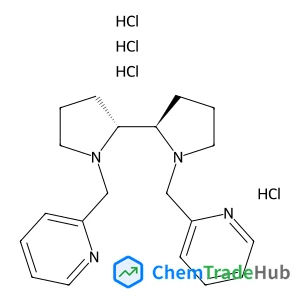
(2R,2'R)-1,1'-Bis(2-pyridinylmethyl)-2,2'-bipyrrolidine tetrahydrochloride
CAS Number:
1228077-88-0
Molecular Formula:
C20H30Cl4N4
![Ethanone, 1-[4-chloro-2-(methylthio)-5-pyrimidinyl]- structure](https://static.chemtradehub.com/structs/661/66116-82-3-863e.webp "Ethanone, 1-[4-chloro-2-(methylthio)-5-pyrimidinyl]- structure")
Ethanone, 1-[4-chloro-2-(methylthio)-5-pyrimidinyl]-
CAS Number:
66116-82-3
Molecular Formula:
C7H7ClN2OS

(4aS,10aS)-7-Isopropyl-1,4a-dimethyl-5,8-dioxo-3,4,4a,5,8,9,10,10a-octahydro-2-phenanthrenecarboxylic acid
CAS Number:
142950-86-5
Molecular Formula:
C20H24O4

Recommended Suppliers






Disclaimer
This page provides academic journal information for reference and research purposes only. We are not affiliated with any journal publishers and do not handle publication submissions. For publication-related inquiries, please contact the respective journal publishers directly.
If you notice any inaccuracies in the information displayed, please contact us at support@chemtradehub.com. We will promptly review and address your concerns.