













Energy-transfer from ultra-small Au nanoclusters to Er3+ ions: a short-range mechanism
Literature Information
Publication Date
2014-05-29
DOI
10.1039/C4CP01680G
Impact Factor
3.676
Authors
Tiziana Cesca, Boris Kalinic, Niccolò Michieli, Chiara Maurizio, Carlo Scian, Gurram Devaraju, Giancarlo Battaglin, Paolo Mazzoldi, Giovanni Mattei
View Original
Abstract
Sub-nanometric Au nanoclusters are known to act as very efficient sensitizers for the luminescent emission of Er3+ ions in silica through a non-resonant broad-band energy-transfer mechanism. In the present work the energy-transfer process is investigated in detail by room temperature photoluminescence characterization of Er and Au co-implanted silica systems in which a different degree of coupling between Er3+ ions and Au nanoclusters is obtained. The results allow us to definitely demonstrate the short-range nature of the interaction in agreement with non-radiative energy-transfer mechanisms. Moreover, an upper limit to the interaction length is also set by the Au–Au intercluster semi-distance which is smaller than 2.4 nm in the present case.
Related Literature
Solid-state 87Rb NMR signatures for rubidium cations bound to a G-quadruplex
Ramsey Ida, Gang Wu
2005-08-02
Communication
DOI: 10.1039/B505674H
Palladium(0) alkyne complexes as active species: a DFT investigation
Mårten Ahlquist, Giancarlo Fabrizi, Sandro Cacchi, Per-Ola Norrby
2005-07-20
Communication
DOI: 10.1039/B507784B
Dendritic supramolecular assemblies for drug delivery
Meredith T. Morgan, Michael A. Carnahan, Stella Finkelstein, Carla A. H. Prata, Lovorka Degoricija, Stephen J. Lee, Mark W. Grinstaff
2005-07-14
Communication
DOI: 10.1039/B502411K
Layer-by-layer assembly of charged poly(phenylacetylene)s with induced macromolecular helicity
Katsuhiro Maeda, Yasuaki Matsushita, Muneyoshi Ezaka
2005-07-26
Communication
DOI: 10.1039/B507863F
Novel HEXOL-type cyclometallated iridium(iii) complexes: stereoselective synthesis and structure elucidation
Liangru Yang, Alex von Zelewsky, Helen Stoeckli-Evans
2005-07-28
Communication
DOI: 10.1039/B507769A
Organogel of an 8-quinolinol platinum(ii) chelate derivative and its efficient phosphorescence emission effected by inhibition of dioxygen quenching
Michihiro Shirakawa, Norifumi Fujita, Takahiro Tani, Kenji Kaneko, Seiji Shinkai
2005-07-04
Communication
DOI: 10.1039/B506148B
Solvolytic routes to new nonabismuth hydroxy- and alkoxy-oxo complexes: synthesis, characterization and solid-state structures of novel nonabismuth polyoxo cations Bi9(μ3-O)8(μ3-OR)65+ (R = H, Et)
John H. Thurston, Dale C. Swenson, Louis Messerle
2005-07-27
Communication
DOI: 10.1039/B504864H
New synthesis method for nickel phosphide hydrotreating catalysts
Shaofeng Yang, Roel Prins
2005-07-27
Communication
DOI: 10.1039/B507940C
You might also like
Compound Q&A
How should waste containing N-Methoxy-N-methyl-1,3-thiazole-5-carboxamide (CAS: 898825-89-3) be handled?
Waste containing N-Methoxy-N-methyl-1,3-thiazole-5-carboxamide (CAS: 898825-89-3...
898825-89-3N-Methoxy-N-methyl-1...
Compound Q&A
How should N-(4-Biphenylyl)dibenzo[b,d]furan-4-amine (CAS: 1318338-47-4) be stored?
N-(4-Biphenylyl)dibenzo[b,d]furan-4-amine should be stored in a tightly sealed c...
1318338-47-4N-(4-Biphenylyl)dibe...
Compound Q&A
What is the market or research trend for 3-Acetamido-5-amino-2,4,6-triiodobenzoic acid (CAS: 1713-07-1)?
The market for 3-Acetamido-5-amino-2,4,6-triiodobenzoic acid (CAS: 1713-07-1) is...
1713-07-13-Acetamido-5-amino-...
Compound Q&A
How should Benzyl 2-O-acetyl-3,4,6-tri-O-benzyl-beta-D-galactopyranoside (CAS: 61820-03-9) be stored?
Benzyl 2-O-acetyl-3,4,6-tri-O-benzyl-beta-D-galactopyranoside (CAS: 61820-03-9) ...
61820-03-9Benzyl 2-O-acetyl-3,...
Compound Q&A
What regulatory guidelines apply to 2-Ethylpiperazine dihydrochloride (CAS: 438050-52-3)?
2-Ethylpiperazine dihydrochloride (CAS: 438050-52-3) is regulated under the Glob...
438050-52-32-Ethylpiperazine di...
Compound Q&A
What regulatory guidelines apply to 1,1'-[1,3-Phenylenebis(methylene)]bis(3-methyl-1H-pyrrole-2,5-dione) (CAS: 119462-56-5)?
1,1'-[1,3-Phenylenebis(methylene)]bis(3-methyl-1H-pyrrole-2,5-dione) (CAS: 11946...
119462-56-51,1'-[1,3-Phenyleneb...
Compound Q&A
Are there alternatives to 5-Fluoro-2-(1-pyrrolidinyl)pyridine (CAS: 1287217-79-1) in synthesis?
Several alternatives can be used in the synthesis of 5-Fluoro-2-(1-pyrrolidinyl)...
1287217-79-15-Fluoro-2-(1-pyrrol...
Compound Q&A
What precautions should be taken when handling 1-((2R,3R,4R,5R)-5-((bis(4-methoxyphenyl)(phenyl)methoxy)methyl)-4-hydroxy-3-methoxytetrahydrofuran-2-yl)-5-methylpyrimidine-2,4(1H,3H)-dione (CAS: 153631-19-7)?
Proper personal protective equipment (PPE) must be worn when handling this compo...
153631-19-71-((2R,3R,4R,5R)-5-(...
Compound Q&A
What precautions should be taken when handling 6-Bromoimidazo[1,2-a]pyridin-8-amine (CAS: 676371-00-9)?
When handling 6-Bromoimidazo[1,2-a]pyridin-8-amine, it is important to wear appr...
676371-00-96-Bromoimidazo[1,2-a...
Compound Q&A
Are there alternatives to (2S,4R)-4-(4-Nitrobenzyl)pyrrolidine-2-carboxylic acid hydrochloride (CAS: 1049740-22-8) in synthesis?
Alternatives to (2S,4R)-4-(4-Nitrobenzyl)pyrrolidine-2-carboxylic acid hydrochlo...
1049740-22-8(2S,4R)-4-(4-Nitrobe...
Source Journal
Physical Chemistry Chemical Physics

CiteScore:
5.5
Self-citation Rate:
10.3%
Articles per Year:
3036
Physical Chemistry Chemical Physics (PCCP) is an international journal co-owned by 19 physical chemistry and physics societies from around the world. This journal publishes original, cutting-edge research in physical chemistry, chemical physics and biophysical chemistry. To be suitable for publication in PCCP, articles must include significant innovation and/or insight into physical chemistry; this is the most important criterion that reviewers and Editors will judge against when evaluating submissions. The journal has a broad scope and welcomes contributions spanning experiment, theory, computation and data science. Topical coverage includes spectroscopy, dynamics, kinetics, statistical mechanics, thermodynamics, electrochemistry, catalysis, surface science, quantum mechanics, quantum computing and machine learning. Interdisciplinary research areas such as polymers and soft matter, materials, nanoscience, energy, surfaces/interfaces, and biophysical chemistry are welcomed if they demonstrate significant innovation and/or insight into physical chemistry. Joined experimental/theoretical studies are particularly appreciated when complementary and based on up-to-date approaches.
Recommended Compounds
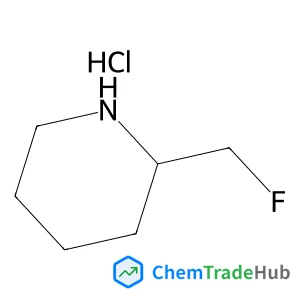
(2S)-2-(Fluoromethyl)piperidine hydrochloride (1:1)
CAS Number:
886216-73-5
Molecular Formula:
C6H13ClFN

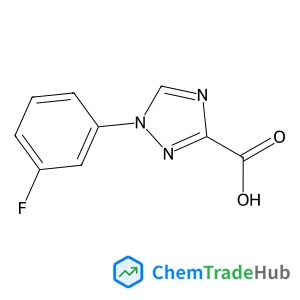
1-(3-Fluorophenyl)-1H-1,2,4-triazole-3-carboxylic acid
CAS Number:
1292369-51-7
Molecular Formula:
C9H6FN3O2
Recommended Suppliers




Disclaimer
This page provides academic journal information for reference and research purposes only. We are not affiliated with any journal publishers and do not handle publication submissions. For publication-related inquiries, please contact the respective journal publishers directly.
If you notice any inaccuracies in the information displayed, please contact us at support@chemtradehub.com. We will promptly review and address your concerns.