













Selectivity in fragmentation of N-methylacetamide after resonant K-shell excitation
Literature Information
Publication Date
2014-06-18
DOI
10.1039/C4CP01067A
Impact Factor
3.676
Authors
Peter Salén, Robert Richter, Michele Alagia, Peter van der Meulen, John H. D. Eland
View Original
Abstract
The fragmentation pattern of the peptide model system, N-methylacetamide, is investigated using ion time-of-flight (TOF) spectroscopy after resonant K-shell excitation. Corresponding near-edge X-ray absorption fine structure (NEXAFS) spectra recorded at high resolution at the C1s, N1s and O1s edges are presented. Analysis of the ion TOF data reveals a multitude of fragmentation channels and dissociation pathways. Comparison between the excitation of six different resonances in the vicinity of the C1s, N1s and O1s edges suggests evidence for site-selective bond breaking. In particular the breaking of the peptide bond and the N–Cα bond show a clear correlation with resonant excitation at the N1s edge. Also, stronger tendencies towards site-selective bond breaking are found for the generation of single ions compared with ion pairs. Analysis of angular distributions of ions from breakage of the peptide bond yields a fragmentation time of <400 fs.
Related Literature
Targeting of mixed sequence double-stranded DNA using pyrene-functionalized 2′-amino-α-l-LNA
Patrick J. Hrdlicka, T. Santhosh Kumar, Jesper Wengel
2005-07-21
Communication
DOI: 10.1039/B506986F
Effects of nanoconfinement on the morphology and reactivity of organic materials
2005-07-19
Feature Article
DOI: 10.1039/B502849N
Polymer vesicles formed by amphiphilic diblock copolymers containing a thermotropic liquid crystalline polymer block
Jing Yang, Daniel Lévy, Wei Deng, Patrick Keller, Min-Hui Li
2005-08-01
Communication
DOI: 10.1039/B508034G
Polydipyrrole- and polydicarbazole-nanorods as new nanosized supports for DNA hybridization
Jean-Paul Lellouche, Senthil Govindaraji, Augustine Joseph, Jyongsik Jang, Kyung Jin Lee
2005-07-14
Communication
DOI: 10.1039/B502483H
Photochemical release of nitric oxide from a regenerable, sol-gel encapsulated Ru–salen–nitrosyl complex
Jeane Bordini, Peter C. Ford, Elia Tfouni
2005-07-25
Communication
DOI: 10.1039/B507407J
First snapshot of a nonpolymeric hydrogelator interacting with its gelling solvents
D. Krishna Kumar, D. Amilan Jose, Amitava Das, Parthasarathi Dastidar
2005-07-13
Communication
DOI: 10.1039/B506941F
Synthesis of 1,3-dioxo-hexahydropyrido[1,2-c][1,3]diazepine carboxylates, a new bicyclic skeleton formed by ring expansion–RCM methodology
Nicolai Dieltiens, Diederica D. Claeys, Bart Allaert, Francis Verpoort, Christian V. Stevens
2005-08-04
Communication
DOI: 10.1039/B508663A
Facile synthetic approach to novel core-extended perylene carboximide dyes
Sibylle Müller, Klaus Müllen
2005-07-19
Communication
DOI: 10.1039/B509220E
The vicinal F–C–C–F moiety as a tool for influencing peptide conformation
Martin Schüler, David O'Hagan, Alexandra M. Z. Slawin
2005-07-14
Communication
DOI: 10.1039/B506010A
Thio[2-(benzoylamino)ethylamino]-β-CD fragment modified gold nanoparticles as recycling extractors for [60]fullerene
Yu Liu, Ying-Wei Yang, Yong Chen
2005-07-21
Communication
DOI: 10.1039/B507650A
You might also like
Compound Q&A
How should waste containing N-Methoxy-N-methyl-1,3-thiazole-5-carboxamide (CAS: 898825-89-3) be handled?
Waste containing N-Methoxy-N-methyl-1,3-thiazole-5-carboxamide (CAS: 898825-89-3...
898825-89-3N-Methoxy-N-methyl-1...
Compound Q&A
How should N-(4-Biphenylyl)dibenzo[b,d]furan-4-amine (CAS: 1318338-47-4) be stored?
N-(4-Biphenylyl)dibenzo[b,d]furan-4-amine should be stored in a tightly sealed c...
1318338-47-4N-(4-Biphenylyl)dibe...
Compound Q&A
What is the market or research trend for 3-Acetamido-5-amino-2,4,6-triiodobenzoic acid (CAS: 1713-07-1)?
The market for 3-Acetamido-5-amino-2,4,6-triiodobenzoic acid (CAS: 1713-07-1) is...
1713-07-13-Acetamido-5-amino-...
Compound Q&A
How should Benzyl 2-O-acetyl-3,4,6-tri-O-benzyl-beta-D-galactopyranoside (CAS: 61820-03-9) be stored?
Benzyl 2-O-acetyl-3,4,6-tri-O-benzyl-beta-D-galactopyranoside (CAS: 61820-03-9) ...
61820-03-9Benzyl 2-O-acetyl-3,...
Compound Q&A
What regulatory guidelines apply to 2-Ethylpiperazine dihydrochloride (CAS: 438050-52-3)?
2-Ethylpiperazine dihydrochloride (CAS: 438050-52-3) is regulated under the Glob...
438050-52-32-Ethylpiperazine di...
Compound Q&A
What regulatory guidelines apply to 1,1'-[1,3-Phenylenebis(methylene)]bis(3-methyl-1H-pyrrole-2,5-dione) (CAS: 119462-56-5)?
1,1'-[1,3-Phenylenebis(methylene)]bis(3-methyl-1H-pyrrole-2,5-dione) (CAS: 11946...
119462-56-51,1'-[1,3-Phenyleneb...
Compound Q&A
Are there alternatives to 5-Fluoro-2-(1-pyrrolidinyl)pyridine (CAS: 1287217-79-1) in synthesis?
Several alternatives can be used in the synthesis of 5-Fluoro-2-(1-pyrrolidinyl)...
1287217-79-15-Fluoro-2-(1-pyrrol...
Compound Q&A
What precautions should be taken when handling 1-((2R,3R,4R,5R)-5-((bis(4-methoxyphenyl)(phenyl)methoxy)methyl)-4-hydroxy-3-methoxytetrahydrofuran-2-yl)-5-methylpyrimidine-2,4(1H,3H)-dione (CAS: 153631-19-7)?
Proper personal protective equipment (PPE) must be worn when handling this compo...
153631-19-71-((2R,3R,4R,5R)-5-(...
Compound Q&A
What precautions should be taken when handling 6-Bromoimidazo[1,2-a]pyridin-8-amine (CAS: 676371-00-9)?
When handling 6-Bromoimidazo[1,2-a]pyridin-8-amine, it is important to wear appr...
676371-00-96-Bromoimidazo[1,2-a...
Compound Q&A
Are there alternatives to (2S,4R)-4-(4-Nitrobenzyl)pyrrolidine-2-carboxylic acid hydrochloride (CAS: 1049740-22-8) in synthesis?
Alternatives to (2S,4R)-4-(4-Nitrobenzyl)pyrrolidine-2-carboxylic acid hydrochlo...
1049740-22-8(2S,4R)-4-(4-Nitrobe...
Source Journal
Physical Chemistry Chemical Physics

CiteScore:
5.5
Self-citation Rate:
10.3%
Articles per Year:
3036
Physical Chemistry Chemical Physics (PCCP) is an international journal co-owned by 19 physical chemistry and physics societies from around the world. This journal publishes original, cutting-edge research in physical chemistry, chemical physics and biophysical chemistry. To be suitable for publication in PCCP, articles must include significant innovation and/or insight into physical chemistry; this is the most important criterion that reviewers and Editors will judge against when evaluating submissions. The journal has a broad scope and welcomes contributions spanning experiment, theory, computation and data science. Topical coverage includes spectroscopy, dynamics, kinetics, statistical mechanics, thermodynamics, electrochemistry, catalysis, surface science, quantum mechanics, quantum computing and machine learning. Interdisciplinary research areas such as polymers and soft matter, materials, nanoscience, energy, surfaces/interfaces, and biophysical chemistry are welcomed if they demonstrate significant innovation and/or insight into physical chemistry. Joined experimental/theoretical studies are particularly appreciated when complementary and based on up-to-date approaches.
Recommended Compounds
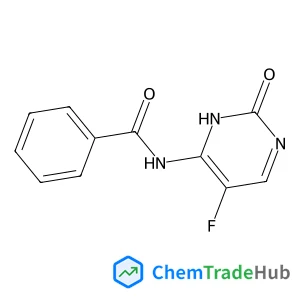
N-(5-Fluoro-2-oxo-2,3-dihydro-4-pyrimidinyl)benzamide
CAS Number:
10357-07-0
Molecular Formula:
C11H8FN3O2
![4-Chloro-2-{[(2-chlorophenoxy)acetyl]amino}benzoic acid structure](https://static.chemtradehub.com/structs/351/351424-20-9-9467.webp "4-Chloro-2-{[(2-chlorophenoxy)acetyl]amino}benzoic acid structure")
4-Chloro-2-{[(2-chlorophenoxy)acetyl]amino}benzoic acid
CAS Number:
351424-20-9
Molecular Formula:
C15H11Cl2NO4

Recommended Suppliers






Disclaimer
This page provides academic journal information for reference and research purposes only. We are not affiliated with any journal publishers and do not handle publication submissions. For publication-related inquiries, please contact the respective journal publishers directly.
If you notice any inaccuracies in the information displayed, please contact us at support@chemtradehub.com. We will promptly review and address your concerns.