












amine structure](https://static.chemtradehub.com/structs/629/62924-61-2-0728.webp "[(2-chlorophenyl)methyl](ethyl)amine structure")
Structures of ionic liquid–water mixtures investigated by IR and NMR spectroscopy
Literature Information
Publication Date
2014-04-07
DOI
10.1039/C4CP00589A
Impact Factor
3.676
Authors
Seoncheol Cha, Mingqi Ao, Woongmo Sung, Bongjin Moon, Bodil Ahlström, Patrik Johansson, Yukio Ouchi, Doseok Kim
View Original
Abstract
Imidazolium-based ionic liquids having different anions 1-butyl-3-methylimidazolium ([BMIM]X: X = Cl−, Br−, I−, and BF4−) and their aqueous mixtures were investigated by IR absorption and proton NMR spectroscopy. The IR spectra of these ionic liquids in the CHx stretching region differed substantially, especially for C–H bonds in the imidazolium ring, and the NMR chemical shifts of protons in the imidazolium ring also varied markedly for ILs having different anions. Upon the introduction of water to screen the electrostatic forces and separate the ions, both IR and NMR spectra of [BMIM]X (X = Cl−, Br−, I−) showed significant changes, while those of [BMIM]BF4 did not change appreciably. H–D isotopic exchange rates of C(2)–H in [BMIM]X–D2O mixtures exhibited an order: C(2)–H⋯Cl > C(2)–H⋯Br > C(2)–H⋯I, while the C(2)–H of [BMIM]BF4 was not deuterated at all. These experimental findings, supported by DFT calculations, lead to the microscopic bulk configurations in which the anions and the protons of the cations in the halide ionic liquids have specific, hydrogen-bond type of interaction, while the BF4− anion does not participate in the specific interaction, but interacts less specifically by positioning itself more above the ring plane of the imidazolium cation. This structural change dictated by the anion type will work as a key element to build the structure–property relationship of ionic liquids.
Related Literature
Total synthesis of spiromastilactone A
Pauline Chaumont-Olive, Jacques Maddaluno, Anne Harrison-Marchand
2019-03-21
Paper
DOI: 10.1039/C9OB00547A
Correction: Enantiomeric NMR discrimination of carboxylic acids using actinomycin D as a chiral solvating agent
Liwen Bai, Pian Chen, Jiangxia Xiang, Jiarui Sun, Xinxiang Lei
2019-03-28
Correction
DOI: 10.1039/C9OB90055A
An unprecedented intramolecular to intermolecular mechanistic switch in 1,1-diaminoazines leading to differential product formation during the I2-induced tandem oxidative transformation
Deepika Kathuria, Pankaj Gupta, Sumit S. Chourasiya, Subash C. Sahoo, Uwe Beifuss, Asit K. Chakraborti, Prasad V. Bharatam
2019-04-01
Paper
DOI: 10.1039/C9OB00610A
Substituent-controlled racemization of dissymmetric coordination capsules
Kentaro Harada, Ryo Sekiya, Takeshi Maehara, Takeharu Haino
2019-03-28
Paper
DOI: 10.1039/C9OB00388F
Structural characteristics requisite for the ligand-based selective detection of i-motif DNA
Sagar Satpathi, Subrahmanyam Sappati, Konoya Das
2019-05-08
Paper
DOI: 10.1039/C9OB01020C
Improvement of the versatility of an arabinofuranosidase against galactofuranose for the synthesis of galactofuranoconjugates
Quentin Pavic, Aline Pillot, Olivier Tasseau, Laurent Legentil, Sylvain Tranchimand
2019-06-24
Paper
DOI: 10.1039/C9OB01162E
Questioning the γ-gauche effect: stereoassignment of 1,3-disubstituted-tetrahydro-β-carbolines using 1H–1H coupling constants
Kristýna Cagašová, Maryam Ghavami, Zhong-Ke Yao, Paul R. Carlier
2019-06-17
Paper
DOI: 10.1039/C9OB01139K
A highly selective H/D exchange reaction of 1,4-dihydropyridines
Kaiqian Wang, Xiao Peng, Ping Wang, Feng Liang
2019-03-25
Paper
DOI: 10.1039/C9OB00575G
Dinuclear zinc synergistic catalytic asymmetric phospha-Michael/Michael cascade reaction: synthesis of 1,2,3-trisubstituted indanes bearing phosphoryl groups
Bing-Kai Tao, Hua Yang, Yuan-Zhao Hua, Min-Can Wang
2019-04-03
Paper
DOI: 10.1039/C9OB00544G
You might also like
Compound Q&A
What are the main uses of (3.beta.)-3-Hydroxy-N,N-dimethyl-chol-5-en-24-amide (CAS: 79066-03-8)?
(3.beta.)-3-Hydroxy-N,N-dimethyl-chol-5-en-24-amide (CAS: 79066-03-8) is primari...
79066-03-8(3.beta.)-3-Hydroxy-...
Compound Q&A
What regulatory guidelines apply to 5-(aminomethyl)-2-methoxyphenol (CAS: 89702-89-6)?
5-(Aminomethyl)-2-methoxyphenol (CAS: 89702-89-6) is classified under GHS as a s...
89702-89-65-(aminomethyl)-2-me...
Compound Q&A
What is Thieno[2,3-c]pyridin-7(6H)-one (CAS: 28981-13-7)?
Thieno[2,3-c]pyridin-7(6H)-one (CAS: 28981-13-7) is a heterocyclic organic compo...
28981-13-7Thieno[2,3-c]pyridin...
Compound Q&A
Is 1-[(6-Methoxy-3-pyridinyl)methyl]-4-piperidinamine dihydrochloride (CAS: 1185311-28-7) safe?
1-[(6-Methoxy-3-pyridinyl)methyl]-4-piperidinamine dihydrochloride is generally ...
1185311-28-71-[(6-Methoxy-3-pyri...
Compound Q&A
What regulatory guidelines apply to [(2E)-3-Phenyl-2-propen-1-yl]phosphonic acid (CAS: 146404-58-2)?
[(2E)-3-Phenyl-2-propen-1-yl]phosphonic acid (CAS: 146404-58-2) is regulated und...
146404-58-2[(2E)-3-Phenyl-2-pro...
Compound Q&A
What regulatory guidelines apply to 6-Bromo-7-methoxyquinoline (CAS: 1620515-86-7)?
6-Bromo-7-methoxyquinoline (CAS: 1620515-86-7) falls under the scope of the Glob...
1620515-86-76-Bromo-7-methoxyqui...
Compound Q&A
What industries use (2R)-1-(1-Benzofuran-2-yl)-N-propyl-2-pentanamine (CAS: 260550-89-8)?
This compound is primarily used in the pharmaceutical industry for the developme...
260550-89-8(2R)-1-(1-Benzofuran...
Compound Q&A
What are the main uses of 1-Ethyl-7-[2-methyl-6-(4H-1,2,4-triazol-3-yl)-3-pyridinyl]-3,5-dihydropyrazino[2,3-b]pyrazin-2(1H)-one (CAS: 1228013-15-7)?
1-Ethyl-7-[2-methyl-6-(4H-1,2,4-triazol-3-yl)-3-pyridinyl]-3,5-dihydropyrazino[2...
1228013-15-71-Ethyl-7-[2-methyl-...
Compound Q&A
Are there alternatives to {5-(Acryloylamino)-2-[(dimethylamino)methyl]phenyl}boronic acid (CAS: 1217500-78-1) in synthesis?
Alternative reagents such as 2-[(dimethylamino)methyl]phenylboronic acid or rela...
1217500-78-1{5-(Acryloylamino)-2...
Compound Q&A
What is 3-(Piperidin-4-yloxy)pyridine (CAS: 310881-48-2)?
3-(Piperidin-4-yloxy)pyridine (CAS: 310881-48-2) is an organic compound with the...
310881-48-23-(Piperidin-4-yloxy...
Source Journal
Physical Chemistry Chemical Physics

CiteScore:
5.5
Self-citation Rate:
10.3%
Articles per Year:
3036
Physical Chemistry Chemical Physics (PCCP) is an international journal co-owned by 19 physical chemistry and physics societies from around the world. This journal publishes original, cutting-edge research in physical chemistry, chemical physics and biophysical chemistry. To be suitable for publication in PCCP, articles must include significant innovation and/or insight into physical chemistry; this is the most important criterion that reviewers and Editors will judge against when evaluating submissions. The journal has a broad scope and welcomes contributions spanning experiment, theory, computation and data science. Topical coverage includes spectroscopy, dynamics, kinetics, statistical mechanics, thermodynamics, electrochemistry, catalysis, surface science, quantum mechanics, quantum computing and machine learning. Interdisciplinary research areas such as polymers and soft matter, materials, nanoscience, energy, surfaces/interfaces, and biophysical chemistry are welcomed if they demonstrate significant innovation and/or insight into physical chemistry. Joined experimental/theoretical studies are particularly appreciated when complementary and based on up-to-date approaches.
Recommended Compounds
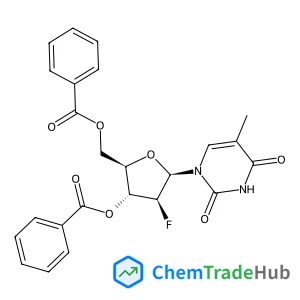
1-(3',5'-Di-O-benzoyl-2'-deoxy-2'-fluoro-b-D-arabinofuranosyl)thymine
CAS Number:
97614-47-6
Molecular Formula:
C24H21FN2O7
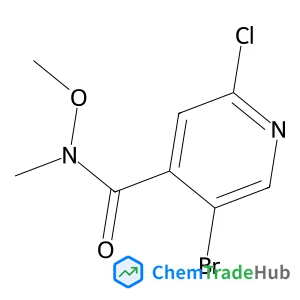
5-Bromo-2-chloro-N-methoxy-N-methylisonicotinamide
CAS Number:
1256790-08-5
Molecular Formula:
C8H8BrClN2O2
Recommended Suppliers





Disclaimer
This page provides academic journal information for reference and research purposes only. We are not affiliated with any journal publishers and do not handle publication submissions. For publication-related inquiries, please contact the respective journal publishers directly.
If you notice any inaccuracies in the information displayed, please contact us at support@chemtradehub.com. We will promptly review and address your concerns.