











An unprecedented intramolecular to intermolecular mechanistic switch in 1,1-diaminoazines leading to differential product formation during the I2-induced tandem oxidative transformation
Literature Information
Publication Date
2019-04-01
DOI
10.1039/C9OB00610A
Impact Factor
3.876
Authors
Deepika Kathuria, Pankaj Gupta, Sumit S. Chourasiya, Subash C. Sahoo, Uwe Beifuss, Asit K. Chakraborti, Prasad V. Bharatam
View Original
Abstract
The tautomeric preference of guanylhydrazones towards the azine form induces an unprecedented intramolecular to intermolecular mechanistic switch during the I2-catalyzed oxidative transformation leading to 4,5-disubstituted-3-amino-1,2,4-triazoles in contrast to the reaction of semicarbazones and thiosemicarbazones to form 1,3,4-oxa/thiadiazoles. This intramolecular to intermolecular cyclization shift was established through control experiments and was attributed to the high energy demand (∼22 kcal mol−1) for the azine tautomer to adopt the s-cis conformation which is essential for the intramolecular reaction. An I2 induced protocol for an efficient and straightforward synthesis of 4,5-disubstituted-3-amino-1,2,4-triazoles has been developed via tandem oxidative transformation of guanylhydrazones (in its preferentially existing azine tautomeric form) with distinct advantages such as wide substrate scope, use of substoichiometric amounts of iodine, no requirement of external oxidizing agents, base free reaction conditions, short reaction time and moderate to good yields. The role of silver salt in improving the yield and shortening of reaction time was also highlighted.
Related Literature
Azide addition to Sc2@C66: favorable activity on unsaturated linear triquinanes and dramatic reactivity difference compared with the free C66 cage
Qiao-Zhi Li, Jia-Jia Zheng, Xiang Zhao
2015-07-13
Communication
DOI: 10.1039/C5CP03737A
Control of layer stacking in CVD graphene under quasi-static condition
Kiran M. Subhedar, Indu Sharma, Sanjay R. Dhakate
2015-08-06
Paper
DOI: 10.1039/C5CP03541D
Synergistically enhanced photocatalytic and chemotherapeutic effects of aptamer-functionalized ZnO nanoparticles towards cancer cells
Xinhuan Wang, Chenglin Heng, Qiusen Han, Shuanfei Cai, Jingying Li, Cui Qi, Wei Liang, Rong Yang, Chen Wang
2015-07-29
Paper
DOI: 10.1039/C5CP02139A
Reaction kinetics for the solid state synthesis of the AlH3/MgCl2 nano-composite by mechanical milling
C. W. Duan, L. X. Hu, Y. Sun, H. P. Zhou, H. Yu
2015-07-28
Paper
DOI: 10.1039/C5CP03768A
Negative linear compressibility
Andrew B. Cairns, Andrew L. Goodwin
2015-05-14
Perspective
DOI: 10.1039/C5CP00442J
Phase transition kinetics and surface binding states of methylammonium lead iodide perovskite
G. Rajendra Kumar, A. Dennyson Savariraj, S. N. Karthick, S. Selvam, B. Balamuralitharan, Hee-Je Kim, K. K. Viswanathan, M. Vijaykumar
2016-02-09
Paper
DOI: 10.1039/C5CP06232B
Electrochemical ‘bubble swarm’ enhancement of ultrasonic surface cleaning
P. R. Birkin, D. G. Offin, C. J. B. Vian, T. G. Leighton
2015-08-03
Paper
DOI: 10.1039/C5CP02933C
An adaptive quantum mechanics/molecular mechanics method for the infrared spectrum of water: incorporation of the quantum effect between solute and solvent
Hiroshi C. Watanabe, Misa Banno, Minoru Sakurai
2016-02-08
Paper
DOI: 10.1039/C5CP07136D
Direct observation of structural properties and fluorescent trapping sites in macrocyclic porphyrin arrays at the single-molecule level
Sujin Ham, Ji-Eun Lee, Suhwan Song, Xiaobin Peng, Takaaki Hori, Naoki Aratani, Atsuhiro Osuka, Eunji Sim, Dongho Kim
2016-01-08
Paper
DOI: 10.1039/C5CP06859B
You might also like
Compound Q&A
What is 1-(2,4,6-Trifluorophenyl)ethanol (CAS: 1250113-83-7)?
1-(2,4,6-Trifluorophenyl)ethanol is an organic compound with the CAS number 1250...
1250113-83-71-(2,4,6-Trifluoroph...
Compound Q&A
Is 1-(2,4-Dimethoxybenzyl)-4-(hydroxymethyl)-2-pyrrolidinone (CAS: 919111-34-5) safe?
1-(2,4-Dimethoxybenzyl)-4-(hydroxymethyl)-2-pyrrolidinone (CAS: 919111-34-5) is ...
919111-34-51-(2,4-Dimethoxybenz...
Compound Q&A
What are the physical and chemical properties of (7S,15R)-6β,15-Diacetoxy-7α,20-epoxy-7-hydroxykaura-2,16-dien-1-one (CAS: 51419-51-3)?
(7S,15R)-6β,15-Diacetoxy-7α,20-epoxy-7-hydroxykaura-2,16-dien-1-one is a crystal...
51419-51-3(7S,15R)-6β,15-Diace...
Compound Q&A
What regulatory guidelines apply to rac-ethyl (1r,4r)-4-hydroxycyclohexane-1-carboxylate, trans (CAS: 3618-04-0)?
The compound rac-ethyl (1r,4r)-4-hydroxycyclohexane-1-carboxylate, trans (CAS: 3...
3618-04-0rac-ethyl (1r,4r)-4-...
Compound Q&A
What is the market or research trend for 2-(2,4-Difluorophenoxy)-3-nitropyridine (CAS: 175135-62-3)?
The market for 2-(2,4-Difluorophenoxy)-3-nitropyridine (CAS: 175135-62-3) is cur...
175135-62-32-(2,4-Difluoropheno...
Compound Q&A
What are the main uses of 6-Diazo-5-oxo-L-norleucine (CAS: 157-03-9)?
The main uses of 6-Diazo-5-oxo-L-norleucine (CAS: 157-03-9) include research in ...
157-03-96-Diazo-5-oxo-L-norl...
Compound Q&A
What precautions should be taken when handling 2-Aminoethyl-mono-amide-DOTA-tris(tBu ester) (CAS: 173308-19-5)?
When handling 2-Aminoethyl-mono-amide-DOTA-tris(tBu ester) (CAS: 173308-19-5), i...
173308-19-52-Aminoethyl-mono-am...
Compound Q&A
How is 5-Methylimidazo[1,2-a]pyridine-3-carbaldehyde (CAS: 178488-37-4) typically synthesized?
5-Methylimidazo[1,2-a]pyridine-3-carbaldehyde (CAS: 178488-37-4) can be synthesi...
178488-37-45-Methylimidazo[1,2-...
Compound Q&A
Are there alternatives to 2,4,6-Trihydroxyisophthalaldehyde (CAS: 4396-13-8) in synthesis?
There are alternative reagents that can be used in the synthesis of 2,4,6-Trihyd...
4396-13-82,4,6-Trihydroxyisop...
Compound Q&A
What is (2Z)-3-(5-Fluoro-1H-indol-3-yl)-2-sulfanylacrylic acid (CAS: 179461-52-0)?
(2Z)-3-(5-Fluoro-1H-indol-3-yl)-2-sulfanylacrylic acid is a chemical compound wi...
179461-52-0(2Z)-3-(5-Fluoro-1H-...
Source Journal
Organic & Biomolecular Chemistry

CiteScore:
3.4
Self-citation Rate:
10.3%
Articles per Year:
1041
Organic & Biomolecular Chemistry (OBC) publishes original and high impact research and reviews in organic chemistry. We welcome research that shows new or significantly improved protocols or methodologies in total synthesis, synthetic methodology or physical and theoretical organic chemistry as well as research that shows a significant advance in the organic chemistry or molecular design aspects of chemical biology, catalysis, supramolecular and macromolecular chemistry, theoretical chemistry, mechanism-oriented physical organic chemistry, medicinal chemistry or natural products. Articles published in the journal should report new work which makes a highly-significant impact in the field. Routine and incremental work is generally not suitable for publication in the journal. More details about key areas of our scope are below. In all cases authors should include in their article clear rationale for why their research has been carried out.
Recommended Compounds
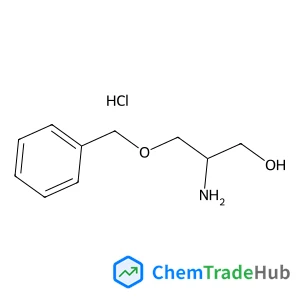
(R)-2-amino-3-(benzyloxy)propan-1-ol hydrochloride
CAS Number:
58577-95-0
Molecular Formula:
C10H16ClNO2
![[2-(Benzyloxy)-3-bromo-5-methylphenyl]boronic acid structure](https://static.chemtradehub.com/structs/870/870777-20-1-24ac.webp "[2-(Benzyloxy)-3-bromo-5-methylphenyl]boronic acid structure")
[2-(Benzyloxy)-3-bromo-5-methylphenyl]boronic acid
CAS Number:
870777-20-1
Molecular Formula:
C14H14BBrO3
Recommended Suppliers






Disclaimer
This page provides academic journal information for reference and research purposes only. We are not affiliated with any journal publishers and do not handle publication submissions. For publication-related inquiries, please contact the respective journal publishers directly.
If you notice any inaccuracies in the information displayed, please contact us at support@chemtradehub.com. We will promptly review and address your concerns.