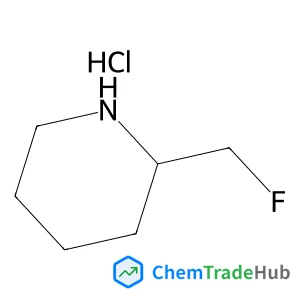
(2S)-2-(Fluoromethyl)piperidine hydrochloride (1:1)
CAS Number:
886216-73-5
Molecular Formula:
C6H13ClFN
Richard I. Ainsworth, Jamieson K. Christie, Nora H. de Leeuw
First-principles and classical molecular dynamics simulations of undoped and silver-doped phosphate-based glasses with 50 mol% P2O5, 0–20 mol% Ag2O, and varying amounts of Na2O and CaO have been carried out. Ag occupies a distorted local coordination with a mean Ag–O bond length of 2.5 Å and an ill-defined first coordination shell. This environment is shown to be distorted octahedral/trigonal bipyramidal. Ag–O coordination numbers of 5.42 and 5.54–5.71 are calculated for first-principles and classical methodologies respectively. A disproportionation in the medium-range phosphorus Qn distribution is explicitly displayed upon silver-doping via CaO substitution, approximating 2Q2 → Q1 + Q3, but not on silver-doping via Na2O substitution. An accompanying increase in FWHM of the phosphorus to bridging oxygen partial pair-correlation function is strong evidence for a bulk structural mechanism associated with decreased dissolution rates with increased silver content. Experimentally, Ag2O ↔ Na2O substitution is known to decrease dissolution and we show this to be a result of Ag's local bonding.
Tsutomu Kimura, Toshiaki Murai
DOI: 10.1039/B507755A
Charng-Sheng Tsai, Ting-Bin Yu, Chao-Tsen Chen
DOI: 10.1039/B507237A
Meredith T. Morgan, Michael A. Carnahan, Stella Finkelstein, Carla A. H. Prata, Lovorka Degoricija, Stephen J. Lee, Mark W. Grinstaff
DOI: 10.1039/B502411K
A. J. (Ton) Dirks, Sander S. van Berkel, Nikos S. Hatzakis, Joost A. Opsteen, Floris L. van Delft, Jeroen J. L. M. Cornelissen, Alan E. Rowan, Jan C. M. van Hest, Floris P. J. T. Rutjes, Roeland J. M. Nolte
DOI: 10.1039/B508428H
Nicholas S. P. Watney, Zoltán A. Gál, Matthew D. S. Webster, Simon J. Clarke
DOI: 10.1039/B505208D
Liang Li, Huifeng Qian, Jicun Ren
DOI: 10.1039/B505791D
Ramsey Ida, Gang Wu
DOI: 10.1039/B505674H
Riichi Miyamoto, Rika Tanaka Hamazawa, Masakazu Hirotsu, Takanori Nishioka, Isamu Kinoshita, L. James Wright
DOI: 10.1039/B505681K
Jeane Bordini, Peter C. Ford, Elia Tfouni
DOI: 10.1039/B507407J
Waste containing N-Methoxy-N-methyl-1,3-thiazole-5-carboxamide (CAS: 898825-89-3...
N-(4-Biphenylyl)dibenzo[b,d]furan-4-amine should be stored in a tightly sealed c...
The market for 3-Acetamido-5-amino-2,4,6-triiodobenzoic acid (CAS: 1713-07-1) is...
Benzyl 2-O-acetyl-3,4,6-tri-O-benzyl-beta-D-galactopyranoside (CAS: 61820-03-9) ...
2-Ethylpiperazine dihydrochloride (CAS: 438050-52-3) is regulated under the Glob...
1,1'-[1,3-Phenylenebis(methylene)]bis(3-methyl-1H-pyrrole-2,5-dione) (CAS: 11946...
Several alternatives can be used in the synthesis of 5-Fluoro-2-(1-pyrrolidinyl)...
Proper personal protective equipment (PPE) must be worn when handling this compo...
When handling 6-Bromoimidazo[1,2-a]pyridin-8-amine, it is important to wear appr...
Alternatives to (2S,4R)-4-(4-Nitrobenzyl)pyrrolidine-2-carboxylic acid hydrochlo...

Physical Chemistry Chemical Physics (PCCP) is an international journal co-owned by 19 physical chemistry and physics societies from around the world. This journal publishes original, cutting-edge research in physical chemistry, chemical physics and biophysical chemistry. To be suitable for publication in PCCP, articles must include significant innovation and/or insight into physical chemistry; this is the most important criterion that reviewers and Editors will judge against when evaluating submissions. The journal has a broad scope and welcomes contributions spanning experiment, theory, computation and data science. Topical coverage includes spectroscopy, dynamics, kinetics, statistical mechanics, thermodynamics, electrochemistry, catalysis, surface science, quantum mechanics, quantum computing and machine learning. Interdisciplinary research areas such as polymers and soft matter, materials, nanoscience, energy, surfaces/interfaces, and biophysical chemistry are welcomed if they demonstrate significant innovation and/or insight into physical chemistry. Joined experimental/theoretical studies are particularly appreciated when complementary and based on up-to-date approaches.
![2-(7,7-Difluorobicyclo[4.1.0]hept-1-yl)ethanamine structure](https://static.chemtradehub.com/structs/209/2098065-08-6-ff24.webp "2-(7,7-Difluorobicyclo[4.1.0]hept-1-yl)ethanamine structure")
![2-Methyl-2-propanyl {3-[4-(4,4,5,5-tetramethyl-1,3,2-dioxaborolan-2-yl)phenyl]-3-oxetanyl}carbamate structure](https://static.chemtradehub.com/structs/127/1279090-25-3-1b84.webp "2-Methyl-2-propanyl {3-[4-(4,4,5,5-tetramethyl-1,3,2-dioxaborolan-2-yl)phenyl]-3-oxetanyl}carbamate structure")