![(2R)-2,7,8-Trimethyl-2-[(4R,8R)-4,8,12-trimethyltridecyl]-6-chromanol structure](https://static.chemtradehub.com/structs/54-/54-28-4-155c.webp "(2R)-2,7,8-Trimethyl-2-[(4R,8R)-4,8,12-trimethyltridecyl]-6-chromanol structure")
(2R)-2,7,8-Trimethyl-2-[(4R,8R)-4,8,12-trimethyltridecyl]-6-chromanol
CAS Number:
54-28-4
Molecular Formula:
C28H48O2
Midori Greenwood-Goodwin, Eric S. Teasley
Engineered biomimetic microenvironments from hydrogels are an emerging strategy to achieve lineage-specific differentiation in vitro. In addition to recapitulating critical matrix cues found in the native three-dimensional (3D) niche, the hydrogel can also be designed to deliver soluble factors that are present within the native inductive microenvironment. We demonstrate a versatile materials approach for the dual-stage delivery of multiple soluble factors within a 3D hydrogel to induce adipogenesis. We use a mixing-induced two-component hydrogel (MITCH) embedded with alginate microgels to deliver two pro-adipogenic soluble factors, fibroblast growth factor 1 (FGF-1) and bone morphogenetic protein 4 (BMP-4) with two distinct delivery profiles. We show that dual-stage delivery of FGF-1 and BMP-4 to human adipose-derived stromal cells (hADSCs) significantly increases lipid accumulation compared with the simultaneous delivery of both growth factors together. Furthermore, dual-stage growth factor delivery within a 3D hydrogel resulted in substantially more lipid accumulation compared to identical delivery profiles in 2D cultures. Gene expression analysis shows upregulation of key adipogenic markers indicative of brown-like adipocytes. These data suggest that dual-stage release of FGF-1 and BMP-4 within 3D microenvironments can promote the in vitro development of mature adipocytes.

Heteroatom Chemistry

Journal of Chemical Sciences

NDT & E International

Journal of Asian Natural Products Research

Topics in Catalysis

Herald of the Russian Academy of Sciences

Bioorganic & Medicinal Chemistry Letters

Biocatalysis and Biotransformation

Colloid Journal

Critical Reviews in Solid State and Materials Sciences
Navaneethan Muthuswamy, Jose Luis Gomez de la Fuente, Piotr Ochal, Rajiv Giri, Steinar Raaen, Svein Sunde, Magnus Rønning, De Chen
DOI: 10.1039/C3CP43659D
Basudeb Sain, Debajyoti Das
DOI: 10.1039/C3CP43875A
Sining Yun, Liang Wang, Chunyu Zhao, Yanxiang Wang, Tingli Ma
DOI: 10.1039/C3CP44048F
Anna Pavlova, Thuat T. Trinh, Rutger A. van Santen, Evert Jan Meijer
DOI: 10.1039/C2CP42436C
Tae-Youl Yang, Ho-Young Kang, Uk Sim, Young-Joo Lee, Ji-Hoon Lee, Byungjin Koo, Ki Tae Nam, Young-Chang Joo
DOI: 10.1039/C2CP44352J
Matthias Gerstl, Gernot Friedbacher, Frank Kubel, Herbert Hutter, Jürgen Fleig
DOI: 10.1039/C2CP42347B
Rita Toth, Michael Grätzel, Edwin C. Constable, Artur Braun
DOI: 10.1039/C2CP42597A
Luca Bertoluzzi, Shuai Ma
DOI: 10.1039/C3CP44248A
Peter Bogdanoff, Carolin Zachäus, Stephan Brunken, Andreas Kratzig, Klaus Ellmer, Sebastian Fiechter
DOI: 10.1039/C2CP42348K
Hee-Kook Kang, Seong-Rae Lee, Won Il Cho, Byung Won Cho
DOI: 10.1039/C2CP42824E
4-(4-tert-Butylphenyl)-1H-pyrazol-3-amine finds applications in various industri...
H3TATAB is used in the pharmaceutical industry for the synthesis of certain orga...
1-Ethyl-3-fluorobenzene (CAS: 696-39-9) is primarily used as a precursor in the ...
1-(tert-Butoxycarbonyl)-4-(4-methoxyphenyl)pyrrolidine-3-carboxylic acid is prim...
1-Cyclobutyl-4-piperidinone (CAS: 359880-05-0) is a colorless or white crystalli...
Pyridine-2,6-dicarboxylic acid mono-tert-butyl ester (CAS: 575433-76-0) is a che...
The market for 2,3-Difluorophenylalanine (CAS: 236754-62-4) is growing with incr...
(2-Hydroxy-1-naphthyl)boronic acid can be synthesized through the reduction of 2...
This compound is a crystalline solid with a molecular weight of approximately 52...
While 5,7-Dihydroxy-4-oxo-2-(3,4,5-trihydroxyphenyl)-4H-chromen-3-yl beta-D-gluc...
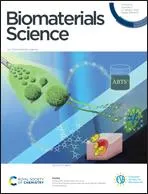
Biomaterials Science is an international high impact journal exploring the science of biomaterials and their translation towards clinical use. Its scope encompasses new concepts in biomaterials design, studies into the interaction of biomaterials with the body, and the use of materials to answer fundamental biological questions. Papers do not necessarily need to report a new biomaterial but should provide novel insight into the biological applications of the biomaterial. Articles that primarily focus on demonstrating novel materials chemistry and bring a molecular picture to bear on a given material’s suitability as a biomaterial are more suited to our companion journal, Journal of Materials Chemistry B. Biomaterials Science publishes primary research and review-type articles in the following areas: molecular design of biomaterials, including translation of emerging chemistries to biomaterials science of cells and materials at the nanoscale and microscale materials as model systems for stem cell and human biology materials for tissue engineering and regenerative medicine (Nano)materials and (nano)systems for therapeutic delivery interactions at the biointerface biologically inspired and biomimetic materials, including bio-inspired self-assembly systems and cell-inspired synthetic tools next-generation biomaterials tools and methods