












![(2R)-2,7,8-Trimethyl-2-[(4R,8R)-4,8,12-trimethyltridecyl]-6-chromanol structure](https://static.chemtradehub.com/structs/54-/54-28-4-155c.webp "(2R)-2,7,8-Trimethyl-2-[(4R,8R)-4,8,12-trimethyltridecyl]-6-chromanol structure")
(2R)-2,7,8-Trimethyl-2-[(4R,8R)-4,8,12-trimethyltridecyl]-6-chromanol
CAS Number:
54-28-4
Molecular Formula:
C28H48O2
Guo-Shiang Huang, Pai-Shan Hsieh, Ching-Shiow Tseng, Shan-hui Hsu
Mesenchymal stem cells (MSCs) are widely used for their self-renewal and multipotent abilities, which can be further enhanced by growing MSCs as three-dimensional (3D) cellular spheroids on certain substrates. Although various surfaces have been used to generate 3D MSC spheroids, the answer to whether all these spheroids have similar in vitro and in vivo properties remains unclear. In this study, adipose-derived adult stem cells (ADSCs) were cultured on a non-adherent Petri dish, polyvinyl alcohol, chitosan (CS), or chitosan-hyaluronan (CS-HA) to form 3D spheroids. The expression of the cell adhesion molecule, N-cadherin, was analyzed by qRT-PCR and Western blotting. The functional migration ability was tested using the transwell assay. The capacity for chondral regeneration of various ADSC spheroids was further evaluated in a rabbit model. We demonstrated that ADSC spheroids derived on the CS or CS-HA surface had the greater expression of N-cadherin and better migration ability. The latter was consistent with the higher expression levels of chemokine/receptor SDF-1/CXCR4 for the spheroids derived on CS or CS-HA. Animal studies also revealed significantly better cartilage repair in defects loaded with CS- or CS-HA-derived spheroids. In particular, CS-HA-derived spheroids gave rise to the best regeneration when combined with a 3D printed scaffold. This study suggested that MSC spheroids derived on different surfaces may have distinct in vitro and in vivo properties, which appeared to be associated with the surface-bound calcium as well as the calcium-dependent N-cadherin and CXCR4 signaling. The substrate-dependent properties may eventually lead to different regeneration capacities of various MSC spheroids in vivo.
Mingfei Liu, Shi Feng, Wei Liu, Hyeon Cheol Park, Meilin Liu
DOI: 10.1039/C3CP44225J
Sylwester Furmaniak, Artur P. Terzyk, Katsumi Kaneko, Piotr A. Gauden, Piotr Kowlaczyk, Tsutomu Itoh
DOI: 10.1039/C2CP43371K
Shinji Hoshina, Masanobu Nara, Kei-ichiro Komeda, Ryukou Shito, Satoshi Yasuda, Kei Murakoshi
DOI: 10.1039/C3CP43728K
Xiangdong Kang, Kuikui Wang, Yujie Zhong, Bing Yang, Ping Wang
DOI: 10.1039/C2CP43532B
Luisa De Marco, Maria R. Belviso, Gianvito Caputo
DOI: 10.1039/C2CP23971J
Itai Y. Stein, Brian L. Wardle
DOI: 10.1039/C3CP43762K
Bjørn Kvamme, Tatiana Kuznetsova, Pilvi-Helina Kivelæ, Jordan Bauman
DOI: 10.1039/C2CP43061D
Lorenzo Stievano, Inge Van Bogaert
DOI: 10.1039/C2CP41977G
Tomohide Okada, Tomoaki Yago, Tadashi Takamasu, Masanobu Wakasa
DOI: 10.1039/C2CP23747D
Andreas T. Messmer, Katharina M. Lippert, Peter R. Schreiner
DOI: 10.1039/C2CP42863F
4-(4-tert-Butylphenyl)-1H-pyrazol-3-amine finds applications in various industri...
H3TATAB is used in the pharmaceutical industry for the synthesis of certain orga...
1-Ethyl-3-fluorobenzene (CAS: 696-39-9) is primarily used as a precursor in the ...
1-(tert-Butoxycarbonyl)-4-(4-methoxyphenyl)pyrrolidine-3-carboxylic acid is prim...
1-Cyclobutyl-4-piperidinone (CAS: 359880-05-0) is a colorless or white crystalli...
Pyridine-2,6-dicarboxylic acid mono-tert-butyl ester (CAS: 575433-76-0) is a che...
The market for 2,3-Difluorophenylalanine (CAS: 236754-62-4) is growing with incr...
(2-Hydroxy-1-naphthyl)boronic acid can be synthesized through the reduction of 2...
This compound is a crystalline solid with a molecular weight of approximately 52...
While 5,7-Dihydroxy-4-oxo-2-(3,4,5-trihydroxyphenyl)-4H-chromen-3-yl beta-D-gluc...
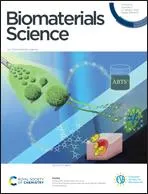
Biomaterials Science is an international high impact journal exploring the science of biomaterials and their translation towards clinical use. Its scope encompasses new concepts in biomaterials design, studies into the interaction of biomaterials with the body, and the use of materials to answer fundamental biological questions. Papers do not necessarily need to report a new biomaterial but should provide novel insight into the biological applications of the biomaterial. Articles that primarily focus on demonstrating novel materials chemistry and bring a molecular picture to bear on a given material’s suitability as a biomaterial are more suited to our companion journal, Journal of Materials Chemistry B. Biomaterials Science publishes primary research and review-type articles in the following areas: molecular design of biomaterials, including translation of emerging chemistries to biomaterials science of cells and materials at the nanoscale and microscale materials as model systems for stem cell and human biology materials for tissue engineering and regenerative medicine (Nano)materials and (nano)systems for therapeutic delivery interactions at the biointerface biologically inspired and biomimetic materials, including bio-inspired self-assembly systems and cell-inspired synthetic tools next-generation biomaterials tools and methods


![Sodium 4-{[(2R,3R)-2-[(dichloroacetyl)amino]-3-hydroxy-3-(4-nitrophenyl)propyl]oxy}-4-oxobutanoate structure](https://static.chemtradehub.com/structs/982/982-57-0-e747.webp "Sodium 4-{[(2R,3R)-2-[(dichloroacetyl)amino]-3-hydroxy-3-(4-nitrophenyl)propyl]oxy}-4-oxobutanoate structure")





