













The biochemical changes in hippocampal formation occurring in normal and seizure experiencing rats as a result of a ketogenic diet
Literature Information
Publication Date
2015-02-04
DOI
10.1039/C4AN01857E
Impact Factor
4.616
Authors
Joanna Chwiej, Agnieszka Skoczen, Krzysztof Janeczko, Justyna Kutorasinska, Katarzyna Matusiak, Henryk Figiel, Paul Dumas, Christophe Sandt, Zuzanna Setkowicz
View Original
Abstract
In this study, ketogenic diet-induced biochemical changes occurring in normal and epileptic hippocampal formations were compared. Four groups of rats were analyzed, namely seizure experiencing animals and normal rats previously fed with ketogenic (KSE and K groups respectively) or standard laboratory diet (NSE and N groups respectively). Synchrotron radiation based Fourier-transform infrared microspectroscopy was used for the analysis of distributions of the main organic components (proteins, lipids, compounds containing phosphate group(s)) and their structural modifications as well as anomalies in creatine accumulation with micrometer spatial resolution. Infrared spectra recorded in the molecular layers of the dentate gyrus (DG) areas of normal rats on a ketogenic diet (K) presented increased intensity of the 1740 cm−1 absorption band. This originates from the stretching vibrations of carbonyl groups and probably reflects increased accumulation of ketone bodies occurring in animals on a high fat diet compared to those fed with a standard laboratory diet (N). The comparison of K and N groups showed, moreover, elevated ratios of absorbance at 1634 and 1658 cm−1 for DG internal layers and increased accumulation of creatine deposits in sector 3 of the Ammon's horn (CA3) hippocampal area of ketogenic diet fed rats. In multiform and internal layers of CA3, seizure experiencing animals on ketogenic diet (KSE) presented a lower ratio of absorbance at 1634 and 1658 cm−1 compared to rats on standard laboratory diet (NSE). Moreover, in some of the examined cellular layers, the increased intensity of the 2924 cm−1 lipid band as well as the massifs of 2800–3000 cm−1 and 1360–1480 cm−1, was found in KSE compared to NSE animals. The intensity of the 1740 cm−1 band was diminished in DG molecular layers of KSE rats. The ketogenic diet did not modify the seizure induced anomalies in the unsaturation level of lipids or the number of creatine deposits.
Related Literature
The vicinal F–C–C–F moiety as a tool for influencing peptide conformation
Martin Schüler, David O'Hagan, Alexandra M. Z. Slawin
2005-07-14
Communication
DOI: 10.1039/B506010A
The elusive phosphorescence of pyrromethene–BF2 dyes revealed in new multicomponent species containing Ru(ii)–terpyridine subunits
Maurilio Galletta, Sebastiano Campagna, Manuel Quesada, Gilles Ulrich, Raymond Ziessel
2005-07-26
Communication
DOI: 10.1039/B507196H
Polydipyrrole- and polydicarbazole-nanorods as new nanosized supports for DNA hybridization
Jean-Paul Lellouche, Senthil Govindaraji, Augustine Joseph, Jyongsik Jang, Kyung Jin Lee
2005-07-14
Communication
DOI: 10.1039/B502483H
Chemistry of aluminium(i)
Herbert W. Roesky, S. Shravan Kumar
2005-07-13
Feature Article
DOI: 10.1039/B505307B
PNA C–C+i-motif: superior stability of PNA TC8 tetraplexes compared to DNA TC8 tetraplexes at low pH
Nagendra K. Sharma, Krishna N. Ganesh
2005-07-13
Communication
DOI: 10.1039/B506870C
Enclathration of morpholinium cations by Dianin's compound: salt formation by partial host-to-guest proton transfer
Gareth O. Lloyd, Martin W. Bredenkamp, Leonard J. Barbour
2005-07-13
Communication
DOI: 10.1039/B507726E
Photostability of a highly luminescent europium β-diketonate complex in imidazolium ionic liquids
Peter Nockemann, Eva Beurer, Kris Driesen, Rik Van Deun, Kristof Van Hecke, Luc Van Meervelt, Koen Binnemans
2005-08-03
Communication
DOI: 10.1039/B506915G
(Z)-Selective cross-dimerization of arylacetylenes with silylacetylenes catalyzed by vinylideneruthenium complexes
Hiroyuki Katayama, Hiroshi Yari, Masaki Tanaka, Fumiyuki Ozawa
2005-07-28
Communication
DOI: 10.1039/B504436G
Demethylation of the [Me3Sn(PhN2O2)]4 tetramer into dimeric [Me2Sn(PhN2O2)2]2: a thermally induced methyl-transfer between supramolecules‡
Andrea Deák, Gábor Tárkányi
2005-07-15
Communication
DOI: 10.1039/B506728F
You might also like
Compound Q&A
How should waste containing N-Methoxy-N-methyl-1,3-thiazole-5-carboxamide (CAS: 898825-89-3) be handled?
Waste containing N-Methoxy-N-methyl-1,3-thiazole-5-carboxamide (CAS: 898825-89-3...
898825-89-3N-Methoxy-N-methyl-1...
Compound Q&A
How should N-(4-Biphenylyl)dibenzo[b,d]furan-4-amine (CAS: 1318338-47-4) be stored?
N-(4-Biphenylyl)dibenzo[b,d]furan-4-amine should be stored in a tightly sealed c...
1318338-47-4N-(4-Biphenylyl)dibe...
Compound Q&A
What is the market or research trend for 3-Acetamido-5-amino-2,4,6-triiodobenzoic acid (CAS: 1713-07-1)?
The market for 3-Acetamido-5-amino-2,4,6-triiodobenzoic acid (CAS: 1713-07-1) is...
1713-07-13-Acetamido-5-amino-...
Compound Q&A
How should Benzyl 2-O-acetyl-3,4,6-tri-O-benzyl-beta-D-galactopyranoside (CAS: 61820-03-9) be stored?
Benzyl 2-O-acetyl-3,4,6-tri-O-benzyl-beta-D-galactopyranoside (CAS: 61820-03-9) ...
61820-03-9Benzyl 2-O-acetyl-3,...
Compound Q&A
What regulatory guidelines apply to 2-Ethylpiperazine dihydrochloride (CAS: 438050-52-3)?
2-Ethylpiperazine dihydrochloride (CAS: 438050-52-3) is regulated under the Glob...
438050-52-32-Ethylpiperazine di...
Compound Q&A
What regulatory guidelines apply to 1,1'-[1,3-Phenylenebis(methylene)]bis(3-methyl-1H-pyrrole-2,5-dione) (CAS: 119462-56-5)?
1,1'-[1,3-Phenylenebis(methylene)]bis(3-methyl-1H-pyrrole-2,5-dione) (CAS: 11946...
119462-56-51,1'-[1,3-Phenyleneb...
Compound Q&A
Are there alternatives to 5-Fluoro-2-(1-pyrrolidinyl)pyridine (CAS: 1287217-79-1) in synthesis?
Several alternatives can be used in the synthesis of 5-Fluoro-2-(1-pyrrolidinyl)...
1287217-79-15-Fluoro-2-(1-pyrrol...
Compound Q&A
What precautions should be taken when handling 1-((2R,3R,4R,5R)-5-((bis(4-methoxyphenyl)(phenyl)methoxy)methyl)-4-hydroxy-3-methoxytetrahydrofuran-2-yl)-5-methylpyrimidine-2,4(1H,3H)-dione (CAS: 153631-19-7)?
Proper personal protective equipment (PPE) must be worn when handling this compo...
153631-19-71-((2R,3R,4R,5R)-5-(...
Compound Q&A
What precautions should be taken when handling 6-Bromoimidazo[1,2-a]pyridin-8-amine (CAS: 676371-00-9)?
When handling 6-Bromoimidazo[1,2-a]pyridin-8-amine, it is important to wear appr...
676371-00-96-Bromoimidazo[1,2-a...
Compound Q&A
Are there alternatives to (2S,4R)-4-(4-Nitrobenzyl)pyrrolidine-2-carboxylic acid hydrochloride (CAS: 1049740-22-8) in synthesis?
Alternatives to (2S,4R)-4-(4-Nitrobenzyl)pyrrolidine-2-carboxylic acid hydrochlo...
1049740-22-8(2S,4R)-4-(4-Nitrobe...
Source Journal
Analyst

CiteScore:
7.8
Self-citation Rate:
5.6%
Articles per Year:
653
Analyst publishes analytical and bioanalytical research that reports premier fundamental discoveries and inventions, and the applications of those discoveries, unconfined by traditional discipline barriers.
Recommended Compounds

![4-Chloro-2-{[(2-chlorophenoxy)acetyl]amino}benzoic acid structure](https://static.chemtradehub.com/structs/351/351424-20-9-9467.webp "4-Chloro-2-{[(2-chlorophenoxy)acetyl]amino}benzoic acid structure")
4-Chloro-2-{[(2-chlorophenoxy)acetyl]amino}benzoic acid
CAS Number:
351424-20-9
Molecular Formula:
C15H11Cl2NO4
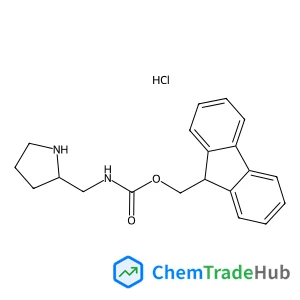
(S)-(9H-Fluoren-9-yl)methyl (pyrrolidin-2-ylmethyl)carbamate hydrochloride
CAS Number:
1217813-15-4
Molecular Formula:
C20H23ClN2O2
![tert-Butyl 6-chloro-4-oxospiro[chroman-2,4'-piperidine]-1'-carboxylate structure](https://static.chemtradehub.com/structs/101/1011482-37-3-88a5.webp "tert-Butyl 6-chloro-4-oxospiro[chroman-2,4'-piperidine]-1'-carboxylate structure")
tert-Butyl 6-chloro-4-oxospiro[chroman-2,4'-piperidine]-1'-carboxylate
CAS Number:
1011482-37-3
Molecular Formula:
C18H22ClNO4
Recommended Suppliers






Disclaimer
This page provides academic journal information for reference and research purposes only. We are not affiliated with any journal publishers and do not handle publication submissions. For publication-related inquiries, please contact the respective journal publishers directly.
If you notice any inaccuracies in the information displayed, please contact us at support@chemtradehub.com. We will promptly review and address your concerns.