












Selective electrochemical determination of cysteine with a cyclotricatechylene modified carbon electrode
Literature Information
Publication Date
2014-11-14
DOI
10.1039/C4AN01835D
Impact Factor
4.616
Authors
Patricia T. Lee, James E. Thomson, Athanasia Karina, Chris Salter, Colin Johnston, Stephen G. Davies, Richard G. Compton
View Original
Abstract
We report the selective electrochemical detection of cysteine in the presence of homocysteine and glutathione with the use of an electrode modified with cyclotricatechylene (CTC). A carbon electrode was first modified with cyclotriveratrylene (CTV) and then electrochemically converted into CTC. Using cyclic voltammetry, the redox activity of CTC was investigated along with its electrochemical response to cysteine and the closely related compounds, glutathione and homocysteine which are commonly found in biological media alongside cysteine. The selective detection of cysteine was achieved with the use of the electrocatalytic oxidation reaction and exploiting the different rates of reaction of each thiol with the oxidized CTC via variable scan rate studies. The analytical parameters consisting of sensitivity, range of linear detection, and limit of detection were determined for selective cysteine detection in phosphate buffer solution and tissue culture media where the sensitivity of the system is ca. 0.023 μA μM−1 and ca. 0.031 μA μM−1 with a limit of detection of ca. 0.6 μM and ca. 0.9 μM for buffer solution and tissue culture media respectively. Practical assessment of this analytical method was carried out in mixed solutions containing a combination of cysteine, homocysteine and glutathione in both media. The determined results agree well with the added cysteine content. This work presents a novel way of utilizing CTC into detecting cysteine, and is well-suited for bio-marker sensing.
Related Literature
All-atom molecular dynamics simulations of spin labelled double and single-strand DNA for EPR studies
C. Prior, L. Danilāne, V. S. Oganesyan
2018-04-16
Paper
DOI: 10.1039/C7CP08625C
On the cononsolvency behaviour of hydrophobic clusters in water–methanol solutions
Andrea Pica, Giuseppe Graziano
2018-02-10
Paper
DOI: 10.1039/C7CP07943E
Vibrational satellites of C2S, C3S, and C4S: microwave spectral taxonomy as a stepping stone to the millimeter-wave band
Marie-Aline Martin-Drumel, Kin Long Kelvin Lee, John F. Stanton, Carl A. Gottlieb
2018-04-11
Paper
DOI: 10.1039/C8CP01102H
Asymmetric triphenylamine–phenothiazine based small molecules with varying terminal acceptors for solution processed bulk-heterojunction organic solar cells
Srikanth Revoju, Subhayan Biswas, Bertil Eliasson, Ganesh D. Sharma
2018-02-01
Paper
DOI: 10.1039/C7CP08653A
Singlet–triplet energy gaps and the degree of diradical character in binuclear copper molecular magnets characterized by spin-flip density functional theory
Natalie Orms, Anna I. Krylov
2018-01-22
Paper
DOI: 10.1039/C7CP07356A
The structure–electrochemical property relationship of quinone electrodes for lithium-ion batteries
Licheng Miao, Luojia Liu, Zhenfeng Shang, Yixin Li, Yong Lu, Fangyi Cheng, Jun Chen
2018-04-17
Paper
DOI: 10.1039/C8CP00597D
An insight into the origin of room-temperature ferromagnetism in SnO2 and Mn-doped SnO2 quantum dots: an experimental and DFT approach
Dhamodaran Manikandan, S. Amirthapandian, I. S. Zhidkov, A. I. Kukharenko, S. O. Cholakh, Ramaswamy Murugan
2018-01-31
Paper
DOI: 10.1039/C7CP07182E
Conformational preferences and isomerization upon excitation/ionization of 2-methoxypyridine and 2-N-methylaminopyridine
Min Cheng, Yikui Du, Qihe Zhu
2018-01-24
Paper
DOI: 10.1039/C7CP07854D
Persistent homology analysis of ion aggregations and hydrogen-bonding networks
2018-04-27
Paper
DOI: 10.1039/C8CP01552J
Small stoichiometric (MoS2)n clusters with the 1T phase
Ya-Ya Wang, Jia-Jun Deng, Xin Wang, Jian-Tao Che, Xun-Lei Ding
2018-01-30
Paper
DOI: 10.1039/C7CP07914A
You might also like
Compound Q&A
What precautions should be taken when handling 2-Chloro-1,2-bis(4-methylphenyl)ethanone (CAS: 71193-32-3)?
When handling 2-Chloro-1,2-bis(4-methylphenyl)ethanone (CAS: 71193-32-3), it is ...
71193-32-32-Chloro-1,2-bis(4-m...
Compound Q&A
What industries use 4-Ethoxy-3-(5-methyl-4-oxo-7-propyl-1,4-dihydroimidazo[5,1-f][1,2,4]triazin-2-yl)benzenesulfonyl chloride (CAS: 224789-26-8)?
4-Ethoxy-3-(5-methyl-4-oxo-7-propyl-1,4-dihydroimidazo[5,1-f][1,2,4]triazin-2-yl...
224789-26-84-Ethoxy-3-(5-methyl...
Compound Q&A
How should Methyl 3-Oxo-4-Androsten-17-Carboxylate (CAS: 2681-55-2) be stored?
Methyl 3-Oxo-4-Androsten-17-Carboxylate (CAS: 2681-55-2) should be stored in a c...
2681-55-2Methyl 3-Oxo-4-Andro...
Compound Q&A
What are the main uses of (R)-3-Amino-4-(3-hexylphenylamino)-4-oxobutylphosphonic acid (CAS: 909725-61-7)?
(R)-3-Amino-4-(3-hexylphenylamino)-4-oxobutylphosphonic acid is primarily used i...
909725-61-7(R)-3-Amino-4-(3-hex...
Compound Q&A
What regulatory guidelines apply to 2-Methyl-2-propanyl 3-amino-3-carbamoyl-1-azetidinecarboxylate (CAS: 1254120-14-3)?
2-Methyl-2-propanyl 3-amino-3-carbamoyl-1-azetidinecarboxylate (CAS: 1254120-14-...
1254120-14-32-Methyl-2-propanyl ...
Compound Q&A
Are there alternatives to (E)-4-(tert-Butoxy)-4-oxobut-2-enoic acid (CAS: 135355-96-3) in synthesis?
There are alternative reagents that can be used in synthesis instead of (E)-4-(t...
135355-96-3(E)-4-(tert-Butoxy)-...
Compound Q&A
What are the physical and chemical properties of [2-(3-Chlorophenyl)-1,3-thiazol-4-yl]methanol (CAS: 121202-20-8)?
[2-(3-Chlorophenyl)-1,3-thiazol-4-yl]methanol (CAS: 121202-20-8) is a crystallin...
121202-20-8[2-(3-Chlorophenyl)-...
Compound Q&A
What is the market or research trend for Methyl (2S)-[(4S)-2,2-dimethyl-1,3-dioxolan-4-yl]{[(4-methylphenyl)sulfonyl]oxy}acetate (CAS: 166249-17-8)?
The market and research trends for Methyl (2S)-[(4S)-2,2-dimethyl-1,3-dioxolan-4...
166249-17-8Methyl (2S)-[(4S)-2,...
Compound Q&A
What is the market or research trend for 1-Bromo-2-isocyanatoethane (CAS: 42865-19-0)?
The market for 1-Bromo-2-isocyanatoethane (CAS: 42865-19-0) is driven by its use...
42865-19-01-Bromo-2-isocyanato...
Compound Q&A
What are the main uses of 4-Nitro-D-phenylalanine hydrochloride (CAS: 147065-06-3)?
4-Nitro-D-phenylalanine hydrochloride (CAS: 147065-06-3) is primarily used in re...
147065-06-34-Nitro-D-phenylalan...
Source Journal
Analyst

CiteScore:
7.8
Self-citation Rate:
5.6%
Articles per Year:
653
Analyst publishes analytical and bioanalytical research that reports premier fundamental discoveries and inventions, and the applications of those discoveries, unconfined by traditional discipline barriers.
Recommended Compounds
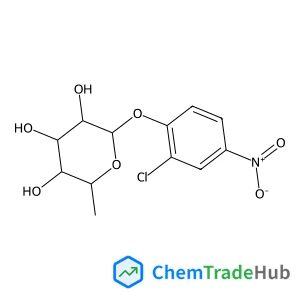
2-Chloro-4-nitrophenyl 6-deoxy-alpha-L-galactopyranoside
CAS Number:
157843-41-9
Molecular Formula:
C12H14ClNO7
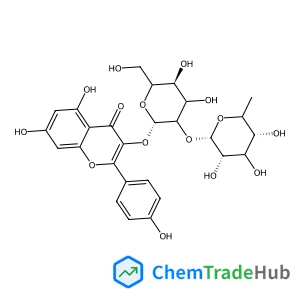
5,7-Dihydroxy-2-(4-hydroxyphenyl)-4-oxo-4H-chromen-3-yl 2-O-(6-deoxy-alpha-L-mannopyranosyl)-beta-D-glucopyranoside
CAS Number:
32602-81-6
Molecular Formula:
C27H30O15
Recommended Suppliers






Disclaimer
This page provides academic journal information for reference and research purposes only. We are not affiliated with any journal publishers and do not handle publication submissions. For publication-related inquiries, please contact the respective journal publishers directly.
If you notice any inaccuracies in the information displayed, please contact us at support@chemtradehub.com. We will promptly review and address your concerns.