












A sensitive and microscale method for drug screening combining affinity probes and single molecule fluorescence correlation spectroscopy
Literature Information
Publication Date
2014-12-05
DOI
10.1039/C4AN01816H
Impact Factor
4.616
Authors
Lingao Ruan, Di Su, Chang Shao, Jinjie Wang, Chaoqing Dong, Xiangyi Huang, Jicun Ren
View Original
Abstract
In this paper, a sensitive and microscale method for drug screening is described using single molecule spectroscopy fluorescence correlation spectroscopy (FCS). The principle of this method is mainly based on the competition of candidate drugs to the fluorescent probe–target complexes and the excellent capacity of FCS for sensitively distinguishing the free fluorescent probes and the fluorescent probe–target complexes in solution. In this study, the screening of protein kinase inhibitors was used as a model, tyrosine-protein kinase ABL1 was used as a target and a known inhibitor dasatinib derivative labeled with a fluorescent dye was used as a fluorescent affinity probe. We firstly established the theoretical model of drug screening based on the binding process of fluorescent probes and targets, the competition of candidate drugs to the fluorescent probe–target complexes and FCS theory. Then, the dasatinib derivatives were synthesized and labeled with the fluorescent dye Alexa 488, and the binding and dissociation processes of Alexa 488-dasatinib and ABL1 were systematically investigated. The dissociation constant and the dissociation rate for the Alexa 488-dasatinib–ABL1 complex were determined. Finally, the established method was used to screen candidate drugs. The dissociation constants of ABL1 kinase to six known drugs for treating chronic myeloid leukemia (CML) were evaluated and the results obtained are well consistent with the reported values. Furthermore, a homemade chip with micro-wells was successfully utilized in FCS measurements as the carrier of samples, and the sample requirements were only 1–2 μL in this case. Our results demonstrated that the drug screening method described here is universal, sensitive and shows small sample and reagent quantity requirements. We believe that this method will become a high throughput platform for screening of small molecule drugs.
Recommended Journals
Related Literature
Porous polystyrene microspheres having dimpled surface structures prepared within micellar assemblies of amphiphilic silica particles in water
Yoshiko K. Takahara, Koji Tachi, Takao Sakata, Toshiaki Hasegawa, Hirotaro Mori, Michio Matsumura, Bunsho Ohtani
2005-07-21
Communication
DOI: 10.1039/B507123B
Surfactant-free hydrothermal synthesis of lithium aluminate microbricks and nanorods from aluminium oxide nanoparticles
Upendra. A. Joshi, Soo Hyun Chung, Jae Sung Lee
2005-08-04
Communication
DOI: 10.1039/B508168H
Polymer vesicles formed by amphiphilic diblock copolymers containing a thermotropic liquid crystalline polymer block
Jing Yang, Daniel Lévy, Wei Deng, Patrick Keller, Min-Hui Li
2005-08-01
Communication
DOI: 10.1039/B508034G
Allosteric pitch length tuning of a dinuclear double helicate
Christian J. Baylies, John C. Jeffery, Tom A. Miller, Ryan Moon, Craig R. Rice, T. Riis-Johannessen
2005-07-21
Communication
DOI: 10.1039/B506199G
Entropy-controlled supramolecular photochirogenesis: enantiodifferentiating Z–E photoisomerization of cyclooctene included and sensitized by permethylated 6-O-benzoyl-β-cyclodextrin
Gaku Fukuhara, Tadashi Mori
2005-07-21
Communication
DOI: 10.1039/B504948B
Analysis of key steps in the catalytic cross-coupling of alkyl electrophiles under Negishi-like conditions
Gavin D. Jones, Chris McFarland, Thomas J. Anderson, David A. Vicic
2005-07-22
Communication
DOI: 10.1039/B504996B
Effects of nanoconfinement on the morphology and reactivity of organic materials
2005-07-19
Feature Article
DOI: 10.1039/B502849N
μ-η3:η4-Lithiocene and η3:η3-zincocene incorporating 1,2-diaza-3,5-diborolyl, a cyclopentadienyl analog
Hanh. V. Ly, Taryn. D. Forster, Darren Maley, Masood Parvez, Roland Roesler
2005-08-09
Communication
DOI: 10.1039/B508152A
Synthesis of 1,3-dioxo-hexahydropyrido[1,2-c][1,3]diazepine carboxylates, a new bicyclic skeleton formed by ring expansion–RCM methodology
Nicolai Dieltiens, Diederica D. Claeys, Bart Allaert, Francis Verpoort, Christian V. Stevens
2005-08-04
Communication
DOI: 10.1039/B508663A
You might also like
Compound Q&A
How should waste containing N-Methoxy-N-methyl-1,3-thiazole-5-carboxamide (CAS: 898825-89-3) be handled?
Waste containing N-Methoxy-N-methyl-1,3-thiazole-5-carboxamide (CAS: 898825-89-3...
898825-89-3N-Methoxy-N-methyl-1...
Compound Q&A
How should N-(4-Biphenylyl)dibenzo[b,d]furan-4-amine (CAS: 1318338-47-4) be stored?
N-(4-Biphenylyl)dibenzo[b,d]furan-4-amine should be stored in a tightly sealed c...
1318338-47-4N-(4-Biphenylyl)dibe...
Compound Q&A
What is the market or research trend for 3-Acetamido-5-amino-2,4,6-triiodobenzoic acid (CAS: 1713-07-1)?
The market for 3-Acetamido-5-amino-2,4,6-triiodobenzoic acid (CAS: 1713-07-1) is...
1713-07-13-Acetamido-5-amino-...
Compound Q&A
How should Benzyl 2-O-acetyl-3,4,6-tri-O-benzyl-beta-D-galactopyranoside (CAS: 61820-03-9) be stored?
Benzyl 2-O-acetyl-3,4,6-tri-O-benzyl-beta-D-galactopyranoside (CAS: 61820-03-9) ...
61820-03-9Benzyl 2-O-acetyl-3,...
Compound Q&A
What regulatory guidelines apply to 2-Ethylpiperazine dihydrochloride (CAS: 438050-52-3)?
2-Ethylpiperazine dihydrochloride (CAS: 438050-52-3) is regulated under the Glob...
438050-52-32-Ethylpiperazine di...
Compound Q&A
What regulatory guidelines apply to 1,1'-[1,3-Phenylenebis(methylene)]bis(3-methyl-1H-pyrrole-2,5-dione) (CAS: 119462-56-5)?
1,1'-[1,3-Phenylenebis(methylene)]bis(3-methyl-1H-pyrrole-2,5-dione) (CAS: 11946...
119462-56-51,1'-[1,3-Phenyleneb...
Compound Q&A
Are there alternatives to 5-Fluoro-2-(1-pyrrolidinyl)pyridine (CAS: 1287217-79-1) in synthesis?
Several alternatives can be used in the synthesis of 5-Fluoro-2-(1-pyrrolidinyl)...
1287217-79-15-Fluoro-2-(1-pyrrol...
Compound Q&A
What precautions should be taken when handling 1-((2R,3R,4R,5R)-5-((bis(4-methoxyphenyl)(phenyl)methoxy)methyl)-4-hydroxy-3-methoxytetrahydrofuran-2-yl)-5-methylpyrimidine-2,4(1H,3H)-dione (CAS: 153631-19-7)?
Proper personal protective equipment (PPE) must be worn when handling this compo...
153631-19-71-((2R,3R,4R,5R)-5-(...
Compound Q&A
What precautions should be taken when handling 6-Bromoimidazo[1,2-a]pyridin-8-amine (CAS: 676371-00-9)?
When handling 6-Bromoimidazo[1,2-a]pyridin-8-amine, it is important to wear appr...
676371-00-96-Bromoimidazo[1,2-a...
Compound Q&A
Are there alternatives to (2S,4R)-4-(4-Nitrobenzyl)pyrrolidine-2-carboxylic acid hydrochloride (CAS: 1049740-22-8) in synthesis?
Alternatives to (2S,4R)-4-(4-Nitrobenzyl)pyrrolidine-2-carboxylic acid hydrochlo...
1049740-22-8(2S,4R)-4-(4-Nitrobe...
Source Journal
Analyst

CiteScore:
7.8
Self-citation Rate:
5.6%
Articles per Year:
653
Analyst publishes analytical and bioanalytical research that reports premier fundamental discoveries and inventions, and the applications of those discoveries, unconfined by traditional discipline barriers.
Recommended Compounds

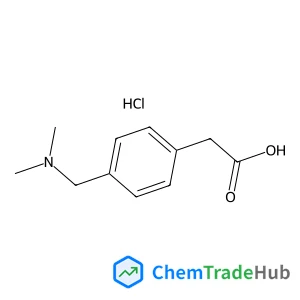
4-(Dimethylaminomethyl)phenylacetic acid hydrochloride
CAS Number:
99985-52-1
Molecular Formula:
C11H16ClNO2
![2-(7,7-Difluorobicyclo[4.1.0]hept-1-yl)ethanamine structure](https://static.chemtradehub.com/structs/209/2098065-08-6-ff24.webp "2-(7,7-Difluorobicyclo[4.1.0]hept-1-yl)ethanamine structure")
2-(7,7-Difluorobicyclo[4.1.0]hept-1-yl)ethanamine
CAS Number:
2098065-08-6
Molecular Formula:
C9H15F2N
Recommended Suppliers






Disclaimer
This page provides academic journal information for reference and research purposes only. We are not affiliated with any journal publishers and do not handle publication submissions. For publication-related inquiries, please contact the respective journal publishers directly.
If you notice any inaccuracies in the information displayed, please contact us at support@chemtradehub.com. We will promptly review and address your concerns.