












The development of “fab-chips” as low-cost, sensitive surface-enhanced Raman spectroscopy (SERS) substrates for analytical applications
Literature Information
Publication Date
2014-11-24
DOI
10.1039/C4AN01633E
Impact Factor
4.616
Authors
Ashley M. Robinson, Lili Zhao, Marwa Y. Shah Alam, Paridhi Bhandari, Scott G. Harroun, Dhananjaya Dendukuri, Jonathan Blackburn, Christa L. Brosseau
View Original
Abstract
The demand for methods and technologies capable of rapid, inexpensive and continuous monitoring of health status or exposure to environmental pollutants persists. In this work, the development of novel surface-enhanced Raman spectroscopy (SERS) substrates from metal-coated silk fabric, known as zari, presents the potential for SERS substrates to be incorporated into clothing and other textiles for the routine monitoring of important analytes, such as disease biomarkers or environmental pollutants. Characterization of the zari fabric was completed using scanning electron microscopy, energy dispersive X-ray analysis and Raman spectroscopy. Silver nanoparticles (AgNPs) were prepared, characterized by transmission electron microscopy and UV-vis spectroscopy, and used to treat fabric samples by incubation, drop-coating and in situ synthesis. The quality of the treated fabric was evaluated by collecting the SERS signal of 4,4′-bipyridine on these substrates. When AgNPs were drop-coated on the fabric, sensitive and reproducible substrates were obtained. Adenine was selected as a second probe molecule, because it dominates the SERS signal of DNA, which is an important class of disease biomarker, particularly for pathogens such as Plasmodium spp. and Mycobacterium tuberculosis. Excellent signal enhancement could be achieved on these affordable substrates, suggesting that the developed fabric chips have the potential for expanding the use of SERS as a diagnostic and environmental monitoring tool for application in wearable sensor technologies.
Related Literature
Electron correlation effects in the photoionization of CO and isoelectronic diatomic molecules
A. Ponzi, N. Quadri, C. Angeli, P. Decleva
2018-12-19
Paper
DOI: 10.1039/C8CP06103C
Influence of Cu adatoms on the molecular assembly of 4,4′-bipyridine on Cu(111)
M.-A. Dubois, O. Guillermet, S. Gauthier, G. Zhan, Y. Makoudi, F. Palmino, X. Bouju, A. Rochefort
2018-05-07
Paper
DOI: 10.1039/C8CP01184B
Ultra-broadband EPR spectroscopy in field and frequency domains
D. Bloos, R. Marx, P. Lutz, M. Kern, O. Laguta, C. Dietrich, J. van Slageren
2018-05-14
Paper
DOI: 10.1039/C7CP07443C
Theoretical investigation of M@Pb122− and M@Sn122− Zintl clusters (M = Lrn+, Lun+, La3+, Ac3+ and n = 0, 1, 2, 3)
2018-05-01
Paper
DOI: 10.1039/C8CP01056K
Effect of oscillation dynamics on long-range electron transfer in a helical peptide monolayer
Daisuke Matsushita, Hirotaka Uji, Shunsaku Kimura
2018-05-23
Paper
DOI: 10.1039/C8CP02315H
Mid-infrared absorption of trapped electrons in titanium(iv) oxide particles using a photoacoustic FTIR technique
Tatsuki Shinoda
2018-09-06
Communication
DOI: 10.1039/C8CP04885A
Strain and defect engineering on phase transition of monolayer black phosphorene
Yan Chen, Xiaoyang Shi, Mingjia Li, Yilun Liu
2018-06-06
Paper
DOI: 10.1039/C8CP01334A
The double exciton state of conjugated chromophores with strong diradical character: insights from TDDFT calculations
Juan Casado
2018-08-29
Paper
DOI: 10.1039/C8CP04008G
You might also like
Compound Q&A
Is 2-(2-chloroacetamido)-3-phenylpropanoic acid (CAS: 7765-11-9) safe?
2-(2-Chloroacetamido)-3-phenylpropanoic acid (CAS: 7765-11-9) is generally consi...
7765-11-92-(2-chloroacetamido...
Compound Q&A
Is 2-(Benzyloxy)-5-bromobenzoic acid (CAS: 62176-31-2) safe?
2-(Benzyloxy)-5-bromobenzoic acid can be handled safely if appropriate precautio...
62176-31-22-(Benzyloxy)-5-brom...
Compound Q&A
What is (4-Methyl-1,2,5-oxadiazol-3-yl)methanamine hydrochloride (CAS: 1159825-48-5)?
(4-Methyl-1,2,5-oxadiazol-3-yl)methanamine hydrochloride is a chemical compound ...
1159825-48-5(4-Methyl-1,2,5-oxad...
Compound Q&A
What is 2-(5-Hexylthiophen-2-yl)-4,4,5,5-tetramethyl-1,3,2-dioxaborolane (CAS: 917985-54-7)?
2-(5-Hexylthiophen-2-yl)-4,4,5,5-tetramethyl-1,3,2-dioxaborolane (CAS: 917985-54...
917985-54-72-(5-Hexylthiophen-2...
Compound Q&A
Are there alternatives to 4-(8-Methyl-9H-1,3-dioxolo[4,5-h][2,3]benzodiazepin-5-yl)benzenamine (CAS: 102771-26-6) in synthesis?
While 4-(8-Methyl-9H-1,3-dioxolo[4,5-h][2,3]benzodiazepin-5-yl)benzenamine (CAS:...
102771-26-64-(8-Methyl-9H-1,3-d...
Compound Q&A
What is the market or research trend for tert-butyl 3-hydroxy-4,5,7,8-tetrahydro-2H-pyrazolo[3,4-d]azepine-6-carboxylate (CAS: 851376-80-2)?
The market for tert-butyl 3-hydroxy-4,5,7,8-tetrahydro-2H-pyrazolo[3,4-d]azepine...
851376-80-2tert-butyl 3-hydroxy...
Compound Q&A
How should waste containing 3,5-Diamino-1H-pyrazole-4-carbonitrile (CAS: 6844-58-2) be handled?
Waste containing 3,5-Diamino-1H-pyrazole-4-carbonitrile (CAS: 6844-58-2) should ...
6844-58-23,5-Diamino-1H-pyraz...
Compound Q&A
How is (6-Fluoro-3-pyridinyl)boronic acid (CAS: 351019-18-6) typically synthesized?
(6-Fluoro-3-pyridinyl)boronic acid can be synthesized through the reaction of 6-...
351019-18-6(6-Fluoro-3-pyridiny...
Compound Q&A
What industries use Dibenzyl carbonimidoylbiscarbamate (CAS: 10065-79-9)?
Dibenzyl carbonimidoylbiscarbamate (CAS: 10065-79-9) finds applications in vario...
10065-79-9Dibenzyl carbonimido...
Compound Q&A
What is the market or research trend for (beta,beta,2,3,4,5,6-~2~H_7_)Phenylalanine (CAS: 74228-83-4)?
The market for (beta,beta,2,3,4,5,6-~2~H_7_)Phenylalanine (CAS: 74228-83-4) is g...
74228-83-4(beta,beta,2,3,4,5,6...
Source Journal
Analyst

CiteScore:
7.8
Self-citation Rate:
5.6%
Articles per Year:
653
Analyst publishes analytical and bioanalytical research that reports premier fundamental discoveries and inventions, and the applications of those discoveries, unconfined by traditional discipline barriers.
Recommended Compounds
![2-Methyl-2-propanyl 4-oxo-3,9-diazabicyclo[4.2.1]nonane-9-carboxylate structure](https://static.chemtradehub.com/structs/131/1312456-05-5-9a15.webp "2-Methyl-2-propanyl 4-oxo-3,9-diazabicyclo[4.2.1]nonane-9-carboxylate structure")
2-Methyl-2-propanyl 4-oxo-3,9-diazabicyclo[4.2.1]nonane-9-carboxylate
CAS Number:
1312456-05-5
Molecular Formula:
C12H20N2O3
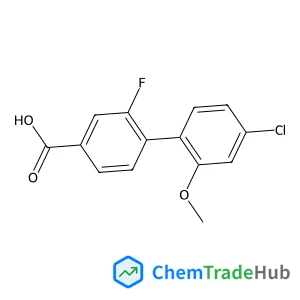
4-(4-Chloro-2-methoxyphenyl)-3-fluorobenzoic acid
CAS Number:
1261970-23-3
Molecular Formula:
C14H10ClFO3
Recommended Suppliers





Disclaimer
This page provides academic journal information for reference and research purposes only. We are not affiliated with any journal publishers and do not handle publication submissions. For publication-related inquiries, please contact the respective journal publishers directly.
If you notice any inaccuracies in the information displayed, please contact us at support@chemtradehub.com. We will promptly review and address your concerns.