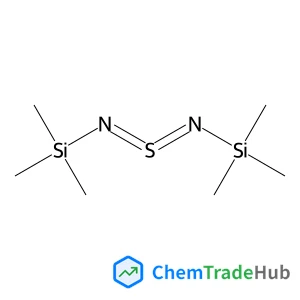
1,3-Bis(trimethylsilyl)-2lambda~4~-diazathia-1,2-diene
CAS Number:
18156-25-7
Molecular Formula:
C6H18N2SSi2
Priscila da Silva Ferreira, Débora Fernandes de Abreu e Silva, Rodinei Augusti, Evandro Piccin
A novel analytical approach based on paper spray mass spectrometry (PS-MS) is developed for a fast and effective forensic analysis of inks in documents. Ink writings made in ordinary paper with blue ballpoint pens were directly analyzed under ambient conditions without any prior sample preparation. Firstly, the method was explored on a set of distinct pens and the results obtained in the positive ion mode, PS(+)-MS, demonstrated that pens from different brands provide typical profiles. Simple visual inspection of the PS(+)-MS led to the distinction of four different combinations of dyes and additives in the inks. Further discrimination was performed by using the concept of relative ion intensity (RII), owing to the large variability of dyes BV3 and BB26 regarding their demethylated homologues. Following screening and differentiation studies, the composition changes of ink entries subjected to light exposure were also monitored by PS-MS. The results of these tests revealed distinct degradation behaviors which were reflected on the typical chemical profiles of the studied inks, attesting that PS-MS may be also useful to verify the fading of dyes thus allowing the discrimination of entries on a document. As proof of concept experiments, PS-MS was successfully utilized for the analysis of archived documents and characterization of overlapped ink lines made on simulated forged documents.
Jonas Wirth, Harald Kirsch, Sebastian Wlosczyk, Yujin Tong, Peter Saalfrank, R. Kramer Campen
DOI: 10.1039/C6CP01397J
DOI: 10.1039/C6CP01214K
Teresa S. Ripolles, Ajay K. Baranwal, Koji Nishinaka, Yuhei Ogomi, Germà Garcia-Belmonte, Shuzi Hayase
DOI: 10.1039/C6CP01427E
Thuy-Duong Nguyen-Phan, Jordi Llorca, Shawn Sallis, Shyam Kattel, Wenqian Xu, Louis F. J. Piper, Dmitry E. Polyansky, Sanjaya D. Senanayake, Dario J. Stacchiola
DOI: 10.1039/C6CP00472E
A. Filippetti, A. Mattoni, C. Caddeo, M. I. Saba, P. Delugas
DOI: 10.1039/C6CP01402J
H. Öberg, T. Brinck
DOI: 10.1039/C6CP02623K
Long Yang, Da-Jun Shu, Shao-Chun Li, Mu Wang
DOI: 10.1039/C6CP01106C
I. A. Godunov, N. N. Yakovlev, R. V. Terentiev, D. V. Maslov, A. V. Abramenkov
DOI: 10.1039/C6CP02138G
Thomas W. J. Nicol, Seishi Shimizu
DOI: 10.1039/C6CP01582D
4-Benzyl-2,2-dimethylmorpholine is generally considered safe when handled under ...
(5,6-Dimethoxy-3-pyridinyl)boronic acid is a chemical compound with the molecula...
1,1,3,3-Tetramethyl-1,3-bis(2-methyl-2-propanyl)disiloxane is synthesized throug...
(2R,4S)-1-Boc-4-methylpyrrolidine-2-carboxylic acid is primarily used as a build...
When handling 2,3-Dichloroacrylonitrile, it is crucial to wear appropriate perso...
(S)-1-(o-Tolyl)ethanamine hydrochloride should be stored in a cool, dry place to...
Benzyl [1-(hydroxyamino)-1-imino-2-methyl-2-propanyl]carbamate (CAS: 518047-98-8...
2-Methyloxazole-5-carbaldehyde is used in the pharmaceutical industry for the sy...
The market for 2-Methyl-2-propanyl 4-[(1S)-1-hydroxyethyl]-1-piperidinecarboxyla...
1-Butyl-3-methylpyridinium bromide is generally considered safe for laboratory u...

Analyst publishes analytical and bioanalytical research that reports premier fundamental discoveries and inventions, and the applications of those discoveries, unconfined by traditional discipline barriers.