












An accurate and transferable protocol for reproducible quantification of organic pollutants in human serum using direct isotope dilution mass spectrometry
Literature Information
Publication Date
2014-08-05
DOI
10.1039/C4AN00851K
Impact Factor
4.616
Authors
Andrew J. Boggess, G. M. Mizanur Rahman, Matt Pamukcu, Scott Faber, H. M. Skip Kingston
View Original
Abstract
A robust method has been developed for easy transfer between analytical laboratories to obtain highly accurate and reproducible quantification of persistent organic pollutants (POPs) in micro-volumes of serum. This method is suited for analysts researching the impact of environmental exposure on human health. When performed by highly trained analysts, existing methods can produce high quality data; however, complex sample preparation steps often cannot be consistently replicated by laboratories, leading to variance in extraction recovery and quantitation. By combining stir-bar sorptive extraction (SBSE) with direct isotope dilution (D-ID) mass spectrometry quantification, a new analytical method was developed. The D-ID quantification significantly improved accuracy, corrected sample-to-sample irreproducibility, and reduced sample preparation time. Independent production of statistically identical data then confirmed transfer of the validated operating protocol to an off-site laboratory with different instrument models. SBSE performance was compared with industry-accepted extraction techniques. D-ID quantification was compared with peer-reviewed relative isotopic response factor (RF) quantification methods. Holding other variables constant, D-ID improved accuracy by 250% and precision by 300% compared with RF; SBSE improved accuracy by 37% compared to industry-accepted extraction methods. Limits of quantification of the analytes ranged from 60 pg g−1 to 1 μg g−1. Protocol transfer exhibited <7% mean between-laboratory error and <2% mean within-laboratory RSD. These results indicate that a transferable method has been developed for academic, government, commercial, and clinical laboratories seeking to maximize throughput and improve quantitative validity. This validated method was applied in a recent clinical study to assess non-communicable disease in children in Pennsylvania, USA.
Related Literature
Structural dynamics upon photoexcitation-induced charge transfer in a dicopper(i)–disulfide complex
Mateusz Rebarz, Martin Rohrmüller, Shirly Espinoza, Miroslav Kloz, Norman Kretzschmar, Adam Neuba, Jochen Ortmeyer, Roland Schoch, Matthias Bauer, Wolf Gero Schmidt, Gerald Henkel
2018-02-12
Paper
DOI: 10.1039/C7CP04880G
Intramolecular singlet fission in a face-to-face stacked tetracene trimer
Xuemin Wang, Rui Wang, Li Shen, Zhaofeng Tang, Congying Wen, Bin Dong, Heyuan Liu, Chunfeng Zhang, Xiyou Li
2018-02-02
Paper
DOI: 10.1039/C7CP07841B
Ternary CBe4Au4 cluster: a 16-electron system with quasi-planar tetracoordinate carbon
Lin-Yan Feng, Hua-Jin Zhai
2018-02-13
Paper
DOI: 10.1039/C7CP08420J
Transition of surface phase of cobalt oxide during CO oxidation
Yu Tang, Jian Dou, Christopher M. Andolina, Yuting Li, Hongbin Ma, Stephen D. House, Xiaoyan Zhang, Judith Yang, Franklin (Feng) Tao
2018-01-02
Paper
DOI: 10.1039/C7CP07407G
Imaging the ordering of a weakly adsorbed two-dimensional condensate: ambient-pressure microscopy and spectroscopy of CO2 molecules on rutile TiO2(110)
Mausumi Mahapatra, David C. Grinter, Fang Xu, Si Luo, Robert M. Palomino, Shyam Kattel, Iradwikanari Waluyo, Ping Liu, Dario J. Stacchiola, Sanjaya D. Senanayake
2018-05-01
Communication
DOI: 10.1039/C8CP01614C
Room temperature chiral reorganization of interfacial assembly of achiral double-decker phthalocyanine
Xiqian Wang, Chenxi Liu, Yuying Jiang, Chiming Wang, Tianyu Wang, Ming Bai, Jianzhuang Jiang
2018-02-14
Paper
DOI: 10.1039/C7CP08647D
Anomalous diffusion of water molecules at grain boundaries in ice Ih
Pedro Augusto Franco Pinheiro Moreira, Roberto Gomes de Aguiar Veiga, Ingrid de Almeida Ribeiro, Julian Helfferich
2018-04-30
Paper
DOI: 10.1039/C8CP00933C
Chemistry through cocrystals: pressure-induced polymerization of C2H2·C6H6 to an extended crystalline hydrocarbon
Matthew D. Ward, Haw-Tyng Huang, Li Zhu, Arani Biswas, Dmitry Popov, Timothy A. Strobel
2018-02-02
Paper
DOI: 10.1039/C7CP07852H
Open flow non-enzymatic template catalysis and replication
Larwsk H. Gonçalves da Silva, David Hochberg
2018-05-11
Paper
DOI: 10.1039/C8CP01828F
You might also like
Compound Q&A
What precautions should be taken when handling 2-Chloro-1,2-bis(4-methylphenyl)ethanone (CAS: 71193-32-3)?
When handling 2-Chloro-1,2-bis(4-methylphenyl)ethanone (CAS: 71193-32-3), it is ...
71193-32-32-Chloro-1,2-bis(4-m...
Compound Q&A
What industries use 4-Ethoxy-3-(5-methyl-4-oxo-7-propyl-1,4-dihydroimidazo[5,1-f][1,2,4]triazin-2-yl)benzenesulfonyl chloride (CAS: 224789-26-8)?
4-Ethoxy-3-(5-methyl-4-oxo-7-propyl-1,4-dihydroimidazo[5,1-f][1,2,4]triazin-2-yl...
224789-26-84-Ethoxy-3-(5-methyl...
Compound Q&A
How should Methyl 3-Oxo-4-Androsten-17-Carboxylate (CAS: 2681-55-2) be stored?
Methyl 3-Oxo-4-Androsten-17-Carboxylate (CAS: 2681-55-2) should be stored in a c...
2681-55-2Methyl 3-Oxo-4-Andro...
Compound Q&A
What are the main uses of (R)-3-Amino-4-(3-hexylphenylamino)-4-oxobutylphosphonic acid (CAS: 909725-61-7)?
(R)-3-Amino-4-(3-hexylphenylamino)-4-oxobutylphosphonic acid is primarily used i...
909725-61-7(R)-3-Amino-4-(3-hex...
Compound Q&A
What regulatory guidelines apply to 2-Methyl-2-propanyl 3-amino-3-carbamoyl-1-azetidinecarboxylate (CAS: 1254120-14-3)?
2-Methyl-2-propanyl 3-amino-3-carbamoyl-1-azetidinecarboxylate (CAS: 1254120-14-...
1254120-14-32-Methyl-2-propanyl ...
Compound Q&A
Are there alternatives to (E)-4-(tert-Butoxy)-4-oxobut-2-enoic acid (CAS: 135355-96-3) in synthesis?
There are alternative reagents that can be used in synthesis instead of (E)-4-(t...
135355-96-3(E)-4-(tert-Butoxy)-...
Compound Q&A
What are the physical and chemical properties of [2-(3-Chlorophenyl)-1,3-thiazol-4-yl]methanol (CAS: 121202-20-8)?
[2-(3-Chlorophenyl)-1,3-thiazol-4-yl]methanol (CAS: 121202-20-8) is a crystallin...
121202-20-8[2-(3-Chlorophenyl)-...
Compound Q&A
What is the market or research trend for Methyl (2S)-[(4S)-2,2-dimethyl-1,3-dioxolan-4-yl]{[(4-methylphenyl)sulfonyl]oxy}acetate (CAS: 166249-17-8)?
The market and research trends for Methyl (2S)-[(4S)-2,2-dimethyl-1,3-dioxolan-4...
166249-17-8Methyl (2S)-[(4S)-2,...
Compound Q&A
What is the market or research trend for 1-Bromo-2-isocyanatoethane (CAS: 42865-19-0)?
The market for 1-Bromo-2-isocyanatoethane (CAS: 42865-19-0) is driven by its use...
42865-19-01-Bromo-2-isocyanato...
Compound Q&A
What are the main uses of 4-Nitro-D-phenylalanine hydrochloride (CAS: 147065-06-3)?
4-Nitro-D-phenylalanine hydrochloride (CAS: 147065-06-3) is primarily used in re...
147065-06-34-Nitro-D-phenylalan...
Source Journal
Analyst

CiteScore:
7.8
Self-citation Rate:
5.6%
Articles per Year:
653
Analyst publishes analytical and bioanalytical research that reports premier fundamental discoveries and inventions, and the applications of those discoveries, unconfined by traditional discipline barriers.
Recommended Compounds
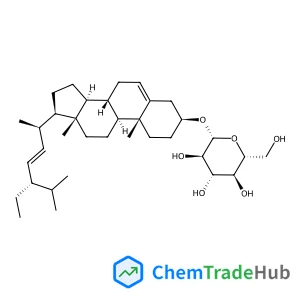
(3beta,22E)-Stigmasta-5,22-dien-3-yl beta-D-glucopyranoside
CAS Number:
19716-26-8
Molecular Formula:
C35H58O6
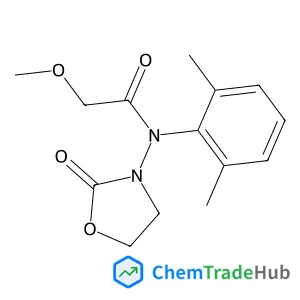
N-(2,6-Dimethylphenyl)-2-methoxy-N-(2-oxo-1,3-oxazolidin-3-yl)acetamide
CAS Number:
77732-09-3
Molecular Formula:
C14H18N2O4

Recommended Suppliers






Disclaimer
This page provides academic journal information for reference and research purposes only. We are not affiliated with any journal publishers and do not handle publication submissions. For publication-related inquiries, please contact the respective journal publishers directly.
If you notice any inaccuracies in the information displayed, please contact us at support@chemtradehub.com. We will promptly review and address your concerns.