


Imaging the ordering of a weakly adsorbed two-dimensional condensate: ambient-pressure microscopy and spectroscopy of CO2 molecules on rutile TiO2(110)
Literature Information
Publication Date
2018-05-01
DOI
10.1039/C8CP01614C
Impact Factor
3.676
Authors
Mausumi Mahapatra, David C. Grinter, Fang Xu, Si Luo, Robert M. Palomino, Shyam Kattel, Iradwikanari Waluyo, Ping Liu, Dario J. Stacchiola, Sanjaya D. Senanayake
View Original
Abstract
Disorder–Order transitions in a weakly adsorbed two-dimensional film have been identified for the first time using ambient-pressure scanning tunneling microscopy (AP-STM) and X-ray photoelectron spectroscopy (AP-XPS). As of late, great effort has been devoted to the capture, activation and conversion of carbon dioxide (CO2), a ubiquitous greenhouse gas and by-product of many chemical processes. The high stability and non-polar nature of CO2 leads to weak bonding with well-defined surfaces of metals and oxides. CO2 adsorbs molecularly on the rutile TiO2(110) surface with a low adsorption energy of ∼10 kcal mol−1. In spite of this weak binding, images of AP-STM show that a substantial amount of CO2 can reside on a TiO2(110) surface at room temperature forming two-dimensionally ordered films. We have employed microscopic imaging under in situ conditions, soft X-ray spectroscopy and theory to decipher the unique ordering behavior seen for CO2 on TiO2(110).
Recommended Journals

Journal of the Chinese Chemical Society

Canadian Metallurgical Quarterly

Advances in Colloid and Interface Science

Anti-Corrosion Methods and Materials

Bulletin of the Chemical Society of Japan

Chemistry of Heterocyclic Compounds

Corrosion Science

Australian Journal of Chemistry

Doklady Chemistry

Chemical Reviews
Related Literature
P-type cobaltite oxide spinels enable efficient electrocatalytic oxygen evolution reaction
Abdalaziz Aljabour, Halime Coskun, Julia Lumetzberger, Daniel Primetzhofer, Bogdan Faina, Jiri Duchoslav, Matthias Kehrer, David Stifter, Verena Ney, Andreas Ney
2021-06-30
Paper
DOI: 10.1039/D1MA00157D
Design of ternary Pt–CoZn alloy catalysts coated with N-doped carbon towards acidic oxygen reduction
Xieweiyi Ye, Yakun Xue, Kaijia Li, Wen Tang, Xiao Han, Xibo Zhang, Zhijia Song, Zhiping Zheng, Qin Kuang
2021-07-12
Paper
DOI: 10.1039/D1MA00475A
Straightforward radical organic chemistry in neat conditions and “on water”‡
Nelly Shapiro, Maria Kramer, Israel Goldberg, Arkadi Vigalok
2010-02-09
Communication
DOI: 10.1039/B922475K
What is special about silicon in functionalised organic semiconductors?
Micai Benford, Yang Song, Sean R. Parkin
2021-07-13
Paper
DOI: 10.1039/D1MA00447F
Effects of acidity and immiscibility of lactam-based Brønsted-acidic ionic liquids on their catalytic performance for esterification
Hancheng Zhou, Jing Yang, Linmin Ye, Haiqiang Lin, Youzhu Yuan
2010-02-19
Paper
DOI: 10.1039/B921081D
Nanomaterials: stimulants for biofuels and renewables, yield and energy optimization
Yogendra Kumar, Prerna Yogeshwar, Sushant Bajpai, Pooja Jaiswal, Shalu Yadav, Diksha Praveen Pathak, Muskan Sonker, Saurabh Kr Tiwary
2021-07-15
Review Article
DOI: 10.1039/D1MA00538C
Highly ordered transparent mesoporous TiO2 thin films: an attractive matrix for efficient immobilization and spectroelectrochemical characterization of cytochrome c
Christophe Renault, Véronique Balland, Eugenia Martinez-Ferrero, Lionel Nicole, Clément Sanchez, Benoît Limoges
2009-11-12
Communication
DOI: 10.1039/B919976D
You might also like
Compound Q&A
What precautions should be taken when handling 4-Methyl-6-(trifluoromethyl)quinoline (CAS: 40716-16-3)?
When handling 4-Methyl-6-(trifluoromethyl)quinoline (CAS: 40716-16-3), safety go...
40716-16-34-Methyl-6-(trifluor...
Compound Q&A
What is 4-(3,5-Difluorophenyl)aniline (CAS: 405058-00-6)?
4-(3,5-Difluorophenyl)aniline is an aromatic organic compound with the CAS numbe...
405058-00-64-(3,5-Difluoropheny...
Compound Q&A
How is 5-{[4-(Trifluoromethyl)phenyl]sulfanyl}-1,2,3-thiadiazole-4-carboxylic acid (CAS: 338982-07-3) typically synthesized?
5-{[4-(Trifluoromethyl)phenyl]sulfanyl}-1,2,3-thiadiazole-4-carboxylic acid can ...
338982-07-35-{[4-(Trifluorometh...
Compound Q&A
What is the market or research trend for 4-Benzylaniline hydrochloride (CAS: 6317-57-3)?
The market for 4-Benzylaniline hydrochloride (CAS: 6317-57-3) is steadily growin...
6317-57-34-Benzylaniline hydr...
Compound Q&A
Is [3-(Diethylsulfamoyl)phenyl]boronic acid (CAS: 871329-58-7) safe?
[3-(Diethylsulfamoyl)phenyl]boronic acid is generally considered safe when handl...
871329-58-7[3-(Diethylsulfamoyl...
Compound Q&A
What are the main uses of 3-Bromo-2,5-dimethoxyaniline (CAS: 115929-62-9)?
3-Bromo-2,5-dimethoxyaniline is mainly used in the pharmaceutical and chemical i...
115929-62-93-Bromo-2,5-dimethox...
Compound Q&A
What regulatory guidelines apply to N-Methyl-1-(5-methyl-1H-indol-3-yl)methanamine (CAS: 915922-67-7)?
N-Methyl-1-(5-methyl-1H-indol-3-yl)methanamine (CAS: 915922-67-7) is subject to ...
915922-67-7N-Methyl-1-(5-methyl...
Compound Q&A
What industries use Carbamic acid, N-[(5S)-5,6-diamino-6-oxohexyl]-, 1,1-dimethylethyl ester (CAS: 24828-96-4)?
This compound is primarily used in the pharmaceutical industry for the synthesis...
24828-96-4Carbamic acid, N-[(5...
Compound Q&A
How should 2-Methyl-2-propanyl [(1S,3R)-3-aminocyclohexyl]carbamate (CAS: 1298101-47-9) be stored?
2-Methyl-2-propanyl [(1S,3R)-3-aminocyclohexyl]carbamate (CAS: 1298101-47-9) sho...
1298101-47-92-Methyl-2-propanyl ...
Compound Q&A
What industries use Ethyl 2-bromo-4,4,4-trifluorobutanoate (CAS: 367-33-9)?
Ethyl 2-bromo-4,4,4-trifluorobutanoate (CAS: 367-33-9) is utilized in the pharma...
367-33-9Ethyl 2-bromo-4,4,4-...
Source Journal
Physical Chemistry Chemical Physics

CiteScore:
5.5
Self-citation Rate:
10.3%
Articles per Year:
3036
Physical Chemistry Chemical Physics (PCCP) is an international journal co-owned by 19 physical chemistry and physics societies from around the world. This journal publishes original, cutting-edge research in physical chemistry, chemical physics and biophysical chemistry. To be suitable for publication in PCCP, articles must include significant innovation and/or insight into physical chemistry; this is the most important criterion that reviewers and Editors will judge against when evaluating submissions. The journal has a broad scope and welcomes contributions spanning experiment, theory, computation and data science. Topical coverage includes spectroscopy, dynamics, kinetics, statistical mechanics, thermodynamics, electrochemistry, catalysis, surface science, quantum mechanics, quantum computing and machine learning. Interdisciplinary research areas such as polymers and soft matter, materials, nanoscience, energy, surfaces/interfaces, and biophysical chemistry are welcomed if they demonstrate significant innovation and/or insight into physical chemistry. Joined experimental/theoretical studies are particularly appreciated when complementary and based on up-to-date approaches.
Recommended Compounds
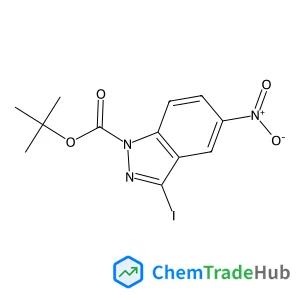
Tert-butyl 3-iodo-5-nitro-1H-indazole-1-carboxylate
CAS Number:
459133-69-8
Molecular Formula:
C12H12IN3O4
Recommended Suppliers





Disclaimer
This page provides academic journal information for reference and research purposes only. We are not affiliated with any journal publishers and do not handle publication submissions. For publication-related inquiries, please contact the respective journal publishers directly.
If you notice any inaccuracies in the information displayed, please contact us at support@chemtradehub.com. We will promptly review and address your concerns.