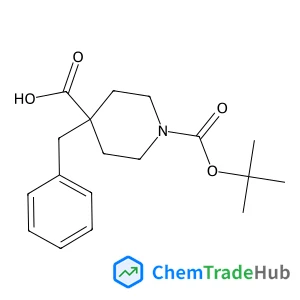
4-Benzyl-1-(tert-butoxycarbonyl)piperidine-4-carboxylic acid
CAS Number:
170838-87-6
Molecular Formula:
C18H25NO4
Thomas Forsting, Julia Zischang, Martin A. Suhm, Marco Eckhoff, Benjamin Schröder, Ricardo A. Mata
In this work, a careful analysis of anharmonic couplings in NH and some CH stretch modes of imidazole is carried out. This includes IR and Raman spectra of the isolated molecule and aggregates up to the trimer, together with two different theoretical approaches to the calculation of anharmonic shifts and absolute band positions. The imidazole dimer is vibrationally characterized for the first time in vacuum isolation under supersonic jet conditions, showing substantial shifts from previous helium droplet experiments and evidence for Fermi resonance for the hydrogen-bonded NH stretch. The most stable imidazole trimer structure is unambiguously shown to be cyclic with three non-equivalent, highly strained hydrogen bonds. This contrasts the helium droplet observation of a chain trimer involving two unstrained hydrogen bonds. These experimental conclusions are strongly corroborated by theory, including vibrational perturbation theory and anharmonic normal mode analysis. Systematic error compensation in some of these methods is emphasized. Intramolecular anharmonic coupling constants from perturbation theory are validated by Raman hot band jet spectroscopy of the monomer. Imidazole aggregation is shown to provide valuable benchmarking opportunities for electronic structure and in particular for anharmonic vibrational methods, covering the field of strong and strongly distorted hydrogen bonding.
Cameron F. Baker, John A. Seed, Ralph W. Adams, Daniel Lee, Stephen T. Liddle
DOI: 10.1039/D3SC04449A
Andrey V. Zaytsev, Amit Sil, Glib V. Baryshnikov, J. A. Gareth Williams, Fernando B. Dias, Valery N. Kozhevnikov
DOI: 10.1039/D3SC04450E
Dan Ouyang, Chuanzhe Wang, Chao Zhong, Juan Lin, Gang Xu, Guane Wang, Zian Lin
DOI: 10.1039/D3SC05633C
Fangliang Li, Yuemiao Lai, Yi Zeng, Xiao Chen, Tao Wang, Qing Guo
DOI: 10.1039/D3SC05623F
Rajib Dey, Sudip Mukherjee, Riya Mukherjee
DOI: 10.1039/D3SC05124B
Daniel Probst, William H. Green, Georg K. H. Madsen
DOI: 10.1039/D3SC02048G
Toshiyuki Sugiyama, Francisco Medina, Wouter van Beek, Jun-ya Hasegawa
DOI: 10.1039/D3SC04466A
Ting Yao, Wei Xia, Shitao Han, Shuaiqiang Jia, Xue Dong, Min Wang, Jiapeng Jiao, Dawei Zhou, Jiahao Yang, Xueqing Xing, Chunjun Chen
DOI: 10.1039/D3SC04061E
DOI: 10.1039/D3SC04687G
Govinda Ghimire, Alexander M. Mebel, Shuai Chang
DOI: 10.1039/D3SC05847F
When handling 4-(2-Furylmethyl)thiomorpholine 1,1-dioxide (CAS: 79206-94-3), it ...
When handling 4-Chloro-N-[2-(4-morpholinyl)ethyl]benzamide (CAS: 71320-77-9), it...
Waste containing this compound (CAS: 62921-74-8) should be handled according to ...
Waste containing (S)-Methyl 2-amino-3-cyclohexylpropanoate should be collected i...
This compound can be synthesized using a multi-step process involving the conjug...
There are several alternatives to (2E)-3-(3,4-Dichlorophenyl)acrylic acid in syn...
Ethyl 6-(2-nitrophenyl)imidazo[2,1-b][1,3]thiazole-3-carboxylate (CAS: 925437-84...
Waste containing 2-(1,3-Thiazol-2-yl)ethanamine (CAS: 18453-07-1) should be coll...
Methyl 5-iodo-2-methylbenzoate can be synthesized through the iodination of meth...
5-Chloro[1,2,4]triazolo[1,5-a]pyridine is commonly synthesized via the condensat...

Physical Chemistry Chemical Physics (PCCP) is an international journal co-owned by 19 physical chemistry and physics societies from around the world. This journal publishes original, cutting-edge research in physical chemistry, chemical physics and biophysical chemistry. To be suitable for publication in PCCP, articles must include significant innovation and/or insight into physical chemistry; this is the most important criterion that reviewers and Editors will judge against when evaluating submissions. The journal has a broad scope and welcomes contributions spanning experiment, theory, computation and data science. Topical coverage includes spectroscopy, dynamics, kinetics, statistical mechanics, thermodynamics, electrochemistry, catalysis, surface science, quantum mechanics, quantum computing and machine learning. Interdisciplinary research areas such as polymers and soft matter, materials, nanoscience, energy, surfaces/interfaces, and biophysical chemistry are welcomed if they demonstrate significant innovation and/or insight into physical chemistry. Joined experimental/theoretical studies are particularly appreciated when complementary and based on up-to-date approaches.
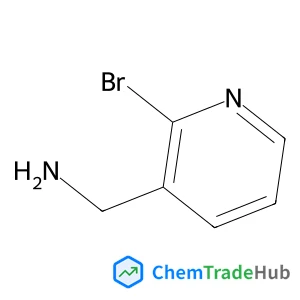
![1-[3-(4-Morpholinylsulfonyl)phenyl]methanamine structure](https://static.chemtradehub.com/structs/933/933989-32-3-51af.webp "1-[3-(4-Morpholinylsulfonyl)phenyl]methanamine structure")