












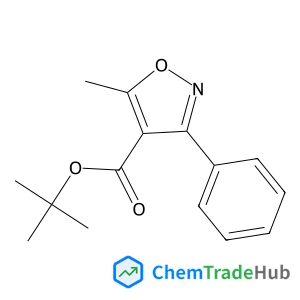
2-Methyl-2-propanyl 5-methyl-3-phenyl-1,2-oxazole-4-carboxylate
CAS Number:
211429-79-7
Molecular Formula:
C15H17NO3
Lu Zhao, Yao Wang, Liang Jin, Minglei Qin, Xiang Li, Anjie Wang, Yongkang Hu
The decomposition of hydrogen sulfide (H2S) has attracted increasing attention because it produces hydrogen from a hazardous waste gas. However, the thermal equilibrium limitation in the decomposition gives rise to low H2S conversion and high energy costs for hydrogen production. In the present work, we demonstrate that alumina-supported CdS and ZnS significantly enhanced the conversion in the non-thermal plasma-induced decomposition of H2S, achieving full conversion at reasonably low energy consumption. It appears that the enhancement might be attributed to the conversion of H2S by its reaction with h+ and e− on the surface of the CdS and ZnS semiconductors, which are generated by the strong electric field and plasma-induced photons.
Diego Cortizo-Lacalle, Antonio Pertegás, Manuel Melle-Franco, Henk J. Bolink
DOI: 10.1039/C7QO00227K
Felix Ammon, Stephanie Theresia Sauer, Rainer Lippert, Dominik Lungerich, David Reger, Frank Hampel, Norbert Jux
DOI: 10.1039/C7QO00112F
Chinnabattigalla Sreenivasulu, A. Gopi Krishna Reddy, G. Satyanarayana
DOI: 10.1039/C6QO00531D
Maria A. Morozova, Mekhman S. Yusubov, Václav Eigner, Alexander A. Bondarev, Akio Saito, Marina E. Trusova, Pavel S. Postnikov
DOI: 10.1039/C6QO00787B
Misun Go, Heekyoung Choi, Ka Young Kim, Cheol Joo Moon, Yeonweon Choi, Hiroyuki Miyake, Shim Sung Lee, Sung Ho Jung, Myong Yong Choi, Jong Hwa Jung
DOI: 10.1039/C9QO00051H
Zhusheng Huang, Qingqing Chen, Xiuqin Yang, Yang Liu, Li Zhang, Tao Lu, Qingfa Zhou
DOI: 10.1039/C6QO00775A
Dan Xu, Yanbang Li, Ning Lou
DOI: 10.1039/C7QO00098G
Meike Sapotta, Peter Spenst, Chantu R. Saha-Möller
DOI: 10.1039/C9QO00172G
Anna Purc, Beata Koszarna, Irina Iachina, Daniel H. Friese, Mariusz Tasior, Krzysztof Sobczyk, Tomasz Pędziński, Jonathan Brewer, Daniel T. Gryko
DOI: 10.1039/C6QO00869K
When handling 4-Methyl-6-(trifluoromethyl)quinoline (CAS: 40716-16-3), safety go...
4-(3,5-Difluorophenyl)aniline is an aromatic organic compound with the CAS numbe...
5-{[4-(Trifluoromethyl)phenyl]sulfanyl}-1,2,3-thiadiazole-4-carboxylic acid can ...
The market for 4-Benzylaniline hydrochloride (CAS: 6317-57-3) is steadily growin...
[3-(Diethylsulfamoyl)phenyl]boronic acid is generally considered safe when handl...
3-Bromo-2,5-dimethoxyaniline is mainly used in the pharmaceutical and chemical i...
N-Methyl-1-(5-methyl-1H-indol-3-yl)methanamine (CAS: 915922-67-7) is subject to ...
This compound is primarily used in the pharmaceutical industry for the synthesis...
2-Methyl-2-propanyl [(1S,3R)-3-aminocyclohexyl]carbamate (CAS: 1298101-47-9) sho...
Ethyl 2-bromo-4,4,4-trifluorobutanoate (CAS: 367-33-9) is utilized in the pharma...

Green Chemistry provides a unique forum for the publication of innovative research on the development of alternative green and sustainable technologies. The scope of Green Chemistry is based on, but not limited to, the definition proposed by Anastas and Warner (Green Chemistry: Theory and Practice, P T Anastas and J C Warner, Oxford University Press, Oxford, 1998). Green chemistry is the utilisation of a set of principles that reduces or eliminates the use or generation of hazardous substances in the design, manufacture and application of chemical products. Green Chemistry is at the frontiers of this continuously-evolving interdisciplinary science and publishes research that attempts to reduce the environmental impact of the chemical enterprise by developing a technology base that is inherently non-toxic to living things and the environment. Submissions on all aspects of research relating to the endeavour are welcome. The journal publishes original and significant cutting-edge research that is likely to be of wide general appeal. To be published, work must present a significant advance in green chemistry. Papers must contain a comparison with existing methods and demonstrate advantages over those methods before publication can be considered. For more information please see this Editorial. Coverage includes the following, but is not limited to: Design (e.g. biomimicry, design for degradation/recycling/reduced toxicity…) Reagents & Feedstocks (e.g. renewables, CO2, solvents, auxiliary agents, waste utilization…) Synthesis (e.g. organic, inorganic, synthetic biology…) Catalysis (e.g. homogeneous, heterogeneous, enzyme, whole cell…) Process (e.g. process design, intensification, separations, recycling, efficiency…) Energy (e.g. renewable energy, fuels, photovoltaics, fuel cells, energy storage, energy carriers…) Applications (e.g. electronics, dyes, consumer products, coatings, pharmaceuticals, preservatives, building materials, chemicals for industry/agriculture/mining…) Impact (e.g. safety, metrics, LCA, sustainability, (eco)toxicology…) Green chemistry is, by definition, a continuously-evolving frontier. Therefore, the inclusion of a particular material or technology does not, of itself, guarantee that a paper is suitable for the journal. To be suitable, the novel advance should have the potential for reduced environmental impact relative to the state of the art. Green Chemistry does not normally deal with research associated with 'end-of-pipe' or remediation issues.
![[3-(2,6-Dichlorophenyl)-5-isopropyl-1,2-oxazol-4-yl]methanol structure](https://static.chemtradehub.com/structs/278/278597-30-1-5c79.webp "[3-(2,6-Dichlorophenyl)-5-isopropyl-1,2-oxazol-4-yl]methanol structure")
![Imidazo[1,2-c]pyrimidine structure](https://static.chemtradehub.com/structs/274/274-78-2-8b4c.webp "Imidazo[1,2-c]pyrimidine structure")
![2,4-Dichloro-6-isopropyl-5H-pyrrolo[3,4-d]pyrimidin-7(6H)-one structure](https://static.chemtradehub.com/structs/107/1079649-94-7-ad4a.webp "2,4-Dichloro-6-isopropyl-5H-pyrrolo[3,4-d]pyrimidin-7(6H)-one structure")




