













Emergence of spin-filter states in Pt–Fe nanowires
Literature Information
Publication Date
2014-01-27
DOI
10.1039/C3CP55437F
Impact Factor
3.676
Authors
E. M. Smelova, K. M. Tsysar, A. M. Saletsky
View Original
Abstract
Our theoretical study predicts the emergence of a new spin-filter state in one-dimensional Pt–Fe bimetallic nanowires. The results show the existence of two transmission states in contracted “zig-zag” Pt–Fe nanowires with low and high transmission 1G0 and 3G0, correspondingly, and one transmission state in linear stretched nanowires with conductance 2G0. Our first principle calculations revealed the dependence of quantum conductance of Pt–Fe nanowires on their geometry and atomic structure. Thus we found that nanowire stretching up to the interatomic distance of 2.3 Å leads to the transition of the wire from a “zig-zag” to the linear configuration, leading to changes in the conductance properties of the wire, i.e. formation of a new spin-filter state. Our study shows also the emergence of a magnetic transition from ferromagnetic to antiferromagnetic states under wire stretching. We found that the spin-filter state exists only in “zig-zag” Pt–Fe nanowires in the ferromagnetic state. Moreover, the spin-polarization of quantum electron transport through Pt–Fe nanowires vanishes totally in linear stretched nanowires in an antiferromagnetic state. Our electronic structure calculation reveals the emergence of new hybridized states in the band structure of the Pt–Fe nanowire, which causes the formation of a new spin-filter state.
Recommended Journals
Related Literature
An electrostatic self-assembly route to prepare C-dots/gold nanoclusters for dual-emission ratiometric optical thermometry in living cells
Xiaojie Zhang, Chunxia Yin, Xun Zhang, Jiaping Zhang, Xinwai Wang, Jingwei Xin
2019-07-26
Paper
DOI: 10.1039/C9AY01115C
Photoelectrochemical-assisted determination of caffeic acid exploiting a composite based on carbon nanotubes, cadmium telluride quantum dots, and titanium dioxide
Chirlene Nascimento Botelho, Neuma das Mercês Pereira, Glaura Goulart Silva, Alan Silva de Menezes, Cícero Wellington Brito Bezerra, Flavio Santos Damos, Rita de Cássia Silva Luz
2019-08-26
Paper
DOI: 10.1039/C9AY01422E
Cu(i)–SNS complexes for outer-sphere hydroboration and hydrosilylation of carbonyls
Matthew R. Elsby, R. Tom Baker
2019-10-28
Communication
DOI: 10.1039/C9CC07266G
Unsorted single walled carbon nanotubes enabled the fabrication of high performance organic thin film transistors with low cost metal electrodes
Shiping Zhu, Tony Wigglesworth, Yiliang Wu
2013-07-26
Communication
DOI: 10.1039/C3CC43920H
Scalable calibration transfer without standards via dynamic time warping for near-infrared spectroscopy
Congming Zou, Huimin Zhu, Junru Shen, Yue He, Jiaen Su, Xiaqiong Fan, Hongmei Lu, Zhimin Zhang, Yi Chen
2019-08-13
Paper
DOI: 10.1039/C9AY01139K
A simple and effective strategy based on sodium gallate-exfoliated graphene for the simultaneous voltammetric determination of guaiacol and vanillin
Chenchen Li, Ju Fu, Xiaohong Tan, Qunfang Li
2019-07-24
Paper
DOI: 10.1039/C9AY01018A
Droplet-based microfluidic synthesis of (Au nanorod@Ag)–polyaniline Janus nanoparticles and their application as a surface-enhanced Raman scattering nanosensor for mercury detection
Yue Wang, Mengxue Shang, Yaning Wang, Zhangrun Xu
2019-07-12
Paper
DOI: 10.1039/C9AY01213C
You might also like
Compound Q&A
What are the main uses of 1H-Indazole-6-carbonitrile (CAS: 141290-59-7)?
1H-Indazole-6-carbonitrile finds applications in pharmaceuticals, where it serve...
141290-59-71H-Indazole-6-carbon...
Compound Q&A
How should waste containing Dioctyl (2E)-2-butenedioate (CAS: 2997-85-5) be handled?
Waste containing Dioctyl (2E)-2-butenedioate (CAS: 2997-85-5) should be collecte...
2997-85-5Dioctyl (2E)-2-buten...
Compound Q&A
What industries use Sodium [(1,2-benzoxazol-3-ylmethyl)sulfonyl]azanide (CAS: 68291-98-5)?
Sodium [(1,2-benzoxazol-3-ylmethyl)sulfonyl]azanide is primarily used in pharmac...
68291-98-5Sodium [(1,2-benzoxa...
Compound Q&A
Are there alternatives to Dimethyl 4-(4,4,5,5-tetramethyl-1,3,2-dioxaborolan-2-yl)-2,6-pyridinedicarboxylate (CAS: 741709-66-0) in synthesis?
Dimethyl 4-(4,4,5,5-tetramethyl-1,3,2-dioxaborolan-2-yl)-2,6-pyridinedicarboxyla...
741709-66-0Dimethyl 4-(4,4,5,5-...
Compound Q&A
How should waste containing 2-Fluoro-6-hydrazinopyridine (CAS: 80714-39-2) be handled?
Waste containing 2-Fluoro-6-hydrazinopyridine (CAS: 80714-39-2) should be manage...
80714-39-22-Fluoro-6-hydrazino...
Compound Q&A
What is 6-Formyl-2-pyridinecarboxylic acid (CAS: 499214-11-8)?
6-Formyl-2-pyridinecarboxylic acid is an organic compound with the molecular for...
499214-11-86-Formyl-2-pyridinec...
Compound Q&A
What is the market or research trend for 3-(3,4-dimethoxyphenyl)-2,5-dimethyl-N-(2-morpholin-4-ylethyl)pyrazolo[1,5-a]pyrimidin-7-amine (CAS: 900874-91-1)?
Research trends for this compound indicate a focus on its potential applications...
900874-91-13-(3,4-dimethoxyphen...
Compound Q&A
How is 9H-Tribenzo[b,d,f]azepine (CAS: 29875-73-8) typically synthesized?
9H-Tribenzo[b,d,f]azepine is typically synthesized via a multi-step process invo...
29875-73-89H-Tribenzo[b,d,f]az...
Compound Q&A
How is 1-Cyclopropyl-7-ethoxy-6-fluoro-8-methoxy-4-oxo-1,4-dihydro-3-quinolinecarboxylic acid (CAS: 1797982-51-4) typically synthesized?
1-Cyclopropyl-7-ethoxy-6-fluoro-8-methoxy-4-oxo-1,4-dihydro-3-quinolinecarboxyli...
1797982-51-41-Cyclopropyl-7-etho...
Compound Q&A
How should waste containing Methyl 3-oxo-1,2,3,4-tetrahydro-6-quinoxalinecarboxylate (CAS: 671820-52-3) be handled?
Waste containing Methyl 3-oxo-1,2,3,4-tetrahydro-6-quinoxalinecarboxylate (CAS: ...
671820-52-3Methyl 3-oxo-1,2,3,4...
Source Journal
Physical Chemistry Chemical Physics

CiteScore:
5.5
Self-citation Rate:
10.3%
Articles per Year:
3036
Physical Chemistry Chemical Physics (PCCP) is an international journal co-owned by 19 physical chemistry and physics societies from around the world. This journal publishes original, cutting-edge research in physical chemistry, chemical physics and biophysical chemistry. To be suitable for publication in PCCP, articles must include significant innovation and/or insight into physical chemistry; this is the most important criterion that reviewers and Editors will judge against when evaluating submissions. The journal has a broad scope and welcomes contributions spanning experiment, theory, computation and data science. Topical coverage includes spectroscopy, dynamics, kinetics, statistical mechanics, thermodynamics, electrochemistry, catalysis, surface science, quantum mechanics, quantum computing and machine learning. Interdisciplinary research areas such as polymers and soft matter, materials, nanoscience, energy, surfaces/interfaces, and biophysical chemistry are welcomed if they demonstrate significant innovation and/or insight into physical chemistry. Joined experimental/theoretical studies are particularly appreciated when complementary and based on up-to-date approaches.
Recommended Compounds

![N-[(9H-Fluoren-9-ylmethoxy)carbonyl]serine structure](https://static.chemtradehub.com/structs/737/73724-45-5-b0dc.webp "N-[(9H-Fluoren-9-ylmethoxy)carbonyl]serine structure")
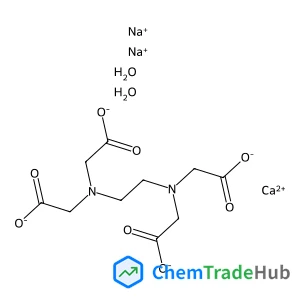
EthylenediaminetetraaceticacidcalciumDisodiumsalthydrate
CAS Number:
23411-34-9
Molecular Formula:
C10H16CaN2Na2O10

Recommended Suppliers





Disclaimer
This page provides academic journal information for reference and research purposes only. We are not affiliated with any journal publishers and do not handle publication submissions. For publication-related inquiries, please contact the respective journal publishers directly.
If you notice any inaccuracies in the information displayed, please contact us at support@chemtradehub.com. We will promptly review and address your concerns.