












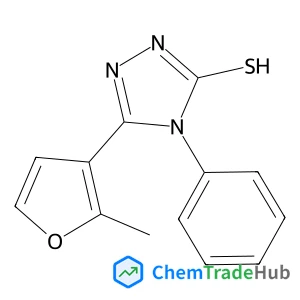
5-(2-Methyl-3-furyl)-4-phenyl-2,4-dihydro-3H-1,2,4-triazole-3-thione
CAS Number:
346464-59-3
Molecular Formula:
C13H11N3OS
This perspective offers an overview of using nanomaterials for understanding cobalt catalysed Fischer–Tropsch chemistry. Nanomaterials now afford unprecedented control of size, shape and structure at the nanometre scale. This makes them invaluable tools for studying heterogeneous catalysis. The Fischer–Tropsch reaction, especially using cobalt based catalysts, is a linchpin in many processes for utilising other feedstocks (via gasification) that have been envisaged as short/medium term replacements for crude oil. The underlying chemistry has therefore garnered considerable renewed interest. The current state of the art in mechanistic understanding is summarised and the application of nanomaterials to developing this further is explored. Several specific questions, to which nanomaterials have already contributed answers, are addressed: how do nanomaterials contribute to our understanding of cobalt particle size effects, reducibility, and the effect of support porosity and how do precious metal promoters operate in cobalt catalysed Fischer–Tropsch chemistry? Future possible uses for nanomaterials in studying this field are also identified.
Ziyin Yang, Xiaohui Zheng, Zhi Li, Jianbin Zheng
DOI: 10.1039/C6AN00640J
Haidong Li, Patrick Garrigue, Laurent Bouffier, Stéphane Arbault, Alexander Kuhn, Neso Sojic
DOI: 10.1039/C6AN00652C
Zhigang Sui, Yichu Shan, Lihua Zhang, Yukui Zhang
DOI: 10.1039/C6AN00892E
Zhiwei Li
DOI: 10.1039/C9AN02495F
Shruti D. Bindesri, Ricardo Jebailey, Najwan Albarghouthi, Cory C. Pye, Christa L. Brosseau
DOI: 10.1039/C9AN02173F
Bing Wang, Jun-Tao Cao, Yan-Ming Liu
DOI: 10.1039/C9AN02448D
Xiaodong Jin, Hao Wang, Ran Xin, Yining Ma, Guoping Wu, Tongxiang Xu, Xiaowei Xia, Shifan Wang, Rongliang Ma
DOI: 10.1039/C9AN02158B
Rui Xiao, Hassan Idris Abdu, Liping Wei, Tieying Wang, Shuhui Huo, Jing Chen
DOI: 10.1039/C9AN02481F
Jia Li
DOI: 10.1039/C9AN90127B
Sarah Esparza, Dimei Wu, Mark R. Hanudel, Barbara Gales, Isidro B. Salusky
DOI: 10.1039/C9AN02215E
When handling lithium chloride hydrate (1:1:1) (CAS: 16712-20-2), it is importan...
4-(4H-1,2,4-Triazol-4-yl)piperidine is generally considered safe for use in phar...
Waste containing 1,3-Thiazole-2-carboxamide (CAS: 16733-85-0) should be collecte...
5-(Difluoromethyl)-2-fluorobenzonitrile (CAS: 934175-58-3) is subject to regulat...
Methyl 3-acetamido-2-thiophenecarboxylate can be synthesized by the reaction of ...
4-Isoquinolinecarbonitrile is a chemical compound with the CAS number 34846-65-6...
Store Methyl 1H-1,2,3-triazole-4-carboxylate (CAS: 877309-59-6) in a cool, dry p...
6-Bromo[1,3]thiazolo[5,4-b]pyridin-2-amine (CAS: 1160791-13-8) is subject to the...
(2S,3S)-2-Ammonio-3-(3,4-dihydroxyphenyl)-3-hydroxypropanoate (CAS: 23651-95-8) ...
7-Bromo-3-methyl-3,4-dihydroquinazolin-4-one is a solid with a crystalline form....

Physical Chemistry Chemical Physics (PCCP) is an international journal co-owned by 19 physical chemistry and physics societies from around the world. This journal publishes original, cutting-edge research in physical chemistry, chemical physics and biophysical chemistry. To be suitable for publication in PCCP, articles must include significant innovation and/or insight into physical chemistry; this is the most important criterion that reviewers and Editors will judge against when evaluating submissions. The journal has a broad scope and welcomes contributions spanning experiment, theory, computation and data science. Topical coverage includes spectroscopy, dynamics, kinetics, statistical mechanics, thermodynamics, electrochemistry, catalysis, surface science, quantum mechanics, quantum computing and machine learning. Interdisciplinary research areas such as polymers and soft matter, materials, nanoscience, energy, surfaces/interfaces, and biophysical chemistry are welcomed if they demonstrate significant innovation and/or insight into physical chemistry. Joined experimental/theoretical studies are particularly appreciated when complementary and based on up-to-date approaches.
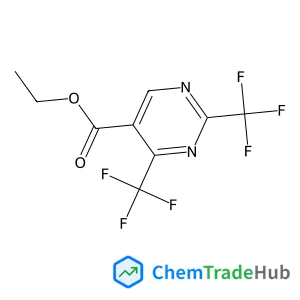
![(1R,5R)-3-{[(2-Methyl-2-propanyl)oxy]carbonyl}-3-azabicyclo[3.1.0]hexane-1-carboxylic acid structure](https://static.chemtradehub.com/structs/116/1165450-63-4-bfe1.webp "(1R,5R)-3-{[(2-Methyl-2-propanyl)oxy]carbonyl}-3-azabicyclo[3.1.0]hexane-1-carboxylic acid structure")
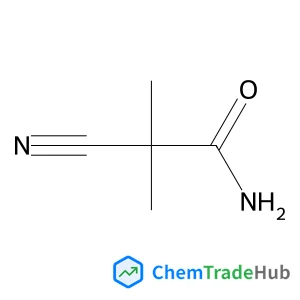
![(R)-N-[(S)-1-[2-(Diphenylphosphino)phenyl]ethyl]-2-methylpropane-2-sulfinamide structure](https://static.chemtradehub.com/structs/159/1595319-98-4-33e7.webp "(R)-N-[(S)-1-[2-(Diphenylphosphino)phenyl]ethyl]-2-methylpropane-2-sulfinamide structure")



