












Competitive lithium solvation of linear and cyclic carbonates from quantum chemistry
Literature Information
Publication Date
2015-11-17
DOI
10.1039/C5CP05121E
Impact Factor
3.676
Authors
Oleg Borodin, Marco Olguin, P. Ganesh, Joshua L. Allen, Wesley A. Henderson
View Original
Abstract
The composition of the lithium cation (Li+) solvation shell in mixed linear and cyclic carbonate-based electrolytes has been re-examined using Born–Oppenheimer molecular dynamics (BOMD) as a function of salt concentration and cluster calculations with ethylene carbonate:dimethyl carbonate (EC:DMC)–LiPF6 as a model system. A coordination preference for EC over DMC to a Li+ was found at low salt concentrations, while a slightly higher preference for DMC over EC was found at high salt concentrations. Analysis of the relative binding energies of the (EC)n(DMC)m–Li+ and (EC)n(DMC)m–LiPF6 solvates in the gas-phase and for an implicit solvent (as a function of the solvent dielectric constant) indicated that the DMC-containing Li+ solvates were stabilized relative to (EC4)–Li+ and (EC)3–LiPF6 by immersing them in the implicit solvent. Such stabilization was more pronounced in the implicit solvents with a high dielectric constant. Results from previous Raman and IR experiments were reanalyzed and reconciled by correcting them for changes of the Raman activities, IR intensities and band shifts for the solvents which occur upon Li+ coordination. After these correction factors were applied to the results of BOMD simulations, the composition of the Li+ solvation shell from the BOMD simulations was found to agree well with the solvation numbers extracted from Raman experiments. Finally, the mechanism of the Li+ diffusion in the dilute (EC:DMC)LiPF6 mixed solvent electrolyte was studied using the BOMD simulations.
Related Literature
Implications of Ga promotion and metal–oxide interface from tailored PtGa propane dehydrogenation catalysts supported on carbon
Enzo Brack, Marc-Georg Willinger, Christophe Copéret
2023-10-25
Edge Article
DOI: 10.1039/D3SC04711C
Stepwise deprotonation of truxene: structures, metal complexation, and charge-dependent optical properties
Yumeng Guo, Herdya S. Torchon, Yikun Zhu, Zheng Wei, Zhenyi Zhang, Haixiang Han, Marina A. Petrukhina, Zheng Zhou
2023-10-31
Edge Article
DOI: 10.1039/D3SC04885C
Azaphosphinines and their derivatives
J. Nolan McNeill, Jeremy P. Bard, Darren W. Johnson, Michael M. Haley
2023-11-24
Review Article
DOI: 10.1039/D3CS00737E
3D-hosted lithium metal anodes
Xin He, Kai Zhang, Zhiqiang Zhu, Zhangfa Tong
2023-11-20
Tutorial Review
DOI: 10.1039/D3CS00495C
Photoswitchable and long-lived seven-membered cyclic singlet diradicals for the bioorthogonal photoclick reaction
Fuqiang Hu, Cefei Zhang, Zhihao Liu, Xinyu Xie, Xiaohu Zhao, Yanju Luo, Jielin Fu, Baolin Li, Changwei Hu, Zhishan Su, Zhipeng Yu
2023-11-02
Edge Article
DOI: 10.1039/D3SC03675H
Metallosupramolecular polymers: current status and future prospects
Rahul Dev Mukhopadhyay
2023-11-14
Review Article
DOI: 10.1039/D3CS00692A
Enantioselective and collective total synthesis of pentacyclic 19-nor-clerodanes
Zhi-Mao Zhang, Junliang Zhang, Quan Cai
2023-10-23
Edge Article
DOI: 10.1039/D3SC04335E
Bio-based hyperbranched epoxy resins: synthesis and recycling
Jiang Li, Dan Li, Yunke Ma, Shucun Zhou, Yu Wang, Daohong Zhang
2023-12-18
Review Article
DOI: 10.1039/D3CS00713H
Virus-mimicking nanosystems: from design to biomedical applications
Hao-Yang Liu, Xiao Li, Zhi-Gang Wang
2023-11-06
Tutorial Review
DOI: 10.1039/D3CS00138E
You might also like
Compound Q&A
How should waste containing 6-Chloro-5-(2'-hydroxy-3'-methoxy-4-biphenylyl)-3-(3-methoxyphenyl)-1H-pyrrolo[3,2-d]pyrimidine-2,4(3H,5H)-dione (CAS: 1346607-05-3) be handled?
Waste containing 6-Chloro-5-(2'-hydroxy-3'-methoxy-4-biphenylyl)-3-(3-methoxyphe...
1346607-05-36-Chloro-5-(2'-hydro...
Compound Q&A
What are the main uses of (3alpha,5alpha)-3-Hydroxypregnane-11,20-dione (CAS: 23930-19-0)?
(3alpha,5alpha)-3-Hydroxypregnane-11,20-dione is primarily used in the pharmaceu...
23930-19-0(3alpha,5alpha)-3-Hy...
Compound Q&A
What is the market or research trend for 4-Amino-6-chloro-2-pyridinecarboxylic acid (CAS: 546141-56-4)?
The market for 4-Amino-6-chloro-2-pyridinecarboxylic acid (CAS: 546141-56-4) is ...
546141-56-44-Amino-6-chloro-2-p...
Compound Q&A
Are there alternatives to (2-Benzoylethyl)trimethylammonium chloride (CAS: 24472-88-6) in synthesis?
Alternatives to (2-Benzoylethyl)trimethylammonium chloride (CAS: 24472-88-6) in ...
24472-88-6(2-Benzoylethyl)trim...
Compound Q&A
Is N-[4-Nitro-3-(trifluoromethyl)phenyl]acetamide (CAS: 393-12-4) safe?
N-[4-Nitro-3-(trifluoromethyl)phenyl]acetamide (CAS: 393-12-4) is generally safe...
393-12-4N-[4-Nitro-3-(triflu...
Compound Q&A
Are there alternatives to [(4R,5R,6S)-5-hydroxy-10-imino-3,7-dioxa-1,9-diazatricyclo[6.4.0.02,6]dodeca-8,11-dien-4-yl]methyl dihydrogen phosphate (CAS: 39679-56-6) in synthesis?
Alternative reagents such as other phosphates or similar functional groups can b...
39679-56-6[(4R,5R,6S)-5-hydrox...
Compound Q&A
Are there alternatives to N,N'-Bis(3-aminopropyl)-1,3-propanediamine (CAS: 4605-14-5) in synthesis?
There are alternatives to N,N'-Bis(3-aminopropyl)-1,3-propanediamine (CAS: 4605-...
4605-14-5N,N'-Bis(3-aminoprop...
Compound Q&A
What precautions should be taken when handling Aluminium trihexadecanoate (CAS: 555-35-1)?
When handling Aluminium trihexadecanoate, it is important to use appropriate per...
555-35-1Aluminium trihexadec...
Compound Q&A
What is (1,1-Dioxido-3-oxo-1,2-benzothiazol-2(3H)-yl)acetic acid (CAS: 52188-11-1)?
(1,1-Dioxido-3-oxo-1,2-benzothiazol-2(3H)-yl)acetic acid is a chemical compound ...
52188-11-1(1,1-Dioxido-3-oxo-1...
Compound Q&A
Are there alternatives to 5,5-dimethyloxolan-2-one (CAS: 3123-97-5) in synthesis?
Several alternatives to 5,5-dimethyloxolan-2-one (CAS: 3123-97-5) can be used in...
3123-97-55,5-dimethyloxolan-2...
Source Journal
Physical Chemistry Chemical Physics

CiteScore:
5.5
Self-citation Rate:
10.3%
Articles per Year:
3036
Physical Chemistry Chemical Physics (PCCP) is an international journal co-owned by 19 physical chemistry and physics societies from around the world. This journal publishes original, cutting-edge research in physical chemistry, chemical physics and biophysical chemistry. To be suitable for publication in PCCP, articles must include significant innovation and/or insight into physical chemistry; this is the most important criterion that reviewers and Editors will judge against when evaluating submissions. The journal has a broad scope and welcomes contributions spanning experiment, theory, computation and data science. Topical coverage includes spectroscopy, dynamics, kinetics, statistical mechanics, thermodynamics, electrochemistry, catalysis, surface science, quantum mechanics, quantum computing and machine learning. Interdisciplinary research areas such as polymers and soft matter, materials, nanoscience, energy, surfaces/interfaces, and biophysical chemistry are welcomed if they demonstrate significant innovation and/or insight into physical chemistry. Joined experimental/theoretical studies are particularly appreciated when complementary and based on up-to-date approaches.
Recommended Compounds
![1-(2-Chlorophenyl)-6-[(2S)-3,3,3-trifluoro-2-methylpropyl]-1,7-dihydro-4H-pyrazolo[3,4-d]pyrimidin-4-one structure](https://static.chemtradehub.com/structs/794/794568-91-5-0c34.webp "1-(2-Chlorophenyl)-6-[(2S)-3,3,3-trifluoro-2-methylpropyl]-1,7-dihydro-4H-pyrazolo[3,4-d]pyrimidin-4-one structure")
1-(2-Chlorophenyl)-6-[(2S)-3,3,3-trifluoro-2-methylpropyl]-1,7-dihydro-4H-pyrazolo[3,4-d]pyrimidin-4-one
CAS Number:
794568-91-5
Molecular Formula:
C15H12ClF3N4O
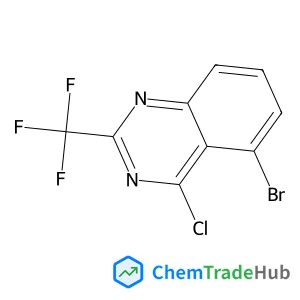
5-Bromo-4-chloro-2-(trifluoromethyl)quinazoline
CAS Number:
2089311-03-3
Molecular Formula:
C9H3BrClF3N2

Recommended Suppliers






Disclaimer
This page provides academic journal information for reference and research purposes only. We are not affiliated with any journal publishers and do not handle publication submissions. For publication-related inquiries, please contact the respective journal publishers directly.
If you notice any inaccuracies in the information displayed, please contact us at support@chemtradehub.com. We will promptly review and address your concerns.