












![4-{[4-(Trifluoromethoxy)benzyl]oxy}benzonitrile structure](https://static.chemtradehub.com/structs/103/1036629-63-6-2172.webp "4-{[4-(Trifluoromethoxy)benzyl]oxy}benzonitrile structure")
4-{[4-(Trifluoromethoxy)benzyl]oxy}benzonitrile
CAS Number:
1036629-63-6
Molecular Formula:
C15H10F3NO2
Liling Fu, Genggeng Qi, Ritu Sahore, Rachid Sougrat, Francis J. DiSalvo, Emmanuel P. Giannelis
By combining elements of hard- and soft-templating, a facile synthesis method for carbon foams with large mesopores has been demonstrated. A commercial Pluronic surfactant was used as the structure-directing agent as well as the carbon precursor. No micelle swelling agent or post treatment is necessary to enlarge mesopores. As such this method requires fewer synthesis steps and is highly scalable. The as-synthesized meso-carbons showed potential applications in the fields of carbon oxide capture and lithium–sulfur batteries.
Ritabrita Goswami, Aarohi Gupta, Olga Bednova, Gaël Coulombe, Dipika Patel, Vincent M. Rotello
DOI: 10.1039/D1CS00269D
Daniel M. Adrion, Waruni V. Karunaratne, Steven A. Lopez
DOI: 10.1039/D3SC03805J
Ning-Yu Huang, Yu-Tao Zheng, Di Chen, Zhen-Yu Chen, Chao-Zhu Huang, Qiang Xu
DOI: 10.1039/D2CS00289B
Fang He, Shi-Zhang Qiao
DOI: 10.1039/D3CS00445G
Geoffrey I. N. Waterhouse, Siyu Lu
DOI: 10.1039/D2CS00993E
Zhi-Mao Zhang, Junliang Zhang, Quan Cai
DOI: 10.1039/D3SC04335E
Enzo Brack, Marc-Georg Willinger, Christophe Copéret
DOI: 10.1039/D3SC04711C
Moritz Thürlemann, Sereina Riniker
DOI: 10.1039/D3SC04317G
Waste containing 6-Chloro-5-(2'-hydroxy-3'-methoxy-4-biphenylyl)-3-(3-methoxyphe...
(3alpha,5alpha)-3-Hydroxypregnane-11,20-dione is primarily used in the pharmaceu...
The market for 4-Amino-6-chloro-2-pyridinecarboxylic acid (CAS: 546141-56-4) is ...
Alternatives to (2-Benzoylethyl)trimethylammonium chloride (CAS: 24472-88-6) in ...
N-[4-Nitro-3-(trifluoromethyl)phenyl]acetamide (CAS: 393-12-4) is generally safe...
Alternative reagents such as other phosphates or similar functional groups can b...
There are alternatives to N,N'-Bis(3-aminopropyl)-1,3-propanediamine (CAS: 4605-...
When handling Aluminium trihexadecanoate, it is important to use appropriate per...
(1,1-Dioxido-3-oxo-1,2-benzothiazol-2(3H)-yl)acetic acid is a chemical compound ...
Several alternatives to 5,5-dimethyloxolan-2-one (CAS: 3123-97-5) can be used in...

Physical Chemistry Chemical Physics (PCCP) is an international journal co-owned by 19 physical chemistry and physics societies from around the world. This journal publishes original, cutting-edge research in physical chemistry, chemical physics and biophysical chemistry. To be suitable for publication in PCCP, articles must include significant innovation and/or insight into physical chemistry; this is the most important criterion that reviewers and Editors will judge against when evaluating submissions. The journal has a broad scope and welcomes contributions spanning experiment, theory, computation and data science. Topical coverage includes spectroscopy, dynamics, kinetics, statistical mechanics, thermodynamics, electrochemistry, catalysis, surface science, quantum mechanics, quantum computing and machine learning. Interdisciplinary research areas such as polymers and soft matter, materials, nanoscience, energy, surfaces/interfaces, and biophysical chemistry are welcomed if they demonstrate significant innovation and/or insight into physical chemistry. Joined experimental/theoretical studies are particularly appreciated when complementary and based on up-to-date approaches.


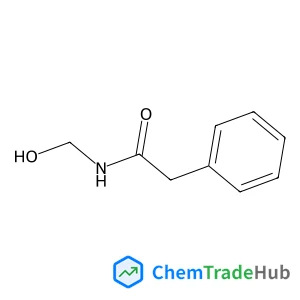
![2-morpholino-2-[2-(trifluoromethyl)pyrimidin-5-yl]ethanamine structure](https://static.chemtradehub.com/structs/119/1192570-20-9-2810.webp "2-morpholino-2-[2-(trifluoromethyl)pyrimidin-5-yl]ethanamine structure")





