












Charge transport characteristics of a high-mobility diketopyrrolopyrrole-based polymer
Literature Information
Publication Date
2013-07-08
DOI
10.1039/C3CP52422A
Impact Factor
3.676
Authors
Dae Sung Chung, Il Kang, Yun-Hi Kim, Soon-Ki Kwon
View Original
Abstract
In this study, we attempt to unveil the charge-transport abnormality of the widely studied diketopyrrolopyrrole (DPP)-based polymers with exceptionally high charge carrier mobility [>5 cm2 V−1 s−1]. Based on the electric field and temperature dependence of the charge-transport characteristics of the field effect transistor (FET) geometry of one of the highly conductive DPP derivatives, namely, (poly[2,5-bis(7-decylnonadecyl)pyrrolo[3,4-c]pyrrole-1,4(2H,5H)-dione-(E)-(1,2-bis(5-(thiophen-2-yl)selenophen-2-yl)ethene) (PDPPDTSE), we show that the high gate–source bias drew the carriers closer to the interface of the semiconductor/dielectric layers where the density of state (DOS) of the charge carrier is significantly broader than the bulk. We argue that the intrinsically narrow DOS in the PDPPDTSE bulk resulted in significantly different charge-transport behavior between the semiconductor bulk and the semiconductor/dielectric interface, which was not visible in the other low-mobility organic semiconductors that contain intrinsically high density of trap states in their bulk. To avoid these charge transport abnormalities, we try to operate the FETs under low gate bias without compromising the accumulated charge carrier density. By carefully employing a thin metal oxide covered with a self-assembled monolayer (SAM) as a dielectric layer, we can demonstrate low-voltage PDPPDTSE FETs with near-ideal performance both in terms of hysteresis-free operation and operating reliability while maintaining a high charge carrier mobility of ∼2.8 cm2 V−1 s−1.
Related Literature
Highly selective and sensitive detection of Cu2+ with lysine enhancing bovine serum albumin modified-carbon dots fluorescent probe
Jia-Ming Liu, Li-ping Lin, Xin-Xing Wang, Shao-Qin Lin, Wen-Lian Cai, Li-Hong Zhang, Zhi-Yong Zheng
2012-04-05
Paper
DOI: 10.1039/C2AN35130G
Optimization of electromagnetic hot spots in surface-enhanced Raman scattering substrates for an ultrasensitive drug assay of emergency department patients’ plasma
Thakshila Liyanage, Adrianna N. Masterson, Sumon Hati, Greta Ren, Nicholas E. Manicke, Daniel E. Rusyniak
2020-09-24
Paper
DOI: 10.1039/D0AN01372B
Simultaneous multiple enantioseparation with a one-pot imprinted microfluidic channel by microchip capillary electrochromatography
Ping Qu, Jianping Lei, Jin Sheng, Lei Zhang, Huangxian Ju
2010-11-29
Paper
DOI: 10.1039/C0AN00559B
Macroporous hydrogel micropillars for quantifying Met kinase activity in cancer cell lysates
Alicia D. Powers, Bi Liu, Andrew G. Lee, Sean P. Palecek
2012-07-06
Paper
DOI: 10.1039/C2AN35464K
Applications of 1,3,5-trimethoxybenzene as a derivatizing agent for quantifying free chlorine, free bromine, bromamines, and bromide in aqueous systems
Ryan P. Dias, Marella H. Schammel, Keith P. Reber
2019-10-01
Paper
DOI: 10.1039/C9AY01443H
Comprehensive screening of multiclass illegal adulterants in herbal supplements and Spice-type drugs using specific MS/MS fragmentations by UHPLC-Q/TOF-MS
Jisu Hur, Wonwoong Lee, Beom Hee Kim, Hyun Ji Kim, Do Hee Lee, Ji Hyun Lee, Yong Moon Lee, Han Bin Oh, Jongki Hong
2019-09-16
Paper
DOI: 10.1039/C9AY01517E
You might also like
Compound Q&A
Are there alternatives to 1-(4-Chlorophenyl)-N-hydroxymethanimine (CAS: 3848-36-0) in synthesis?
When considering alternatives to 1-(4-Chlorophenyl)-N-hydroxymethanimine (CAS: 3...
3848-36-01-(4-Chlorophenyl)-N...
Compound Q&A
How should (1R,9S,10S,12S,14E,16S,19R,20R,21S,22R)-3,9,21-Trihydroxy-5,10,12,14,16,20,22-heptamethyl-23,24-dioxatetracyclo[17.3.1.1~6,9~.0~2,7~]tetracosa-2,5,7,14-tetraen-4-one (CAS: 183202-73-5) be stored?
This compound should be stored in a cool, dry place away from direct sunlight. I...
183202-73-5(1R,9S,10S,12S,14E,1...
Compound Q&A
How is 3-(4-Bromophenyl)-5-(2-fluorophenyl)-1,2,4-oxadiazole (CAS: 419553-16-5) typically synthesized?
3-(4-Bromophenyl)-5-(2-fluorophenyl)-1,2,4-oxadiazole is synthesized through a m...
419553-16-53-(4-Bromophenyl)-5-...
Compound Q&A
How is 5-Chloro-2-(4-chlorophenyl)-4-methyl-6-[3-(1-piperidinyl)propoxy]pyrimidine (CAS: 1639220-19-1) typically synthesized?
5-Chloro-2-(4-chlorophenyl)-4-methyl-6-[3-(1-piperidinyl)propoxy]pyrimidine (CAS...
1639220-19-15-Chloro-2-(4-chloro...
Compound Q&A
What industries use 2-Chloro-4-(difluoromethoxy)pyridine (CAS: 1206978-15-5)?
2-Chloro-4-(difluoromethoxy)pyridine is used in the pharmaceutical industry for ...
1206978-15-52-Chloro-4-(difluoro...
Compound Q&A
What regulatory guidelines apply to 3-Chloro-6-methylpyridazine (CAS: 1121-79-5)?
3-Chloro-6-methylpyridazine (CAS: 1121-79-5) is classified under the Globally Ha...
1121-79-53-Chloro-6-methylpyr...
Compound Q&A
Are there alternatives to Methyl 4,5-dimethyl-2-nitrobenzoate in synthesis?
Several alternatives can be used in the synthesis of Methyl 4,5-dimethyl-2-nitro...
90922-74-0Methyl 4,5-dimethyl-...
Compound Q&A
Are there alternatives to (2E,2'E)-3,3'-(1,4-Phenylene)bisacrylaldehyde in synthesis?
Alternatives to (2E,2'E)-3,3'-(1,4-Phenylene)bisacrylaldehyde include other acry...
63405-68-5(2E,2'E)-3,3'-(1,4-P...
Compound Q&A
What is 3-Amino-5-chloropyridin-2-ol hydrochloride (CAS: 1261906-29-9)?
3-Amino-5-chloropyridin-2-ol hydrochloride is an organic compound with the CAS n...
1261906-29-93-Amino-5-chloropyri...
Compound Q&A
What precautions should be taken when handling 6,7-Difluoro-2,3-dihydro-4H-chromen-4-one (CAS: 1092349-93-3)?
When handling 6,7-Difluoro-2,3-dihydro-4H-chromen-4-one, it is essential to wear...
1092349-93-36,7-Difluoro-2,3-dih...
Source Journal
Physical Chemistry Chemical Physics

CiteScore:
5.5
Self-citation Rate:
10.3%
Articles per Year:
3036
Physical Chemistry Chemical Physics (PCCP) is an international journal co-owned by 19 physical chemistry and physics societies from around the world. This journal publishes original, cutting-edge research in physical chemistry, chemical physics and biophysical chemistry. To be suitable for publication in PCCP, articles must include significant innovation and/or insight into physical chemistry; this is the most important criterion that reviewers and Editors will judge against when evaluating submissions. The journal has a broad scope and welcomes contributions spanning experiment, theory, computation and data science. Topical coverage includes spectroscopy, dynamics, kinetics, statistical mechanics, thermodynamics, electrochemistry, catalysis, surface science, quantum mechanics, quantum computing and machine learning. Interdisciplinary research areas such as polymers and soft matter, materials, nanoscience, energy, surfaces/interfaces, and biophysical chemistry are welcomed if they demonstrate significant innovation and/or insight into physical chemistry. Joined experimental/theoretical studies are particularly appreciated when complementary and based on up-to-date approaches.
Recommended Compounds
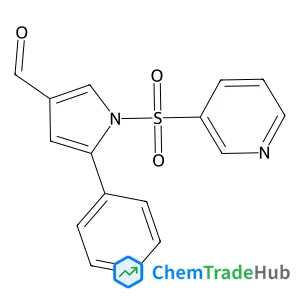
5-Phenyl-1-(pyridin-3-ylsulfonyl)-1H-pyrrole-3-carbaldehyde
CAS Number:
881676-90-0
Molecular Formula:
C16H12N2O3S
![(2S)-2-{[(9H-Fluoren-9-ylmethoxy)carbonyl]amino}-4-(methylselanyl)butanoic acid structure](https://static.chemtradehub.com/structs/121/1217852-49-7-f252.webp "(2S)-2-{[(9H-Fluoren-9-ylmethoxy)carbonyl]amino}-4-(methylselanyl)butanoic acid structure")
(2S)-2-{[(9H-Fluoren-9-ylmethoxy)carbonyl]amino}-4-(methylselanyl)butanoic acid
CAS Number:
1217852-49-7
Molecular Formula:
C20H21NO4Se
Recommended Suppliers






Disclaimer
This page provides academic journal information for reference and research purposes only. We are not affiliated with any journal publishers and do not handle publication submissions. For publication-related inquiries, please contact the respective journal publishers directly.
If you notice any inaccuracies in the information displayed, please contact us at support@chemtradehub.com. We will promptly review and address your concerns.