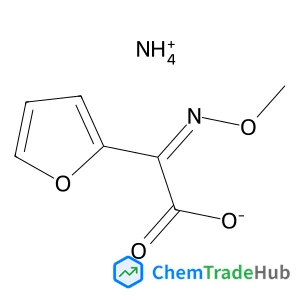
Ammonium (Z)-2-(furan-2-yl)-2-(methoxyimino)acetate
CAS Number:
97148-39-5
Molecular Formula:
C7H10N2O4
Vito Cristino, Serena Berardi, Stefano Caramori, Roberto Argazzi, Stefano Carli, Laura Meda, Alessandra Tacca, Carlo Alberto Bignozzi
Indium tin oxide (ITO) surfaces of triple junction photovoltaic cells were functionalized with oxygen evolving catalysts (OECs) based on amorphous hydrous earth-abundant metal oxides (metal = Fe, Ni, Co), obtained by straightforward Successive Ionic Layer Adsorption and Reaction (SILAR) in an aqueous environment. Functionalization with Fe(III) oxides gave the best results, leading to photoanodes capable of efficiently splitting water, with photocurrent densities up to 6 ± 1 mA cm−2 at 0 V vs. the reversible hydrogen electrode (RHE) under AM 1.5 G simulated sunlight illumination. The resulting Solar To Hydrogen (STH) conversion efficiencies, measured in two electrodes configuration, were in the range 3.7–5%, depending on the counter electrode that was employed. Investigations on the stability showed that these photoanodes were able to sustain 120 minutes of continuous illumination with a < 10% photocurrent loss at 0 V vs. RHE. Pristine photoanodic response of the cells could be fully restored by an additional SILAR cycle, evidencing that the observed loss is due to the detachment of the more weakly surface bound catalyst.
T. Fukushima, A. Stroppa, S. Picozzi, J. M. Perez-Mato
DOI: 10.1039/C1CP20626E
Alexander K. H. Weiss, Thomas S. Hofer, Bernhard R. Randolf, Anirban Bhattacharjee, Bernd M. Rode
DOI: 10.1039/C1CP20669A
Leonardo Belpassi, Loriano Storchi, Harry M. Quiney, Francesco Tarantelli
DOI: 10.1039/C1CP20569B
Yongcai Qiu, Xinfeng Zhang, Shihe Yang
DOI: 10.1039/C1CP21148J
Yan Wu, Jianxiang Shen, Yangyang Gao, Liqun Zhang, Dapeng Cao
DOI: 10.1039/C0CP02952A
Scott G. Sayres, Matt W. Ross, A. W. Castleman, Jr.
DOI: 10.1039/C1CP20612E
1H-Indazole-6-carbonitrile finds applications in pharmaceuticals, where it serve...
Waste containing Dioctyl (2E)-2-butenedioate (CAS: 2997-85-5) should be collecte...
Sodium [(1,2-benzoxazol-3-ylmethyl)sulfonyl]azanide is primarily used in pharmac...
Dimethyl 4-(4,4,5,5-tetramethyl-1,3,2-dioxaborolan-2-yl)-2,6-pyridinedicarboxyla...
Waste containing 2-Fluoro-6-hydrazinopyridine (CAS: 80714-39-2) should be manage...
6-Formyl-2-pyridinecarboxylic acid is an organic compound with the molecular for...
Research trends for this compound indicate a focus on its potential applications...
9H-Tribenzo[b,d,f]azepine is typically synthesized via a multi-step process invo...
1-Cyclopropyl-7-ethoxy-6-fluoro-8-methoxy-4-oxo-1,4-dihydro-3-quinolinecarboxyli...
Waste containing Methyl 3-oxo-1,2,3,4-tetrahydro-6-quinoxalinecarboxylate (CAS: ...

Physical Chemistry Chemical Physics (PCCP) is an international journal co-owned by 19 physical chemistry and physics societies from around the world. This journal publishes original, cutting-edge research in physical chemistry, chemical physics and biophysical chemistry. To be suitable for publication in PCCP, articles must include significant innovation and/or insight into physical chemistry; this is the most important criterion that reviewers and Editors will judge against when evaluating submissions. The journal has a broad scope and welcomes contributions spanning experiment, theory, computation and data science. Topical coverage includes spectroscopy, dynamics, kinetics, statistical mechanics, thermodynamics, electrochemistry, catalysis, surface science, quantum mechanics, quantum computing and machine learning. Interdisciplinary research areas such as polymers and soft matter, materials, nanoscience, energy, surfaces/interfaces, and biophysical chemistry are welcomed if they demonstrate significant innovation and/or insight into physical chemistry. Joined experimental/theoretical studies are particularly appreciated when complementary and based on up-to-date approaches.